In recent years, China has become a power to be reckoned with in terms of its space program, especially since the creation of the China National Space Administration (CNSA) in 1993.
For many years, talking about space research was synonymous with talking about the space programs of the United States and the Soviet Union. They were then joined by Europe through the European Space Agency, founded in its current form in 1975, although its germ, the European Space Research Organization, ESRO, was born in 1964.
But in recent years, China has become a power to be reckoned with in terms of its space program, especially since the creation of the China National Space Administration (CNSA) in 1993. Although it should not be forgotten that on April 24, 1970, China became the fifth country in the world to be able to put satellites into orbit with the launch of the Dong Fang Hong 1 aboard a Long March 1 rocket.
China currently has a complete range of launchers of the Long March family that allow payloads ranging from a few hundred kilos to 25 tons to be placed into orbit. In addition, thanks to market liberalization,
This has allowed it to launch all kinds of satellites ranging from earth observation satellites, some of them in collaboration with other space agencies to communications satellites, including military satellites or the Beidou constellation, which is the Chinese version of the American GPS.
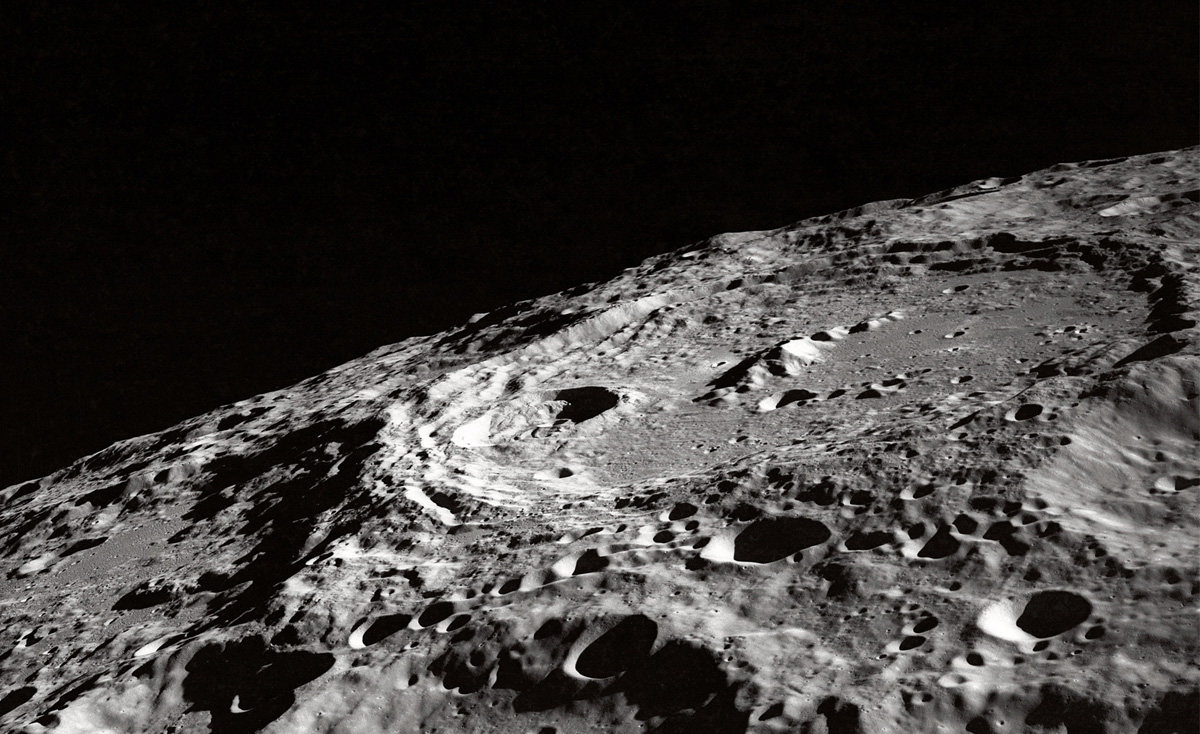
It also has a lunar exploration program that has allowed it to place two probes in orbit around our satellite and land two rovers on its surface, one of them on the far side of the Moon, which has made China the first country in history to land there. They are preparing a fifth mission that aims to bring back samples from the surface for study on Earth.
 What they haven’t had any luck with so far is exploring the solar system. Its only attempt so far was that of the Yinghuo-1 probe, which aimed to enter orbit around Mars. But it was launched together with Roscosmos’ Phobos-Grunt probe in 2011 and both ended up disintegrating in the Earth’s atmosphere after a
In any case, the jewel in the crown of the Chinese space program is its manned program. Since October 15, 2003, nine Chinese men and two women have been in orbit, launched aboard Shenzhou capsules. Part of their time in orbit was also spent aboard the Tiangong-1 and Tiangong-2 space laboratories, which have served as a test platform for the permanent space station that China wants to put into orbit.
 It is a modular space station, similar to the International Space Station, although much smaller, with capacity for a crew of three people. The Chinese government has already announced that it is open to international collaborations both in terms of the experiments to be carried out on board and in terms of the composition of the crews. In fact, European Space Agency astronaut Samanta Cristoforetti is already training along with her Chinese colleagues; Everything indicates that he will be the first crew member from another agency to go to the Chinese space station.
And China does not want to stay in low-Earth orbit with its manned missions. It has the objective, 10 or 15 years from now, of placing a manned mission on the surface of the Moon. And it would not be surprising if the next person to set foot on the Moon is Chinese, even if the US administration has said that it wants to return to the Moon in 2021, something extremely unlikely.
Not bad at all, no matter how much the Chinese space program is sometimes criticized for being based on the technology developed for the Soviet space program and then for the Russian one; There is no doubt that they are getting results.
If you want to know more about space, don’t miss our experts’ analysis in the “Commercialization of Space” report.