AI-generated summary
The revolution of physical artificial intelligence, known as Embodied AI, is reshaping how machines interact with the real world and altering human perceptions of technology. By combining sensors, cameras, and learning algorithms, these AI systems act in real time, enabling more natural and flexible interactions. The Future Trends Forum highlighted how Embodied AI integrated with collaborative robotics (cobots) marks a new era where technology extends human capabilities rather than replaces them. This approach broadens robotics applications across sectors like manufacturing, logistics, healthcare, agriculture, and retail, helping automate routine tasks and enhance efficiency while allowing humans to focus on strategic and creative work.
Collaborative robotics represents a rapidly growing market, revolutionizing industrial processes with open-source solutions like AGIMUS and inventory management tools like StockBot. In healthcare, projects such as SAFE-LY and assistive robots like EllieQ improve patient care and social well-being. Autonomous vehicle startups like Wayve are also advancing mobility through integrated AI systems. Future trends emphasize humanoid robot designs that adapt to human environments, balancing autonomy and supervision to ensure safety, trust, and social acceptance. Challenges remain in cybersecurity, ethical design, and workforce impact, but co-design with users and targeted training can foster sustainable growth. With strong European collaboration and investment, Embodied AI promises to transform sci-fi concepts into real-world benefits, promoting a safer, more productive, and humane future.
How physical AI is impacting strategic industrial sectors and where advanced robotics is evolving.
The revolution of physical artificial intelligence – or Embodied AI – is transforming both the interaction of machines with the real world and the way humans perceive and relate to them. Technological advances, which integrate sensors, cameras and learning algorithms into systems capable of acting in real time, open up opportunities that were unthinkable until recently, while testing society’s ability to adapt.
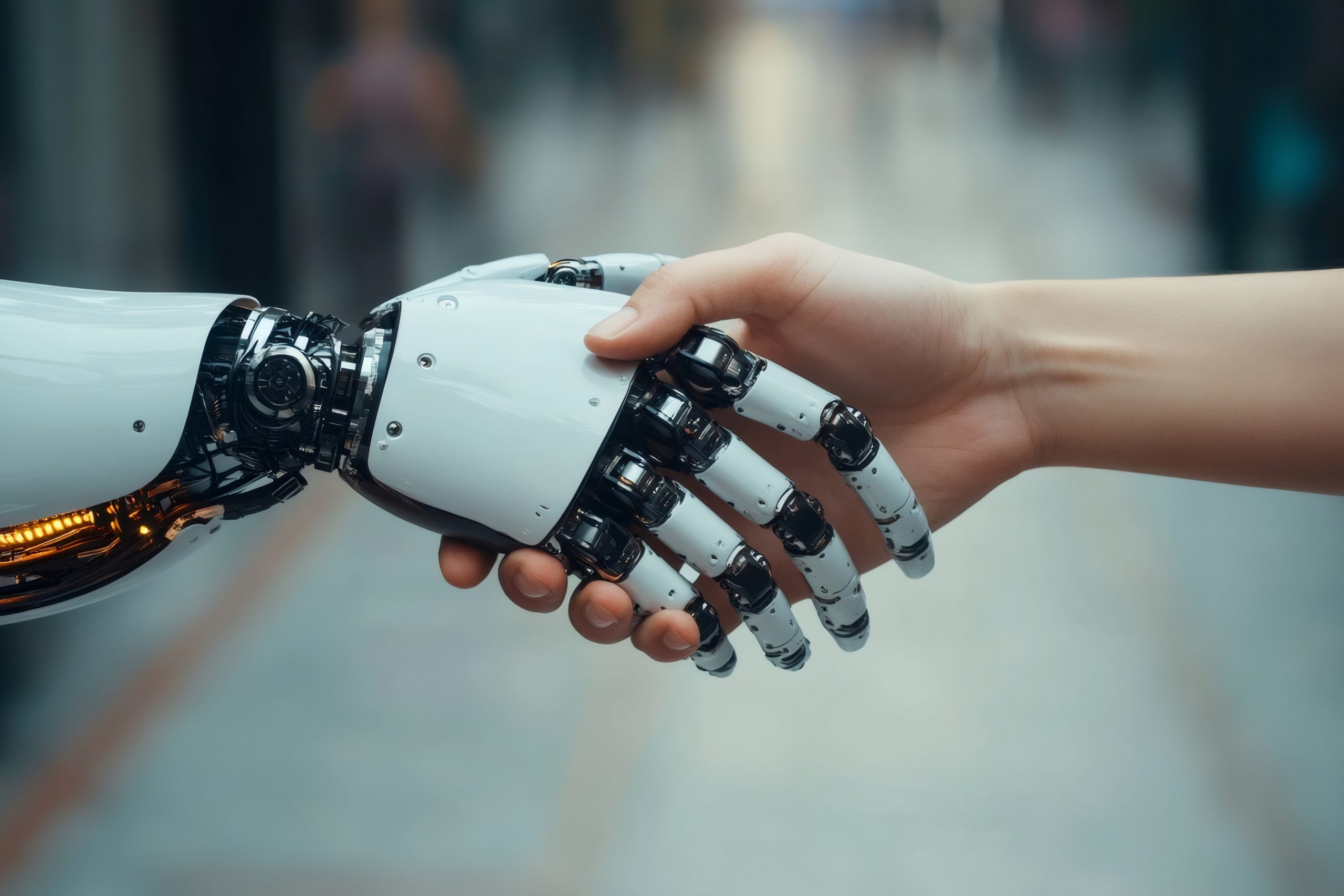
The Future Trends Forum, organised by the Bankinter Innovation Foundation and dedicated to physical AI, showed how the integration of this technology with collaborative robotics marks the beginning of a new era, in which technology becomes an extension of human capabilities.
Francesco Ferro, CEO of PAL Robotics, the company that developed the first bipedal robots in Europe, sums up the essence of physical AI as follows: “Embodied AI combines the cognitive capabilities of artificial intelligence with a physical body capable of perceiving and acting in real time, enabling more flexible and natural interactions in various environments.”
This vision broadens the spectrum of applications of advanced robotics in manufacturing, logistics, healthcare, and other sectors, but also reinforces the idea that technology does not seek to replace human intelligence, but to complement it, and allow people to focus on creative and strategic tasks.
Impact on strategic sectors
Within physical AI, perhaps the field of collaborative robots is the most promising, with a global market estimated at $2.14 billion in 2024 and a growth of 31.6% between 2025 and 2030. In the industrial sector,the implementation of these cobots is revolutionizing assembly lines and production processes.
Initiatives such as the AGIMUS is committed to open source solutions that facilitate rapid configuration and autonomy in manufacturing processes, allowing companies to adapt quickly to changes in production and improve versatility in dynamic environments. On the other hand, in retail the solution StockBot optimizes inventory management in stores and warehouses, significantly reducing the time spent on monotonous tasks.
Service robotics is also driving improvements in the agricultural sector. Francesco Ferro mentions the project Canopies, where, he explains, “we use our TIAGo Pro mobile manipulator for tasks that require high efficiency in very short deadlines, optimizing harvesting and crop control.” This technology is especially valuable in intensive field work, where adverse conditions limit human intervention.
In the health field, the Physical AI applied to cobots contributes to improving quality of life and optimizing patient care. Projects such as SAFE-LY and SPRING demonstrate how advanced robotics eases the burden on healthcare workers, while solutions such as the assistive robot EllieQ combat loneliness and promote healthy habits in the elderly, evidencing a positive impact on social well-being.
Finally, the integration of AI into autonomous vehicles is transforming mobility. Startups like Wayve are developing systems that combine perception, planning, and execution into a single process, laying the groundwork for safer and more efficient driving, despite the regulatory and scalability challenges that still exist.
Future trends in collaborative robotics
From a technical point of view and the approaches that will mark the evolution of collaborative robotics in the near future, Francesco Ferro highlights the progress in general-purpose humanoid robots, whose designs inspired by the human form facilitate their adaptation to environments designed for people. Recalling the beginnings of PAL Robotics, the expert adds: “Since 2004, we have launched increasingly innovative solutions, such as our Talos, Reem-C and Kangaroo. The human form of these robots allows them to easily adapt to environments designed for people.”
However, Ferro also warns that, although a human appearance facilitates integration, it is vital to avoid the ‘uncanny valley‘: “the objective is for robots to be friendly, safe and to generate trust from the first contact,” he clarifies. The balance between robot autonomy and human supervision favors a close collaboration, which not only improves the social acceptance of these technologies, but also generates more dynamic and productive work environments.
The incorporation of imitation and reinforcement learning methods, along with progress in sensors and control algorithms, has allowed recent robotic models such as TIAGo Pro and TIAGo Head improve their ability to interact and make decisions based on experience. In this sense, Ferro underlines how “artificial intelligence has been at the center of our work for years; By integrating it into physical bodies, we turn what today seems like science fiction into reality.”
The development of advanced simulators, based on real physics and predictive models, is essential to train robots in dynamic environments and ensure the efficiency and safety of their applications. Security and data protection are consolidated as critical challenges and, according to Ferro: robots must operate without a connection to the cloud whenever possible, processing data locally to safeguard the integrity of information and mitigate cybersecurity risks. European projects such as Cyberfactory and Secoiia reinforce these measures, ensuring a safer technological environment.
Challenges and opportunities: design, ethics and employment
The success of advanced robotics depends on a comprehensive design that combines software, mechanics, behavior, and interaction. This requires clear communication, secure integration into the environment, and security guarantees for people and the environment. In this sense, “what is working best for us is co-design, which is key to developing technologies that are really useful and accepted by their users,” explains the CEO. An example of this is the NHoA, developed for care and rehabilitation, expression of hand-to-hand work between users, engineers and therapists.
In terms of impact on employment, advanced robotics transforms the labor landscape by redistributing tasks and creating new roles. According to Ferro: “Collaboration between humans and robots increases efficiency and drives the development of more sophisticated and diversified skills.” This alliance, supported by training and adaptation policies, can generate sustainable growth and greater competitiveness.
Caught between leadership and technological competition between China and the United States, what role can Europe play? Ferro is convinced that for the Old Continent it is still possible to lead the future of service robotics and artificial intelligence. This requires a robust ecosystem and institutions such as the European Bureau of Artificial Intelligence, million-dollar investments and strategic partnerships (such as ADRA, euRobotics e IFR), lay the foundations for innovation to be distributed equitably and transformed into opportunities for growth.
“With a long-term vision and close collaboration between sectors, we can transform what today seems like science fiction into palpable realities that promote the progress and well-being of society,” concludes the expert. The commitment to intelligent integration, where artificial intelligence and human intelligence complement each other, is the way to a safer, more productive and humane future.