
AI-generated summary
The Bankinter Innovation Foundation’s Akademia program combines selective admission, practical and cutting-edge coursework, and excellent instructors to prepare students for innovation beyond traditional clinical paths. Alumni like Fernando Eiras exemplify this outcome: an intensive care specialist with a PhD in AI and machine learning for health, a master’s in health management, academic roles, leadership positions in professional societies, and international humanitarian work.
Eiras explains that Akademia broadened his perspective early in medical school, leading him to collaborate with startups and build a lasting professional network. Drawn to intensive care for its technological intensity and high-stakes variety, he gradually moved into AI after seeing the untapped potential of real-time ICU data. His doctoral research developed machine-learning models to predict which drug candidates should advance to clinical trials, achieving high sensitivity and specificity and spawning the startup Ikerdata. He describes AI’s promise in ICUs for real-time monitoring, early warning, personalized treatment suggestions, resource optimization, and accelerating research, while noting barriers like infrastructure, training, and misunderstanding of AI’s scope. Eiras emphasizes the need for clinicians to learn data science fundamentals, values leadership and teaching in his career, and advocates ongoing education to harness AI responsibly in medicine.
Fernando Eiras, an Akademia alumnus, explains how artificial intelligence and machine learning are changing intensive care and healthcare management
At the Bankinter Innovation Foundation, we are very proud of the alumni who have been trained in our Akademia programme.
The uniqueness of the program lies in its design and execution: it ranges from a demanding student selection process to a practical and avant-garde approach to the content of the classes, complemented by the excellence of the teachers. This combination results in students who are enthusiastic about innovation, ready to bring new ideas and creative solutions in their respective fields.
On this occasion, we interviewed Fernando Eiras, a former student of Akademia, a specialist in Intensive Care Medicine, with a PhD in Artificial Intelligence and Machine Learning in Health Sciences, a Master’s Degree in Health Management and a great believer in the goodness of artificial intelligence in modern medicine, which is in a moment of accelerated transformation. driven by technological advances that are changing the way we diagnose, treat and manage health.
In this context, Fernando Eiras stands out as an example of integration between clinical practice and cutting-edge research. Fernando combines his work at the Galician Health Service (SERGAS) with a solid academic and professional career in artificial intelligence and machine learning applied to medicine.
Fernando completed his Doctoral Thesis with an international mention in Artificial Intelligence and Machine Learning for drug development and clinical trials at the University of the Basque Country, which has allowed him to be at the forefront of medical research. His training allows him to address the challenges of medicine from a comprehensive perspective. In addition to his clinical and academic work, Fernando is a member of the Board of Directors of the Galician Society of Intensive Medicine and Coronary Units, and actively participates in several scientific associations and research groups. His commitment to the transmission of knowledge is reflected in his role as a teaching collaborator at the Faculty of Medicine of the University of Santiago de Compostela (USC) and as an instructor in clinical simulation.
Fernando’s passion for medicine and his desire to contribute to global well-being also led him to participate in an international cooperation program in the Sahara refugee camps, an experience that has marked his career and personal life.
In this interview, we will explore his journey, the challenges and opportunities of artificial intelligence in intensive care medicine, and his vision for the future of global health.
As an Akademia alumnus, what memories do you have of your experience in the program and how do you think it helped you prepare for your professional career?
My experience at Akademia was very positive. I participated in the program when I was in the third year of medical school, 14 years ago. At the time, the idea of innovation was not something I had in mind, as medical education is mainly focused on the clinical.
Akademia opened the doors to a new world for me, allowing me to think beyond traditional clinical medicine. Thanks to the program, I started collaborating with startups, something I continue to do today, and I was also able to build a network of professional contacts that has been very valuable for my career. Akademia helped me to see and take advantage of opportunities outside the strictly clinical field, positively impacting my professional development and broadening my horizons.
Your passion for medicine is evident. What originally motivated you to choose this career and specialize in intensive care medicine?
From a very young age, I always wanted to be a doctor. I remember that, even before I was clear about what the profession entailed, I already felt an attraction to medicine. During high school, my grades were fair because I wasn’t that passionate about subjects. To be able to access Medicine, I did a Vocational Training as a Lightning Technician, which helped me to mature and prepare myself better to face the career. Once in Medicine, my grades improved significantly because I was finally studying what I was really passionate about.
As for my specialization in intensive care medicine, I was always attracted to critical patient care. Since my career, I have focused on the most serious cases, those in which the patient’s life was at stake. During my studies, I also became certified as an ambulance technician, which reaffirmed my interest in critically ill patients. Intensive care medicine is probably the most technological specialty, as it requires the use of various machines to provide organic support. I like its dynamism and the need for quick and decisive interventions in highly complex situations. Every day is different; You can treat anything from intracranial hemorrhage to sepsis or gastrointestinal bleeding. This variety and the opportunity to make a difference in critical moments is what motivated me to specialize in intensive care medicine.
You went from being immersed in the field of medicine to getting involved in the area of artificial intelligence and machine learning. How did this transition come about and what propelled you towards it?
Since his degree, he already had an interest in artificial intelligence. A close friend, who was a computer engineer and a college classmate, made me even more curious. I began to notice how artificial intelligence was already around us in many aspects of everyday life, such as in social media ads or automated decision-making. I was surprised that it wasn’t applied more broadly in medicine. The transition to artificial intelligence was progressive. I started my doctoral thesis five years ago, but even during medical school I already knew that I wanted to explore this field. When defining my specialty in intensive care medicine, I realized the enormous volume of real-time data that is generated in this area, both from machines and from patients’ vital signs. It seemed incredible to me that this information was not used to improve decision-making and benefit the patient.
The path to artificial intelligence was facilitated by that friend I mentioned, who after studying computer engineering decided to study medicine. She connected me with a research group in the Basque Country that was interested in developing a thesis on artificial intelligence applied to medicine. This group became my starting point, helping me train and develop my first machine learning models. The training was intensive and self-taught. I spent many hours in meetings, courses, and studies on my own, learning how to use tools like R to develop models. Over time, I met more people interested in artificial intelligence applied to medicine, which allowed me to be part of a growing network of researchers in this field.
Now, we are working on creating a nationwide research network on artificial intelligence in intensive care medicine. Although at first it was difficult to find specific training for doctors in AI and machine learning, now master’s degrees and specialized courses are beginning to emerge. I am convinced that these networks and continued collaboration will be essential to continue advancing and applying artificial intelligence in medicine.
With your combined experience in intensive care medicine and emerging technologies, how do you see Artificial Intelligence transforming care and management in ICUs?
Artificial intelligence (AI) is having a significant impact on intensive care medicine, transforming both patient care and the management of Intensive Care Units (ICUs). One of the main advantages of AI in this area is its ability to handle and analyze large volumes of data in real time. This facilitates continuous and detailed monitoring of patients, allowing for the early detection of subtle changes in their health status that could be indicative of serious complications.
In the context of ICUs, where every second counts, the speed and accuracy with which AI can process information and generate alerts is crucial. Machine learning algorithms can identify patterns in patient data, helping to predict adverse events before they occur. This allows medical teams to intervene more quickly and effectively, thus improving clinical outcomes.
AI is also improving decision-making in ICUs. For example, by analyzing historical and current patient data, AI systems can suggest adjustments to treatments, customizing interventions to each patient’s specific needs. In this way, it increases the precision and efficiency of care and optimizes the use of resources, a critical aspect in high-pressure environments such as ICUs.
Another important aspect is the ability of AI to support the research and development of new therapies. By analyzing large patient datasets, AI can identify trends and correlations that might not be apparent to the naked eye. This accelerates the clinical research process and the development of innovative treatments, contributing to the advancement of intensive care medicine.
The implementation of artificial intelligence in ICUs is not without its challenges. The integration of these technologies requires adequate infrastructure, as well as training and adaptation by medical personnel. However, the potential benefits are enormous. AI, in addition to improving the accuracy and efficiency of care in ICUs, can also free up time for healthcare professionals to focus on more human aspects of care, such as communicating with patients and their families.
Is there a lot of reluctance among doctors when it comes to using these technologies?
The reluctance observed among doctors is mainly due to lack of knowledge. Many colleagues fear that these technologies could replace us, which is completely false. Artificial intelligence (AI) and machine learning are supporting tools designed to improve our daily clinical practice, not replace us.
It is essential for doctors to understand what is behind these technologies. We must transition from being purely clinical clinicians to being professionals who understand and collaborate with data scientists. This joint work will allow us to develop tools that really help us make clinical decisions more effectively. A few years ago, the reluctance was greater, but now I see that there is greater acceptance and understanding. However, I am concerned that AI will be reduced to applications such as ChatGPT, which, while a useful tool, does not represent the full potential of artificial intelligence. For example, recently my hospital organized a course on AI applications in medicine, but it focused solely on the use of ChatGPT. This reflects a limited understanding of what artificial intelligence really is and its broad potential in the medical field.
Regarding your doctoral thesis in artificial intelligence and machine learning, could you share with us the main focus of your research and how you hope it will impact the future of medical practice?
My doctoral thesis focused on addressing a significant problem in the pharmaceutical industry and in the development of clinical trials. In this industry, out of every 10,000 molecules that are investigated, only one becomes a clinical trial, due to the rigorous testing processes to ensure its safety and efficacy. This process is extremely expensive and consumes a great deal of human resources and time, reflecting considerable inefficiency in the industry.
The goal of my research was to develop machine learning models that could predict whether a molecule is viable to advance to the clinical trial phase. Using databases with characteristics of molecules and clinical trials, we create models that can identify which molecules are most likely to succeed. This allows resources and efforts to be focused on the most promising molecules, significantly optimizing the process.
We developed four different models to adjust to the different characteristics of the available data, such as patient or clinical trial specificities. These models achieved high sensitivity and specificity, with the lowest sensitivity at 86% and most exceeding 95%.
Although this research is academic in nature, we have founded the startup Ikerdata with the aim of bringing these models into industrial practice and perfecting them. Initially, we focused on anti-HIV molecules, but the models can be easily adapted to other types of drugs, which could revolutionize the way clinical trials are conducted.
You have received training in areas outside the healthcare field such as management and leadership. How do you think these skills complement your medical practice and your research work?
Management and leadership training has been instrumental in complementing both my medical practice and my research work. In both areas, teamwork is crucial. As intensivists, we often find ourselves in crisis situations where we must lead and make critical decisions in a matter of seconds. The ability to manage teams and crisis situations is essential at this time.
In daily clinical practice, these skills allow me to better coordinate with my colleagues, which is vital when it comes to managing patients in serious condition. In addition, in research, working in multidisciplinary teams is the norm. This involves interacting with professionals from other hospitals, universities and even other countries. Effective management of these teams is essential to the success of any research project, especially when I am acting as principal investigator.
These leadership and management skills improve the dynamics of teamwork, and also facilitate daily interaction with patients and their families. Being able to communicate effectively and handle difficult situations calmly and clearly is an indispensable skill for any doctor.
You have dedicated a significant part of your career to training and teaching. How important do you give to continuing education in the medical field and how do you contribute to it?
Continuing education is essential in the medical field. Medicine is a constantly evolving discipline, and what is a standard today can change radically in a short time. The number of scientific articles and publications that appear daily is enormous, and keeping up with these advances is essential for any healthcare professional. In all disciplines it is important to be up to date, but in medicine it is essential. A doctor must be constantly reading and training to offer the best possible care.
I contribute to continuing education in a number of ways. I publish research and scientific articles that help share knowledge and discoveries with the medical community. In addition, I participate as a speaker in congresses and conferences, where I share my experiences and learnings with other professionals. Next week, for example, I will be a speaker at a conference.
Another way I contribute is through resident training. Physicians-in-training who rotate with me receive guidance and learn from daily clinical practice. I also intend to get more involved in the university, to continue contributing to medical education from an academic platform.
Thank you very much, Fernando!
If you are interested in the intersection between medicine and artificial intelligence, don’t miss the webinar with Dr. Julio Mayol: AI: The New Frontier in Medicine.
If you want to know the testimonies of other Akademia alumni, you can see them here.
And if you want to know more about the Akademia program, we invite you to visit the Foundation’s website.
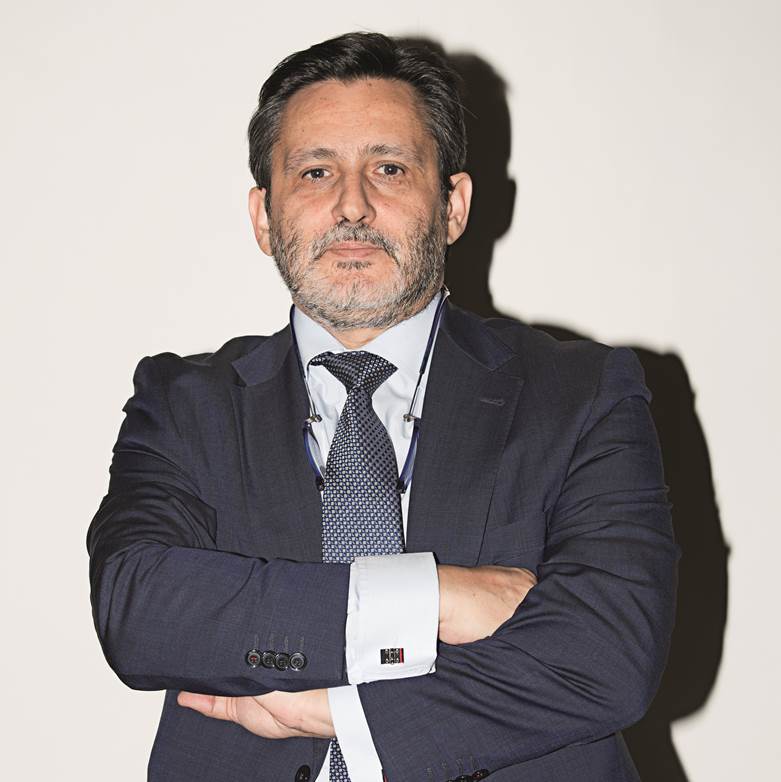
Profesor titular de Cirugía, Director Médico y de Innovación y Secretario de la BJS Society