
AI-generated summary
As part of the Bankinter Innovation Foundation’s Megatrends2024 cycle, surgeon Julio Mayol presented a webinar exploring how artificial intelligence (AI) and precision medicine are reshaping healthcare. Drawing on historical milestones and recent advances, Mayol highlights generative AI’s disruptive potential to make medicine more predictive, preventive, personalized, equitable and participatory. He describes tools that already aid diagnosis, education and research—such as Dx29 for rare diseases, Med-Gemini and GPT-based agents for exam training—and notes AI’s role in creating synthetic patients, accelerating drug design, and improving surgical practice through robotics and vision systems.
Mayol warns of technical and ethical challenges—hallucinations, catastrophic forgetting, biased training data, ownership of AI outputs—and stresses the need for clear validation, regulation and responsible use. He urges rapid adaptation by organizations: understand AI’s basics, define strategic use cases, invest in innovation and cultural change, and prioritize continuous education. Ultimately, Mayol calls for “architects of the future” to guide AI ethically so technology enhances human interaction rather than replacing it. The webinar underlines Megatrends2024’s view that AI will profoundly transform medicine, demanding both opportunity-focused action and careful stewardship.
As part of the Bankinter Innovation Foundation's Megatrends2024 cycle, Professor of Surgery Julio Mayol explores how artificial intelligence is transforming medicine. This webinar provides a detailed look at the applications and impact of AI in the medical field, from improving diagnoses to personalizing treatments.
As part of the Megatrends2024 cycle organised by the Bankinter Innovation Foundation, an exciting webinar was held with the outstanding professor of surgery, Julio Mayol. This event is part of a series of meetings that address the megatrends identified in our annual report, which offers a forward-looking vision of the future based on the consensus of more than 800 international and national experts.
Megatrends2024: a glimpse into the future
The Megatrends2024 report is an essential tool for anticipating the technological and social changes that will shape our future. Among the ten megatrends highlighted, two were the focus of our recent webinar: artificial intelligence and precision medicine. These trends promise to revolutionize their respective fields and present a confluence that redefines the way we understand and practice medicine.
The webinar: Artificial intelligence and the new frontier of medicine
During the webinar entitled “Artificial Intelligence: the new frontier of medicine“, Julio Mayol addresses the issue of how Artificial Intelligence (AI) is transforming medicine into a more predictive, preventive, personalized, equitable and participatory discipline. It explores the revolution that AI represents in improving the quality of healthcare, optimizing processes from diagnosis to treatment and talks about how AI is marking the new frontier in medicine, promising significant revolutions in the way healthcare is practiced and understood.
Julio Mayol, with a career that spans from his training at the Complutense University of Madrid and the Beth Israel Hospital in Boston, to his role as the dean’s delegate for new technologies and communication, shares his vast experience and vision on the impact of AI on medicine. According to Mayol, we are on the threshold of a revolution that will profoundly change the power structure in societies, by allowing patients to interact directly with AI systems to make decisions about their health.
If you want to watch the webinar, you can do so here:
AI: the new frontier of medicine with Julio Mayol
Below, we summarize Julio Mayol’s ideas and reflections:
Artificial intelligence continues to be a central topic at this time, especially generative artificial intelligence, but also in other areas such as robotics or machine learning. And, on the other hand, precision medicine continues to advance, achieving milestones such as the recent approval by the European Commission of a treatment based on genetic addition to cure previously incurable diseases.
A bit of perspective: the origin of AI
Artificial intelligence (AI) is defined as the ability of machines to simulate human cognitive abilities such as reasoning, learning, planning, and creating. This concept has evolved thanks to the efforts of many people, but three figures stand out in particular:
- Ada Lovelace: daughter of Lord Byron, she is considered the first person to create a machine that could think, a revolutionary concept for her time.
- Alan Turing: considered the true architect of the AI revolution. Although Turing never used the term “artificial intelligence,” his ideas about computing and the formulation of Turing’s theoretical concept of the machine in 1936 laid the foundation for modern computing. In 1950, he published the article “Can Machines Think?” in the journal MIND, introducing the famous Turing Test.
- John von Neumann: mathematician and polymath, he was a mentor to Alan Turing and developed the architecture of the computers we know today. Their work during the Cold War, particularly on the strategy of “mutually assured destruction,” also had a significant impact on the development of AI.
The development of AI has gone through different stages and challenges. In 1955, John McCarthy first coined the term “artificial intelligence” and organized the Dartmouth Summer Research Project, where he defined AI as the construction of machines capable of using language, forming abstractions and concepts, solving problems, and improving themselves.
Progress in AI has been driven by three key enablers since 2005:
- Insights into the human brain: especially from Ramón y Cajal’s discoveries about how neurons form networks to process information, which inspired neural networks and deep learning.
- Big Data and the Internet of Things: The accumulation of large amounts of labeled data has made it easier to train neural networks.
- Large processing and computing capacity: advances in hardware have made it possible to handle and process this data on a large scale.
These enablers have given rise to two major fields of AI: discriminative AI, which predicts future outcomes based on historical data, and generative AI, which can create new outcomes from previous data, thus producing something entirely new.
The Generative AI Revolution in Medicine
Generative artificial intelligence is causing a profound transformation in medicine, comparable to historical revolutions such as the industrial revolution or the invention of the printing press. In the past, doctors were seen as the “magicians of the tribe” with exclusive knowledge that gave them great power. With the scientific revolution, this figure evolved towards an approach based on experimentation and clinical trials. In the 21st century, generative AI is displacing the physician as the sole intermediary of knowledge, allowing patients to interact directly with AI systems to make decisions about their health. This technology is impacting all domains of healthcare, from knowledge generation and management, to education and clinical practice. However, this has led to medical professionals spending more time interacting with information systems than with patients.
A prominent example of generative AI’s capabilities is its application in the creation of synthetic patients. This can be used to fill the lack of data in certain studies, making it easier to conduct complex and expensive clinical trials. In addition, UNESCO has addressed the use of tools such as ChatGPT in research and higher education, pointing out its multiple applications and opening debates on intellectual property and ethics in the use of these systems.
Generative artificial intelligence also plays a crucial role in medical education and training. Julio Mayol mentions that he himself uses a GPT-based agent to answer questions from his students 24/7 on any topic related to medical room surgical pathology. This system also generates MIR questions to train students without the need to resort to traditional academies.
The potential of these tools was tested together with Álvaro Fuentes, a former student who is now a thoracic surgeon at the Río Clínico Hospital in Valladolid. They found that GPT 3.5, without specific training, could pass the thoracic surgeon exams in the Andalusian Health Service. In addition to GPT, there are other models such as Med-Gemini, a Google AI specifically trained for medicine, which outperforms GPT-4 in the USMLE exam, and can also interact with surgical videos to train students in complex procedures.
Another significant advance is the creation of the Dx29 tool by Julián Isla of the 29 Foundation, designed to diagnose rare diseases. This tool, which uses generative AI, is integrated into Madrid’s primary care system and helps both patients and professionals to diagnose more accurately. Dx29 has already identified five children with rare diseases and has more than 500 daily users, demonstrating its impact on modern medicine.
The future of AI in medicine
The future of artificial intelligence (AI) in medicine promises to be even more revolutionary than what we’ve already seen. Many people underestimate the potential impact of generative AI, but its ability to transform the healthcare sector is immense. An example of this evolution is NAV29, a tool developed in collaboration with Julián Isla and his foundation, designed for patients to manage their own information and make informed decisions about their health. This approach changes the traditional dynamic between doctors and patients, giving more power and knowledge to the latter.
In terms of access to treatments and diagnostics, the AiCCESS project, in which Dr. Mayol participates, seeks to use generative AI to address the gaps in safe surgery, obstetrics, and anesthesia for millions of people around the world. This project involves surgeons and researchers from the United States, Scotland and the San Carlos Clinical Hospital.
In a completely different arena, Johnson & Johnson and Verb Surgical excel in the field of robotic surgery, using convolutional neural networks to accelerate learning and improve surgical practice. AI also has the potential to revolutionize the design of drugs and therapeutic solutions at the molecular level.
The change that artificial intelligence (AI) is bringing is profound and we are still beginning to understand its true scope. AI has the ability to present human-like cognitive abilities, which raises interesting questions: can AI hallucinate, forget, or develop dementia? Can machines lie? Hallucinations in AIs are comparable to lies, as these machines try to meet our expectations based on patterns of behavior they find in the data they have been trained with. A well-known phenomenon is catastrophic forgetting, which occurs when a neural network is overtrained with certain data, leading to a drastic forgetting of previous information. Another problem is incestuous learning, which occurs when an AI is trained on products generated by other AIs instead of diverse data, which deteriorates the quality of the model until it collapses. These challenges underscore the importance of diversifying data sources and being aware of the limits and risks inherent in artificial intelligence, especially in critical applications such as medicine.
And can AI demonstrate empathy? a
In addition, a Turing test conducted to assess the personality of chatbots such as GPT 3.5 and GPT 4 showed that these models can behave similarly to humans in various dimensions of personality. This is because they have been trained with human data, developing cognitive skills comparable to ours.
In conclusion, generative AI is well on its way to completely redefining the medical landscape, from the relationship between patients and professionals to the design and implementation of advanced treatments.
How to prepare your organization for AI
- Act quickly: The evolution of AI is extremely fast. New versions and technologies are constantly emerging, as was the recent case with OpenAI’s GPT-4o and Google’s Gemini. It’s crucial to keep up and adapt quickly to these changes.
- Understand the basic principles: You don’t need to be an expert, but it’s essential to understand how AI works. Language models such as Large Language Models are based on linear algebra and statistics. Knowing these fundamentals helps set realistic expectations and leverage AI effectively.
- Develop a clear strategy: It is vital to have a defined purpose for the use of AI in medicine. Identifying the goals and how AI can contribute to achieving them ensures targeted and effective implementation.
- Address ethical and legal issues: The implementation of AI in medicine must consider ethical and legal aspects. It is crucial to establish clear guidelines for the responsible use of AI, protecting both patients and professionals.
- Identify valuable use cases: It is important to identify where AI can generate the most value and improve people’s lives. This allows for a more focused and effective use of technology.
- Invest in innovation and cultural change: the adoption of AI requires, in addition to investment in technology and innovation, a cultural change. Professionals need to be open to new ways of working and collaborating with AI.
- Education and coaching: Continuing education is essential. Reskilling and upskilling of workers ensures that they are prepared to use new AI tools and face the challenges of the future.
Preparing an organization for artificial intelligence (AI) is essential to make the most of its potential and face the challenges it poses, says Julio Mayol. It lays out the key steps to be AI-ready:
Finally, says Dr. Mayol, we need architects of the future, visionaries who can design and guide the ethical use of AI. Every new technology brings new responsibilities. It is critical to coordinate efforts to prevent the race for control of AI from ending in tragedy.
“The dream of our species is to replace us, we must go back to basics, we must go back to the principles, abandon screens and return to human interaction.”
Julio Mayol
Q with Julio Mayol
Below, we summarize Dr. Mayol’s Q with the audience:
What innovations in artificial intelligence are you most excited to see developed in the medical field in the coming years?
I am excited about innovations that improve quality of life and equity in access to medical services, eliminating unnecessary practices and improving patient safety. AI should allow healthcare professionals to focus more on patients and less on machines.
Do you think we will have a medical machine at home in the near future?
Not in the immediate future, but we already have technologies that perform similar functions, such as ChatGPT.
Could you share a specific success story where artificial intelligence has had a significant impact on the care of a specific patient?
The Dx29 tool in Madrid is helping to diagnose rare diseases, considerably reducing the time needed to obtain a diagnosis.
What kind of studies and evidence are required to validate the effectiveness and safety of Artificial Intelligence applications in Medicine?
Discriminative AI is validated with clinical trials comparing its accuracy with human diagnoses. Generative AI, due to its changing nature, is more difficult to validate and requires clear responsibilities in its use.
What future advances in the field of computer vision in the medical field do you think will come in the near future?
It is possible that in the near future we will be able to capture images of the brain and convert them using AI so that people without vision can “see” their surroundings.
And are issues for dementia already being put into practice? Is there progress in this?
Although there is ongoing research to find biomarkers and new molecules using AI, there are still no effective solutions implemented for dementia.
Do you think we are a long way from the self-diagnosing and self-healing autodoc machines we see in science fiction movies?
In the next five or ten years, probably not. However, in regions with limited access to doctors, any advancement in AI would be very significant.
With respect to the ownership of the results obtained with Artificial Intelligence, who would be the final owner: the subject who performs the query, the creator of the Artificial Intelligence method or the subjects whose data has been used to train the models?
This is an unresolved legal debate. Currently, it is questioned how AI models have been trained and with what data, posing challenges about the ownership and authorization of use of this data.
How feasible is the prediction or detection of mental illness with high accuracy using image classification?
Current tools make it possible to diagnose specific neurological conditions and rule out what is normal, but there are still no practical and effective solutions to predict mental illnesses with high accuracy.
What recommendations do you have for the training of future doctors in the use of artificial intelligence?
Medical training programs need to be reformed to include AI from the first year. At the Complutense University, we have launched a course on the Practical Application of AI, but curricula must be adapted to avoid obsolescence.
This webinar is another example of the Bankinter Innovation Foundation’s commitment to the dissemination of knowledge and the promotion of innovation. Throughout the year, we will follow the megatrends, unraveling how they can influence and improve various aspects of our lives and society at large. We invite you to stay tuned for our upcoming events and download the Megatrends2024 report from our website to get a complete overview of the trends that will define the future.
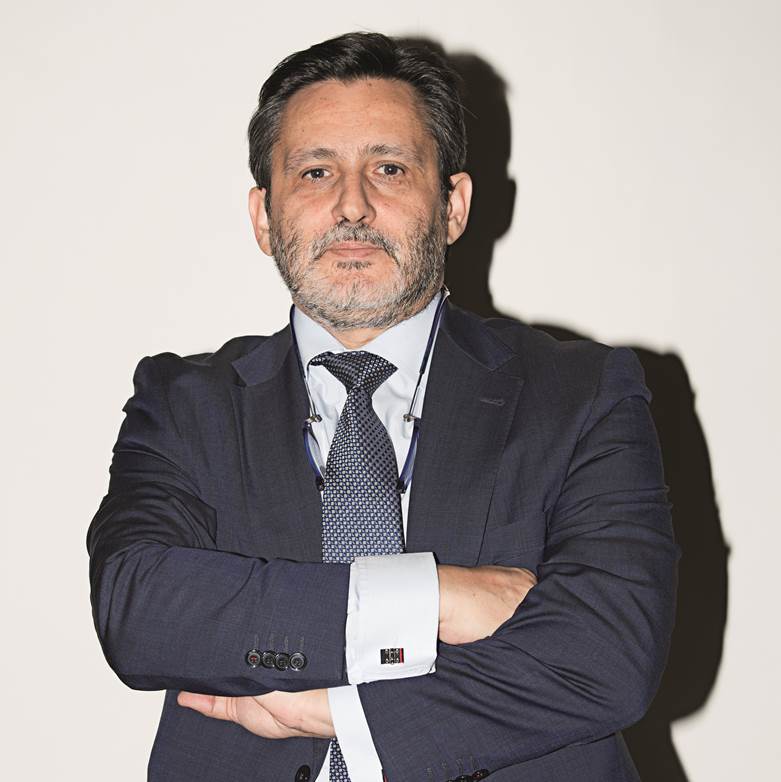
Profesor titular de Cirugía, Director Médico y de Innovación y Secretario de la BJS Society