
AI-generated summary
At the end of the 2000s, cities began piloting internet-connected containers equipped with emerging 3G and 2G+ technologies to notify garbage trucks when bins were full, enhancing collection efficiency. Santander, a pioneering city, installed 12,000 sensors, marking a futuristic step then but now a baseline example of connectivity. Today, many urban infrastructures—including streetlights, traffic signals, public building air conditioning, and public transport—are internet-connected. Telecommunications advancements, such as 5G, have rapidly been adopted, with attention now turning to the future 6G technology.
6G promises to optimize urban infrastructure use and reduce cities’ carbon footprints despite higher energy consumption per device. This is achieved by enabling data-driven efficiencies—for example, thermostats consuming more energy to transmit data but saving much more overall energy through improved climate control. Beyond energy savings, 6G will enhance management of scarce resources like water, allowing precise monitoring and reducing waste. It will also support circular economy principles by improving traceability of food and waste streams. Furthermore, 6G is expected to be a pivotal enabler for emerging technologies such as autonomous vehicles—which require rapid, reliable data exchange to navigate complex urban environments—and virtual/augmented reality, which demands ultra-low latency to prevent user discomfort. Ultimately, 6G will serve as a foundational technology, facilitating smarter, more sustainable, and more connected cities.
Can wireless telecommunications technology improve the quality of life in urban environments? Is it possible that 6G will bring us more inclusive, safe, efficient and clean cities? Probably, as previous generations such as 2G, 3G, 4G and 5G already did. Although citizens tend to quickly embrace changes, integrate them into their lives, and look forward to the next disruption.
The normality of the internet-connected container: what has already been achieved
At the end of the 2000s, some cities around the world were piloting containers connected to the then emerging 3G and 2G+. The idea was that the bin would notify the garbage truck that its contents were full, so that the collection route would be done more efficiently. The pioneering city of Santander installed 12,000 sensors. The data is fascinating for two reasons: at that time it was futuristic, and today it is almost little.
The container is connected to the internet, the street lights too, and the traffic lights, the pumps in the fountains in the parks, the air conditioning of public buildings, the bus and its stops. What years ago was innovative, a decade later is commonplace, almost the minimum. Improvements in telecommunications infrastructure, including 5G, are installed and adopted immediately, and then we look to the future, towards 6G.
What will 6G bring to cities?
As can be read in the report Megatrends 2024, one of the fundamental co-benefits of 6G in the urban environment is to “optimise the use of these infrastructures and minimise the city’s carbon footprint “. How is this possible if, in fact, each mobile telecommunications technology consumes slightly more than the last?
Yes, with each generation data traffic skyrockets and It increases the consumption of the system, but this increase in data results in global human activities with less impact. For example, now the thermostat sends twice as much data, going from consuming 5 Wh per day to 10 Wh, but thus saving 1000 Wh of electricity by improving the energy efficiency of the room.
The example of air conditioning can be extrapolated to the entire city, as well as to mobility. A faster, lower latency and more reliable telecommunications network results in much more efficient public transport. Combined, mobility and air conditioning are the two largest consumers of electrical and combustion energy. But there is more.
6G for raw material recirculation
Efficient management of finite – and increasingly scarce resources, such as water – is the only way to preserve them for future generations. The sixth generation of mobile telecommunications will allow more reliable control of critical networks such as water resources, especially where there are leaks, which agents consume the most liquid, when and where, or what actions can be carried out to reduce consumption and recirculate water.
This also applies to incoming food streams and outgoing waste streams. Cities are great consumers of resources because many people live inside them, and precisely for this reason waste is remarkable. With regard to food, the 6G is a critical technology in agriculture, capable of helping with food generation; and the communication network itself can be a support for the evaluation of the urban waste tax.
Combining both systems, telecommunications serve as a traceability system for raw materials (food and waste) that help close this loop. As pointed out in the circular bulletins of the Ministry of Ecological Transition, “it will be necessary to position ourselves in the clean technology market, consolidate the 5G network and invest in 6G”.
Autonomous driving, virtual reality, artificial intelligence, IoT, how will they change with the deployment of 6G?
Emerging technologies are game-changers, but they need ideal conditions to emerge and consolidate. While some such as AI or IoT can gradually improve with mobile technology, gaining capabilities in each iteration and making their mass use viable by more and more users; there are technologies that need a turning point in communications that has not yet occurred, but it could appear with 6G.
Self-driving cars are undoubtedly one of the most demanded technologies in urban centers, where the almost chaotic movement of people and vehicles requires a level of information processing beyond the capabilities of 5G. Although they already circulate relatively naturally on highways, and perform skirmishes in some American cities, European environments require more attention to pedestrians and cyclists. More sensors, more data, and more transmission speed.
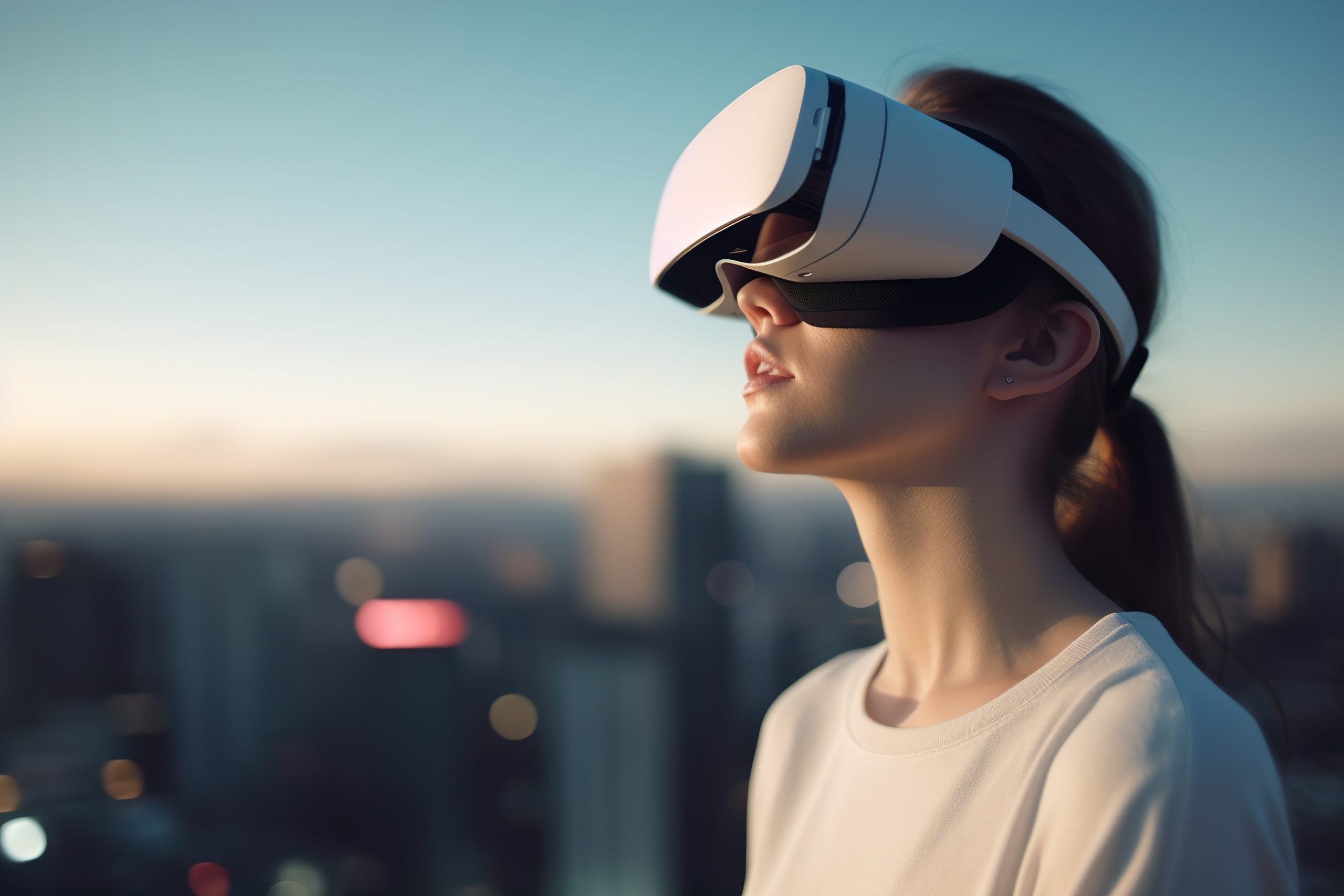
Another technology that seems to have trouble taking off successfully is virtual reality and augmented reality. Beyond the weight of the glasses or devices used as a screen is the fact that a few milliseconds more in latency makes the user dizzy. 5G, with a latency of around 10 milliseconds, has not been able to avoid this effect, but 6G (below 1 ms) will probably succeed.
6G technology should be considered as an enabling technology of possibilities, a supporting technology on which to build more complex ones. Just as 4G and 5G made IP voice calls, lag-free video calls and video conferencing possible, video viewing in the subway, container traceability, improved GPS, 6G will change the lives of citizens.