

AI-generated summary
Fusion energy has evolved from a purely scientific pursuit to a complex industrial challenge, requiring coordinated efforts beyond laboratory breakthroughs. Erik Fernández (INEUSTAR), David Zaragoza (IDOM), and Miguel Ángel Carrera (AVS) emphasize that realizing fusion as a viable clean energy source demands a comprehensive industrial strategy, integrating technological capabilities, specialized talent, stable financing, and robust public-private collaboration. They stress the urgency for Europe to develop a cohesive approach that aligns industry from the design phase through execution to avoid past mistakes of isolated scientific investments.
Fernández advocates for a unified European industrial policy that supports companies, especially SMEs, through dedicated programs and financing, to build a competitive fusion value chain capable of rivaling global powers like the US and China. Zaragoza highlights the importance of industrial integration early in the design process to ensure constructibility and scalability, promoting standardized components and methodologies. Carrera brings a business perspective, underscoring the need for geopolitical alliances, strategic planning, and trust between industry and customers to manage technological uncertainties. He also notes Spain’s potential to become a key player, as demonstrated by companies like AVS and projects like IFMIF-DONES in Granada.
Together, these experts argue that fusion energy presents a transformative industrial opportunity for Europe and Spain, requiring immediate investment, planning, and collaboration to build a resilient, exportable, and maintainable industrial ecosystem. This coordinated effort is essential for Europe to lead the energy revolution of the 21st century.
Industry experts analyse how to articulate a solid production strategy that accelerates the arrival of nuclear fusion on a commercial scale in Europe and Spain
Fusion energy has gone from being a scientific challenge to an industrial challenge. This is clearly stated by Erik Fernández, general director of INEUSTAR, the Association of the Scientific Industry of Spain, David Zaragoza, Partner and Business Director of fusion technologies at IDOM and Miguel Ángel Carrera, Founder and CEO of AVS, three key voices in the promotion of fusion from the Spanish productive fabric. In their speeches at the Future Trends Forum “Fusion Energy: An Energy Revolution in the Making“, the speakers shared a common vision: if we want fusion to become a viable source of clean energy, we need more than just breakthroughs in the lab. We need an ambitious and coordinated industrial strategy that will enable Europe to lead this new energy frontier.
The challenge is enormous. The transition from scientific research to the construction of fusion plants on a commercial scale will require technological capabilities, specialized talent, stable financing and, above all, public-private collaboration. The question is whether our industrial structures are prepared to take on their scale.
In this article we explore the main ideas put forward by these three experts, which offer a clear x-ray of where we are and what steps we must take to position the Spanish and European industrial ecosystem at the centre of this energy revolution.
If you want to see Erik Fernández’s presentation, you can do so in this video:
Erik Fernandez: “Fusion Supply Chain: Capabilities, Challenges and Opportunities” #FusionForward
If you want to see David Zaragoza’s presentation, you can do so in this video:
David Zaragoza: “From Plasma to Product: Preparing the Fusion Value Chain” #FusionForward
If you want to see Miguel Ángel Carrera’s presentation, you can do so in this video:
Miguel Angel Carrera: “From Plasma to Product: Preparing the Fusion Value Chain” #FusionForward
Erik Fernández: coordinating a European industrial policy from the scientific industry
Erik Fernández argues that Europe cannot repeat the mistakes of the past: it is not enough to invest in large scientific infrastructures, such as ITER or IFMIF-DONES, if it is not linked to industry from the beginning. His message is clear: the industry must be part of the process from the design, not just in the execution phase.
Fernández stresses that merger projects require an integrative approach that combines industrial capabilities, political will and public-private collaboration. “Science has its time, but the industry needs visibility, stability and strategy,” he says. In his speech, he calls for a coherent European industrial policy, with specific support programmes and financing mechanisms that allow companies – especially SMEs and specialised suppliers – to access these complex and long-term markets.
He also warns about the dispersion of efforts in Europe and advocates a joint strategy: “The fusion value chain has to be built in a coordinated way at the European level if we want to compete with powers such as the United States or China”.
David Zaragoza: designing with an industrial mindset to make fusion a reality
From an applied engineering perspective, David Zaragoza insists that one of the main bottlenecks of large fusion projects is the lack of integration between scientific design and industrial implementation.
Zaragoza explains that his experience in projects such as ITER and DEMO shows that “many times designs work on paper, but they are not constructible”. The solution lies in integrating industrial logic from the early stages of technological development. This involves co-designing with manufacturers, anticipating assembly, maintenance and operation processes, and prioritizing technically viable and sustainable solutions over time.
According to Zaragoza, one of the risks of the fusion ecosystem is relying too much on single, tailor-made solutions that cannot scale. It proposes moving towards the standardization of components and methodologies, something that will only be possible if companies in the industrial sector actively participate in technological development processes.
He also defends the role of companies such as IDOM as “bridges” between the scientific and industrial worlds, capable of translating physical requirements into achievable systems.
Miguel Ángel Carrera: building a robust value chain from business experience
Miguel Ángel Carrera offers an insider’s view of a company that has been participating in major international fusion projects and large scientific infrastructures for years. AVS designs and manufactures critical systems for extreme environments: cryogenics, high vacuum, magnetic fields, radiation. Their experience in projects such as ITER or IFMIF-DONES has forced them to adapt continuously, learning to operate in markets where there are no manuals.
Carrera stresses that “it is not enough to have technology: you need business vision and geopolitical alliances to survive in this type of project”. He explains that his company has developed an internationalization strategy with a presence in Spain, France, the United Kingdom and the USA, which has allowed them to enter complex tenders and anticipate strategic movements.
He also points out that the merger value chain cannot be improvised: it requires planning, investment and trust. “Each project we tackle has a very high level of technological uncertainty. The only way to close that gap between what is expected and what can be done is through trust between customer and industry,” he says.
Finally, Carrera highlights the role that Spain can play in this industrial transformation. AVS has shown that it is possible to compete in frontier technologies from here, if you combine technical expertise, global mindset and commitment to quality.
Conclusion: an opportunity for Europe… and for Spain
The interventions by Erik Fernández, David Zaragoza and Miguel Ángel Carrera converge on a key idea: fusion energy is an unprecedented industrial opportunity, but it requires a structured and long-term response. Europe not only needs to produce knowledge; you need to turn it into constructible, exportable and maintainable systems.
And to achieve this, it must build a robust, transversal and resilient industrial value chain, capable of operating in international markets and in complex technological environments. This chain cannot be improvised: it must be activated now, with investment, planning and collaboration between industry, science and institutions.
Spain has already taken important steps. The construction of IFMIF-DONES in Granada is much more than a scientific milestone: it is an opportunity to mobilise industrial capacities, attract investment and position our companies as global benchmarks. Companies such as IDOM or AVS are demonstrating this on the ground.
The time to build the fusion industry is now. If Europe wants to lead the energy of the 21st century, it must start by strengthening its production base. And Spain is well positioned to be a key player in that future.
This article is part of the analysis that we have carried out at the Bankinter Innovation Foundation. The full report, Fusion Energy: An Energy Revolution in the Making, brings together input from more than twenty international experts and defines the five critical axes for scaling fusion energy as a climate, economic and technological driver.
Download it here and find out in detail how we can build tomorrow’s energy system today.
And if you are interested in continuing to explore this transformation, don’t miss the next installments of the Fusion Forward series, where we continue to bring society closer – with rigour and vision – to the keys to the energy future that is already being designed.
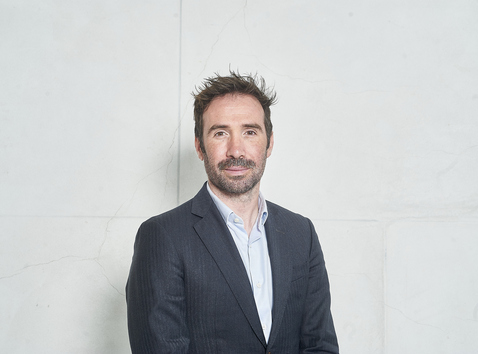
Director general de Ineustar