

AI-generated summary
Venture Capital (VC) funds are crucial drivers in the entrepreneurial ecosystem, providing capital to high-growth, high-risk startups in exchange for equity. According to the Bankinter Innovation Foundation’s Startup Observatory, VC investment in Spain saw a significant decline of 21.1% in 2020. However, this trend reversed sharply in early 2021, with investment volume surging by 154.8% from the previous quarter and over twelvefold compared to the same period in 2020. While the number of investment deals dropped 34% in Q1 2021 compared to Q4 2020, this reflects a normalization following a record activity period rather than a true decline.
The report highlights the distinction between investment volume and activity: a few large deals can inflate investment totals, but a broader spread of smaller investments may yield greater medium-term impact. The growth in VC funding is partly fueled by the closure of new funds in 2020, with startups in Spain showing increased maturity, especially in Series A and B rounds, which form the ecosystem’s foundation. Additionally, corporate venture capital (CVC) investments have grown by 70%, as corporations seek strategic collaborations with startups beyond purely financial returns. This trend mirrors a broader European pattern of increasing CVC involvement. While it’s too early to predict future VC trends, their robust activity remains vital for the health and growth of Spain’s startup landscape.
The significant increase in the volume of investment by this type of fund represents a change in trend compared to the last quarter of 2020.
Venture Capital funds are one of the key players in the entrepreneurial ecosystem and an important economic engine for its development. As defined by Jaime Novoa, Venture Capital can be translated as venture capital and is a type of financial operation in which capital is provided to startups and companies with high growth potential and high levels of risk in exchange for a percentage of the company.
One of the main conclusions reflected in the Investment Trends in Spain Q1 2021 report by our Startup Observatory has to do precisely with this type of fund and poses notable differences with respect to the data with which they closed 2020.
During 2020, VC funds experienced a drop in absolute investment volume that reached 21.1%. This trend has slowed down very significantly during the first quarter of 2021, with an increase in investment volume of 154.8% compared to the previous quarter and 1,265% compared to the same period in 2020.
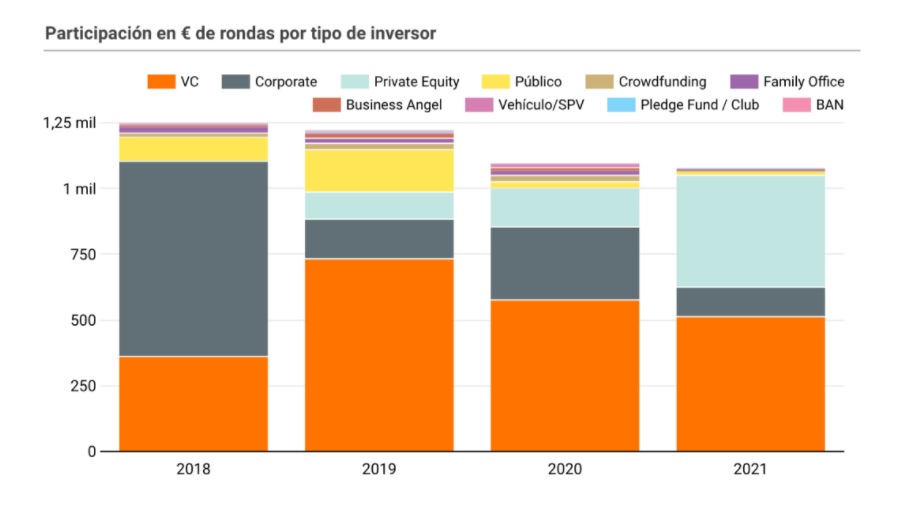
As far as activity is concerned, we also see a reversal in the trend. Throughout 2020, the number of investment operations grew by 39.2% compared to the previous year. In this first quarter of 2021, we have been able to see a
In this sense, we must take into account the differences between volume and activity and the implications of their variations. “A more active VC means that they make a lot of trades, but that doesn’t take into account their investment volume. In fact, we don’t know exactly how much each VC has put into a round,” explains Javier Megías, director of the Startups program at the Bankinter Innovation Foundation.
“The threshold of VC activity is an essential factor in this sector, since, even if a company raises 450 million euros, as Glovo recently achieved, the impact that this generates is limited. However, if 450 companies raised 1 million euros, it would have a greater impact in the medium term. We must differentiate between impact on volume and on activity,” he says.
Megías points out that the significant increase in the amount of VC investment is due to the fact that “during 2020, 1,200 million euros in new VC funds have been closed (or are about to be closed). In general, these funds usually have an investment strategy where typically between 30% and 50% of that capital must be invested during the first 3 or 5 years, with the rest being destined to continue accompanying the invested companies.” In this way, Megías explains, there is a “growing maturity of startups in Spain, with a growth of more than 30% in Series A and B operations, which are the basis of its ecosystem”.
Along with this increase in the investment volume of VC funds, the data from the Investment Trends in Spain Q1 2021 report on the origin of investments corroborate and also confirm a 70% growth in corporate funds.
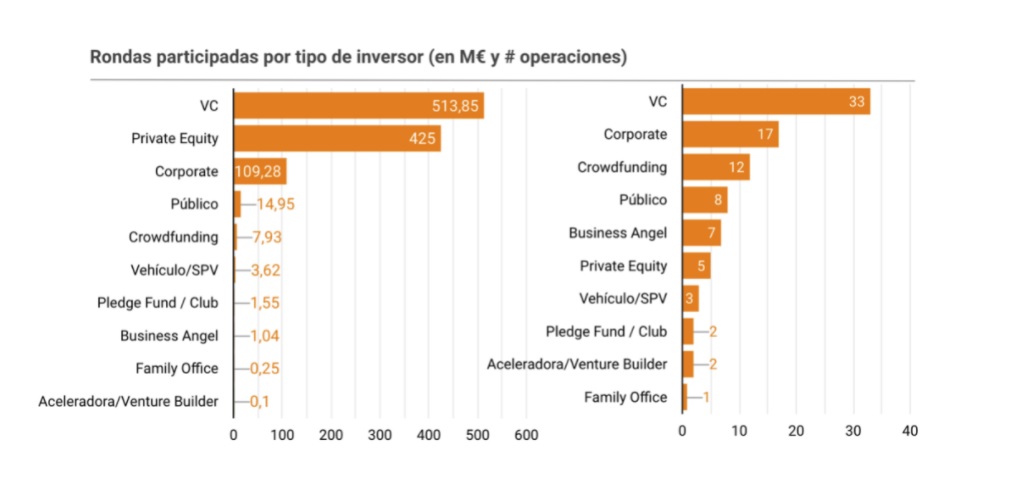
Within the transformation initiatives that a good number of corporations have underway, startups can play a decisive role. Hence, Megías points out, this type of investment is becoming a common movement for them.
For the director of the Startups program of the Bankinter Innovation Foundation, the value provided by corporate funds has certain differences with respect to traditional VC funds. “CVCs (Corporate Venture Capital) usually invest to connect with the business and usually develop joint projects, proofs of concept and even lines of business with startups. In other words, it is a different relationship from that generated by VC funds whose objective is financial, and sometimes they can end up acquiring startups.”
This trend is evident in the rest of Europe, explains Megías, where since 2013 we have seen a sustained increase in the investment of corporate funds in startups.
With much of 2021 still to unfold, it is still too early to predict whether the growth of VC funds will continue over time or we will see some other alteration in the coming quarters. What remains true is that its activity is essential for the Spanish startup ecosystem, as it focuses especially on the early phases such as series A and B. Investment in these stages is the basis of the sector and their good health can be considered as a positive indicator of the moment that these young companies are experiencing.