
AI-generated summary
Futuristic cities are emerging worldwide as smart urban environments that leverage technology and innovation to address the challenges of growing populations. Cities like Hong Kong and Singapore exemplify this trend by digitalizing infrastructure to enhance residents’ quality of life. Singapore, in particular, has transformed from a city with poor living conditions into a sustainable, high-development smart city. Yet, it faces critical issues such as water scarcity, worsened by climate change and industrial demand. To tackle this, Singapore employs advanced water management systems like NEWater, which recycles wastewater for industrial use and replenishes reservoirs, while also seeking energy-efficient desalination methods.
The reliance on traditional urban materials like concrete and asphalt exacerbates problems related to extreme weather events, such as droughts and floods, which are becoming more frequent due to climate change. Architect Kongjian Yu proposes an alternative model inspired by rural water management practices: the “sponge city.” This concept involves creating porous green spaces, natural ponds, and restoring river channels to absorb and regulate stormwater naturally. By integrating permeable surfaces, green roofs, and vertical gardens, sponge cities retain and filter water, reduce urban heat, and enhance ecological balance. Ultimately, futuristic cities that embrace such resilient, environmentally integrated designs offer promising solutions to the pressing challenges of climate change and urban sustainability.
A new approach seeks to give water time and space so that cities can coexist with it.
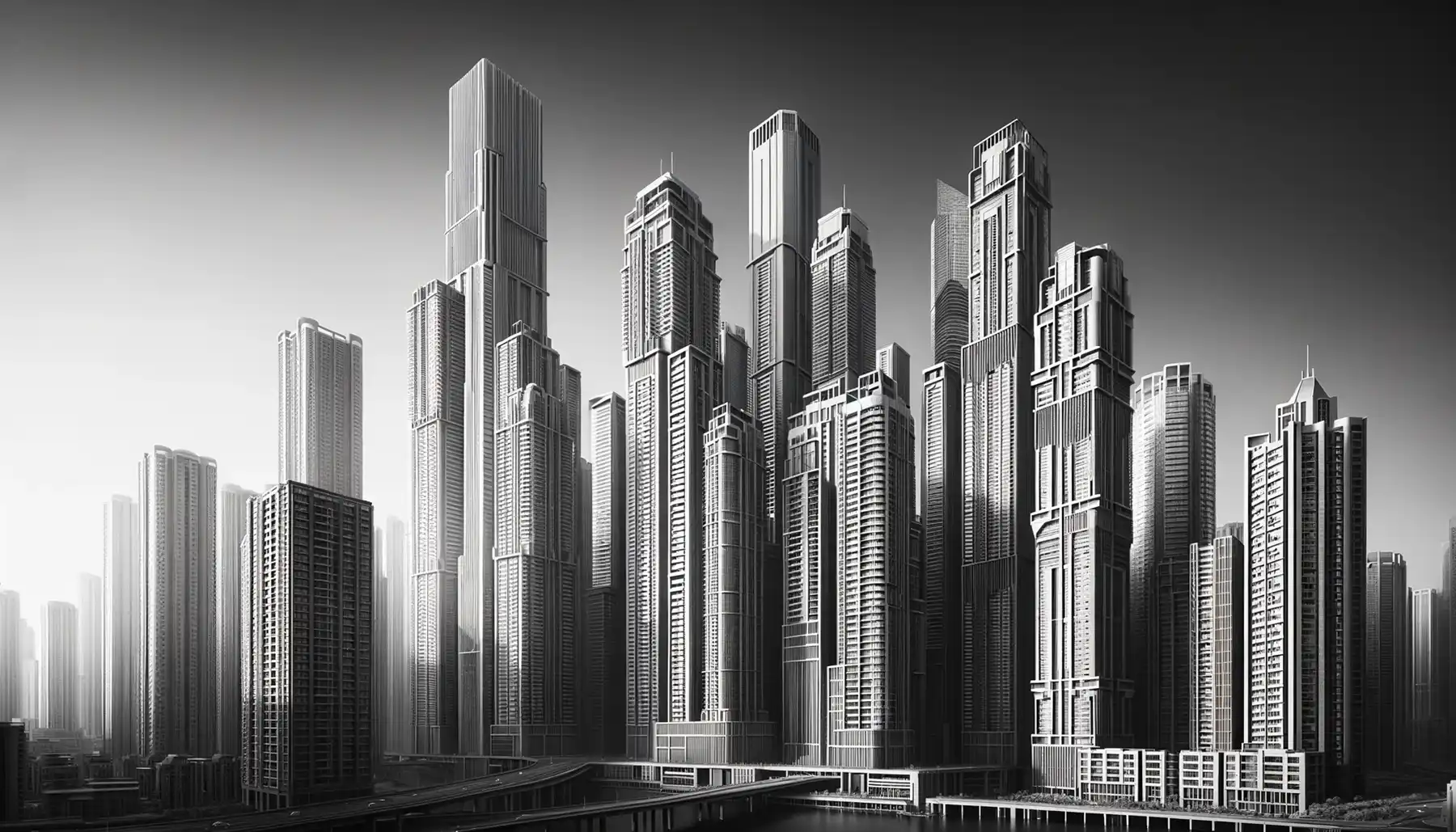
Futuristic cities are already among us. There are many examples in the world that anticipate what the cities we will inhabit in a few years could be like. These are smart cities, which merge innovation and technology to face the challenges posed by an urban population that does not stop growing.
Hong Kong and Singapore are two of the examples highlighted during the Future Trends Forum dedicated to disruptive cities and organised by the Bankinter Innovation Foundation. These two megacities have opted
Futuristic cities… No water
In a matter of a few decades, Singapore went from housing most of its inhabitants in slums and with poor sanitary conditions to being an example of sustainability and the development of smart infrastructure, as explained by the Future Trends Forum on disruptive cities.
Long-term planning and a dynamic urban governance approach were key in this leap from the third world to the first. Today, Singapore is home to more than five million people and has one of the highest human development indices in the world. It is a fixture in the smart city rankings. One of those futuristic cities that others aspire to imitate in many aspects.
However, Singapore has a problem with a supply as basic as water. Its scarcity is a constant challenge, accentuated by
To alleviate this problem, Singapore has opted for smart water management solutions. For example, it has implemented the NEWater system, which collects and treats used water from households to reuse it in high-tech industries or dump it back into reservoirs. The city is also looking for ways to reduce the amount of energy needed to desalinate seawater.
Concrete, asphalt and climate change
What is happening to Singapore is a latent challenge in many other urban environments on the planet. These car-centric models fail when phenomena such as drought or torrential rains appear, increasingly frequent and pronounced where they were not before.
The concrete and asphalt that have been used to build its infrastructures are materials that do not get along as well with water as they do in an environment of increasingly common extreme weather events. In many cases, they no longer allow enough to be preserved when it is not raining or to be channeled properly when it rains.
Faced with these models, the Chinese architect Kongjian Yu contrasts another approach, based on what he learned as a child in his village. He has already taken it to more than 70 cities in his home country and to many other projects abroad.
Sponge cities that embrace water
Kongjian Yu is the son of peasants and grew up in a rural environment where he constantly dealt with a monsoon-dominated climate, with constant floods and droughts. This relationship with water allowed rural people to develop their own strategies for centuries to accumulate it when there was surplus and have it available when needed.
Based on this ancient knowledge and modern environmental sciences, Kongjian Yu developed his own model, which is now used in numerous cities to solve the water problem. His concept of the sponge city proposes to embrace storms, instead of fighting them with impermeable infrastructure.
In essence, it is about reserving large green areas in cities to act as sponges. These are porous parks capable of absorbing water in a matter of hours when torrential rain appears. It also promotes natural ponds, ditches in ditches or recovers the natural channelling of rivers to control and slow down the natural course of water during large floods and floods.
Giving water time (and space)
The soil itself allows water to be retained and filtered. In addition to facilitating their management, all this translates into higher humidity, lower temperatures and more vegetation to promote ecological processes in cities. All this is helped by other initiatives, such as the use of permeable concrete or the installation of green roofs, vertical gardens and ponds in buildings.
In short, it is about giving time and space to water to drain where it falls, instead of trying to channel it at all costs with impermeable materials. The rules of the game have changed and the climate situation requires low-impact and high-resilience solutions.
Futuristic cities are, after all, those that help us face the great challenges that await us. Turning them into sponges is undoubtedly a promising approach in this regard.