
AI-generated summary
Nuclear fusion, the process of combining atomic nuclei to release vast energy, offers a promising path to clean, sustainable, and virtually limitless power, addressing critical issues like climate change and energy security. Unlike nuclear fission, fusion produces minimal radioactive waste and carries lower safety risks. Recent years have seen significant advances driven by international efforts such as the ITER project and private companies like Commonwealth Fusion Systems and TAE Technologies. Key fusion technologies include magnetic confinement devices—tokamaks, which use toroidal magnetic fields, and stellarators, with complex 3D magnetic coils—as well as inertial confinement fusion, which employs lasers to trigger fusion. ITER aims to demonstrate industrial-scale fusion with a tenfold energy gain, while private firms pursue innovative, compact designs to accelerate commercialization.
Despite progress, major scientific and technical challenges remain. These include maintaining stable plasma confinement at extremely high temperatures, achieving net energy gain, and developing materials that endure intense heat and radiation within reactors. Furthermore, socio-economic hurdles such as securing sustained investment, adapting energy infrastructures, and ensuring international cooperation are essential to bring fusion to market. If successfully integrated, fusion could revolutionize the global energy landscape by providing a zero-carbon, abundant fuel source from seawater and lithium, enhancing energy security, and driving technological innovation. While commercial viability may still be decades away, ongoing breakthroughs and collaborative efforts make nuclear fusion a compelling cornerstone for a sustainable energy future.
Unraveling the challenges and envisioning the future of nuclear fusion
Nuclear fusion, a process in which two atomic nuclei combine to form a heavier nucleus, releasing an extraordinary amount of energy, represents one of the most promising frontiers in the search for clean and sustainable energy sources. Unlike nuclear fission, which has been the basis of nuclear power until now and carries significant safety and radioactive waste risks, fusion offers a path to virtually inexhaustible energy with minimal radioactive waste. At a time when the world is facing unprecedented challenges related to climate change and energy security, nuclear fusion is emerging as a potential solution that could transform our energy system.
Research and development efforts in the field of nuclear fusion have experienced a significant boom in recent years, driven both by large-scale international projects, such as the International Thermonuclear Experimental Reactor (ITER), and by innovative private initiatives. These advances point toward a future in which nuclear fusion could meet the world’s growing energy demands efficiently and sustainably. We explore the current state of nuclear fusion technology, highlighting the latest advances, challenges, and opportunities this field offers for a brighter, cleaner energy future.
Main Nuclear Fusion Technologies and Methods
The main nuclear fusion technologies under investigation, as well as the most significant advances in this field, are:
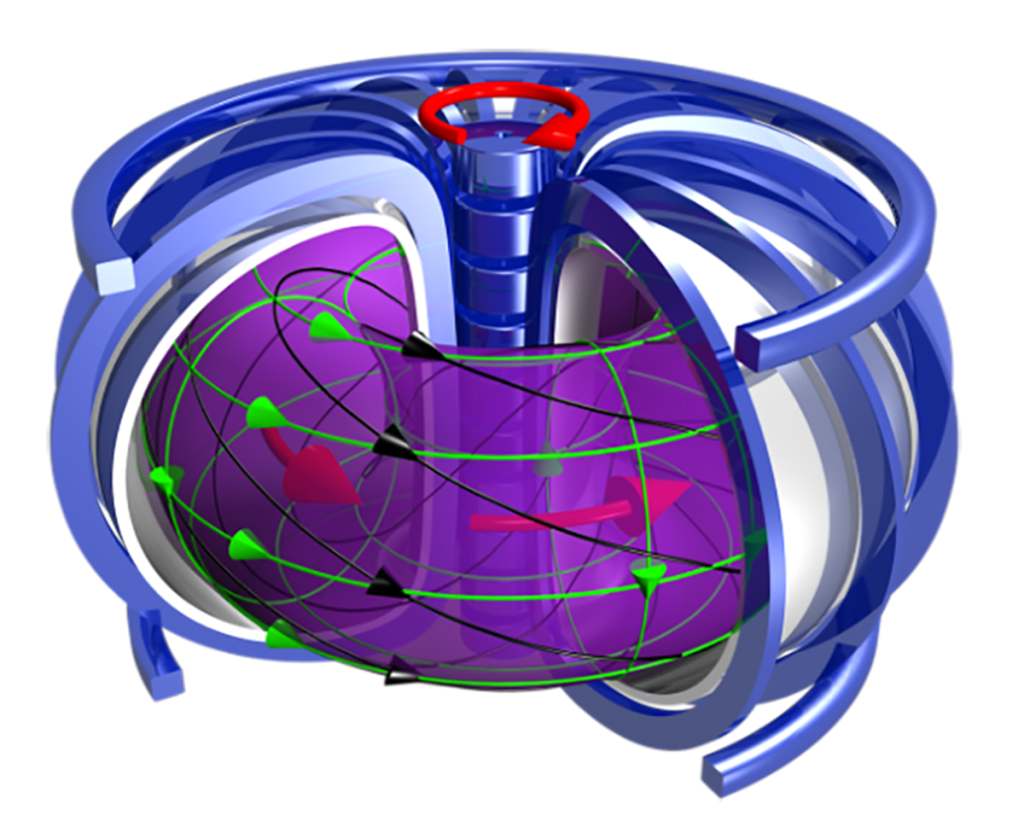
Tokamaks: are magnetic confinement devices designed to contain hot plasma at extreme temperatures, necessary for fusion reactions. They use a powerful toroidal magnetic field to keep the plasma in a donut shape, minimizing its contact with the container walls. This technology has been the most studied and developed, with the International Thermonuclear Experimental Reactor (ITER) being the most ambitious project to date. ITER is an international collaboration that seeks to demonstrate the viability of fusion as an energy source on an industrial scale, with the aim of producing ten times more energy than it consumes.
Source: International Atomic Energy Agency (IAEA)
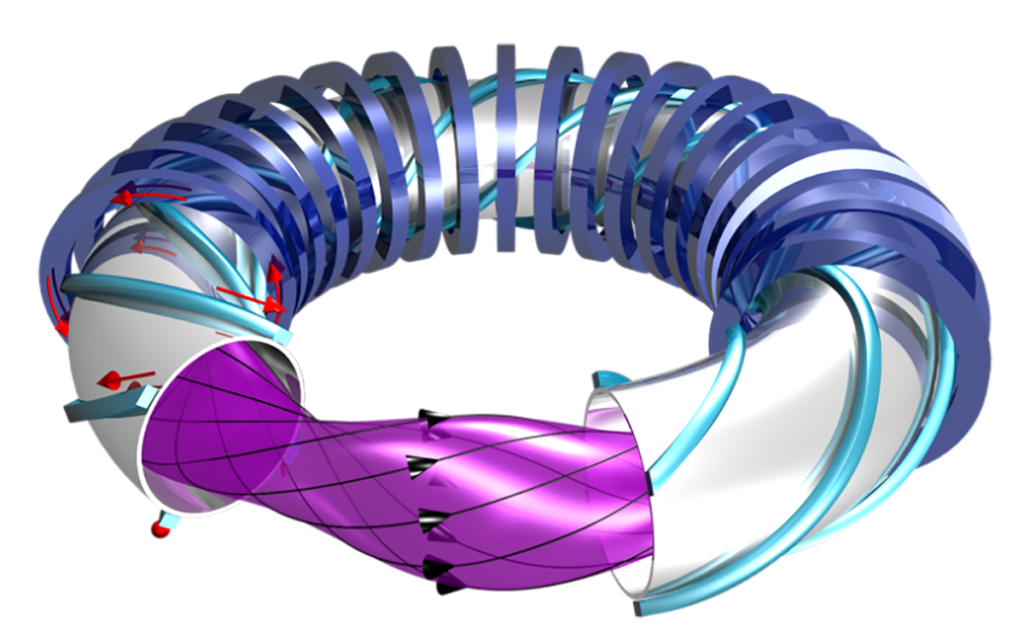
Stellarators: Similar to tokamaks in their goal of confining plasma to high temperatures, stellarators use a different approach to generate the necessary magnetic field. Its design is more complex, with coils arranged in a way that creates a three-dimensional magnetic field. This complexity allows for better control over the plasma, potentially making stellarators more stable and less prone to disruption than tokamaks. The Wendelstein 7-X in Germany is the largest and most advanced stellarator in the world, and it attempts to demonstrate the long-term viability of this approach.
Source: International Atomic Energy Agency (IAEA)
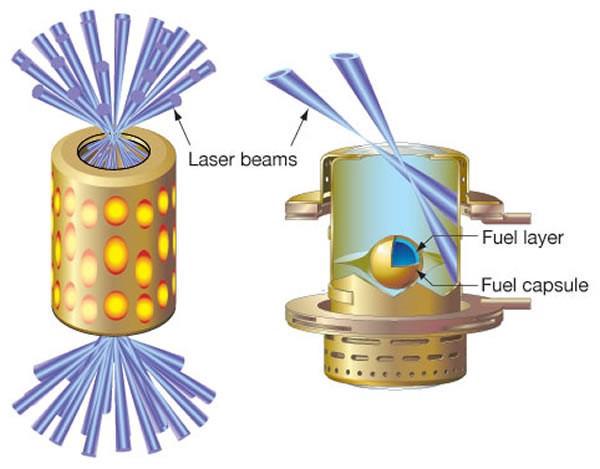
Inertial confinement fusion: This method uses lasers or particle beams to rapidly compress and heat small capsules of fusion fuel, inducing fusion. Unlike magnetic confinement, inertial confinement seeks to reach the conditions necessary for fusion in an instant, allowing the reaction to occur before the fuel can disperse. The National Ignition Facility (NIF) in the US has led this research, recently making significant advances towards ignition, where the energy released by fusion exceeds the energy of the lasers used.
Source: National Ignition Facility (NIF)
Recent advances in nuclear fusion
Both large-scale international projects and private initiatives continue to advance:
ITER: considered the most important project in nuclear fusion, ITER has made steady progress towards its construction and operation. Although its completion has been delayed, technical progress in the manufacture of key components and in systems integration suggests that ITER could reach its first plasma by the end of this decade, marking a historic milestone towards the demonstration of energy fusion.
Private Emerging Projects: Private sector interest in nuclear fusion has grown exponentially, with companies such as Commonwealth Fusion Systems (CFS) and TAE Technologies leading the way to innovative and potentially faster solutions to market. CFS, for example, is developing a compact tokamak powered by high-temperature superconductors, promising a faster and cheaper path to commercial fusion. TAE Technologies, on the other hand, explores a unique approach with its magnetic confinement setup, looking for an intermediate solution between tokamaks and stellarators.
These developments, both in large-scale international projects and in private initiatives, reflect a moment of dynamism and optimism in the field of nuclear fusion.
Technical and scientific challenges of nuclear fusion
Nuclear fusion, despite its promise as a clean and abundant energy source, faces significant technical and scientific challenges that must be overcome to make it viable on a commercial scale. These obstacles range from the effective confinement of plasma to the development of materials capable of withstanding the extreme conditions inside a fusion reactor:
Technical obstacles
Plasma confinement: One of the biggest challenges is keeping plasma, an ionized gas at temperatures above 100 million degrees Celsius, stably confined. In magnetic confinement devices, such as tokamaks and stellarators, the challenge lies in controlling turbulence and preventing the plasma from touching the walls of the reactor, which could cool it and stop the fusion reaction. Plasma inabilities can lead to loss of confinement and potentially harmful disruptions.
Energy efficiency: For nuclear fusion to be a viable energy source, the reactor must produce significantly more energy than it consumes. This involves, firstly, achieving ignition, where fusion reactions become self-sustaining, and secondly, optimising reactor design and processes to maximise energy extraction. Energy efficiency ranges from power generation to conversion into usable electricity, challenging engineers and scientists to constantly innovate.
Reactor materials and technology: Developing materials that can withstand the intense heat, radiation, and wear and tear inside a fusion reactor is crucial. These materials must maintain their structural integrity and functionality for long periods under extreme conditions, without degrading or being significantly radioactively activated. In addition, reactor technology must advance to enable the efficient construction and operation of large-scale fusion facilities.
Outstanding scientific issues
Achieving and maintaining conditions for sustained fusion: Although significant progress has been made, achieving the necessary conditions for sustained and purely energetic fusion remains a challenge. This includes reaching the extreme temperatures and pressures required for fusion and maintaining these conditions stably for long enough for the reaction to generate a significant amount of net energy.
Continued research in plasma physics, reactor engineering, and materials development is critical to overcoming these obstacles. As scientists and technicians deepen their understanding of fusion and improve related technologies, the path to commercially viable nuclear fusion becomes clearer. However, the complexity and scope of these challenges underscore that there is still a long way to go before nuclear fusion can become an integral part of our energy system.
Opportunities and potential impact
Nuclear fusion, as it approaches technical and economic feasibility, presents transformative opportunities for the world’s energy future. Its potential to deliver a clean, safe, and virtually inexhaustible source of energy could have profound impacts on climate change mitigation, energy security, and technological development.
Clean and inexhaustible energy
Nuclear fusion promises a zero-greenhouse gas energy source, directly addressing the critical challenge of climate change. Unlike fossil fuels, which release carbon dioxide and other pollutants, fusion only produces small amounts of short-lived radioactive waste, without the risk of large-scale accidents such as those associated with nuclear fission. In addition, fusion fuel, derived from seawater (deuterium) and lithium (to produce tritium), is abundant, offering a virtually inexhaustible source of energy.
Energy security
Global dependence on limited and geopolitically concentrated energy sources has created significant vulnerabilities in global energy security. Nuclear fusion, with its widely available fuel and ability to be deployed in diverse geographic settings, could diversify and stabilize the global energy supply. This would reduce price volatility and dependence on energy imports and, in addition, promote greater energy sovereignty for many countries.
Promotion of technological innovation
The development of nuclear fusion is driving advances in related scientific and technical fields. Research into advanced materials, such as high-temperature superconductors and radiation-resistant materials, has applications beyond fusion, including medicine, aerospace, and electronics. In addition, the techniques developed for plasma handling and control may have implications in manufacturing, material processing, and other areas of applied physics.
Energy transition and sustainable development
The integration of nuclear fusion into the global energy system would facilitate a faster transition to a low-carbon economy. By complementing renewable sources, such as solar and wind, fusion could provide consistent and reliable power generation, addressing the problem of intermittency and contributing to a more resilient and sustainable electricity grid. In addition, by offering a high-density energy source, nuclear fusion could play a crucial role in powering energy-intensive industrial processes and desalination of water, promoting sustainable development and access to clean water.
Socio-economic and energy policy challenges
The transition to nuclear fusion as a viable energy source involves, in addition to overcoming technical and scientific challenges, resolving socio-economic and energy policy obstacles. Investment in research and development (R+D), integration into the current energy system, and international collaboration are crucial aspects that require attention and innovative solutions.
Investment and financing of R+D
The development of nuclear fusion technology is enormously expensive and long-term, posing significant challenges for funding. Fusion projects require multimillion-dollar investments and decades of research before they can be commercialized. Although public investment has traditionally been the main source of financing, there is a growing need to attract private investment to accelerate development. This requires creating attractive incentives for investors and developing viable business models that can balance risks and rewards in the long run.
Integration into the current energy system and market
Integrating fusion into the existing energy system presents logistical and regulatory challenges. Today’s energy infrastructures are designed around conventional and renewable energy sources with very different operational and market characteristics from those of nuclear fusion. Adapting these infrastructures and regulating markets to accommodate a new source of high-density energy will require advance planning, investment in new transmission and distribution technologies, and flexible regulatory frameworks that can evolve with technology.
Need for international collaboration and supportive policies
The complex and expensive nature of nuclear fusion research makes international collaboration essential. Projects such as ITER demonstrate how global cooperation can share costs and knowledge, accelerating progress. In addition, the development of supportive international policies that encourage fusion research and innovation is crucial, from subsidies and venture financing to international standards and protocols that facilitate the exchange of information and technology.
Overcoming these socio-economic and energy policy challenges will require a collective commitment and long-term vision, both from governments and the private sector. Creating an enabling environment for the development of nuclear fusion will accelerate its arrival on the market and ensure that its integration into our energy system is carried out efficiently and sustainably.
Conclusions and a look to the future
Nuclear fusion is at an exciting inflection point, with significant advances bringing us closer than ever to unlocking its promise of a clean, safe, and virtually limitless source of energy. Through innovations in confinement technologies, achievements in energy efficiency, and the development of resilient materials, the scientific community has shown that nuclear fusion is becoming more feasible. However, technical, economic and regulatory challenges remain, requiring innovative solutions and sustained investments in research and development.
The importance of international collaboration and political support cannot be underestimated in this global effort. Nuclear fusion, with its potential to transform the global energy landscape, requires a long-term collective commitment that transcends borders and generations.
Looking ahead, although it is difficult to predict exactly when nuclear fusion will be commercially viable, steady progress suggests that it could be a practical reality in the coming decades. This encouraging prospect motivates the need to prepare our societies and energy systems to integrate this revolutionary energy source, leading the way to a more sustainable and energy-secure future.
If you want to delve into the challenges and opportunities of nuclear fusion, we invite you to listen to our podcast Innoverse with Pablo Rodríguez, researcher at the Plasma Science and Fusion Center at MIT.