

AI-generated summary
The text discusses emerging new forms of governance enabled by digital tools that empower citizens to participate more directly in decision-making processes. John Rossant, founder of The New Cities Foundation, highlights examples like Madrid, where residents have a say in allocating nearly 300 million euros of public investment, reflecting growing public demand for involvement. This participatory approach, sometimes called crowdcitizenship or crowdurbanism, represents a shift toward more inclusive urban governance.
Experts argue for a rebalancing of roles among public institutions, companies, and individuals in city management. The governance model is evolving from the traditional Triple Helix—comprising administrations, universities, and companies—to a Quadruple Helix that incorporates civil society through neighborhood associations. Moreover, a Quintuple Helix model is emerging, adding the natural environment as a key stakeholder, aligning with principles of sustainable development and social ecology. The Future Trends Forum emphasizes the necessity of long-term planning that transcends political cycles. Successful urban transformation depends on cooperation among all stakeholders, including residents, and a sustained vision that can adapt to future challenges.
Citizens' decisions will be key to the successful development of the cities of the future.
“We have reason to be able to talk about new forms of governance. First, because there are digital tools that are giving new possibilities to citizens,” explains John Rossant, founder and president of The New Cities Foundation.
“Crowdcitizenship, crowdurbanism… Formulas are emerging for citizens to decide in a participatory way how the budget is spent. In Madrid, for example, it is already being done: the neighbors have had a voice and vote on almost 300 million euros in investments. People are almost desperate to make themselves heard,” Rossant continues .
“We need a better balance between public institutions, companies and individuals in everything that has to do with cities,” agreed Evan Wolff, CEO of The Chertoff Group.
We can affirm that we are moving from the innovation model of Triple Hélice to the Quadruple Hélice, adding Civil Society, in the form of neighborhood representatives or neighborhood associations, to the already known participants: Administrations, Universities, and Companies. We would even dare to affirm that the model that will be imposed is that of Quintuple Helix, where the fifth is the Natural Environment, and that it can be interpreted as an approach in line with sustainable development and the so-called social ecology .
One of the conclusions of the experts of the Future Trends Forum is that long-term planning is needed that is respected by the changes of government.
Without the cooperation of all parties involved in the development of cities, including their inhabitants , and without a long-term vision, it seems difficult to successfully face the many transformations that cities will undergo.
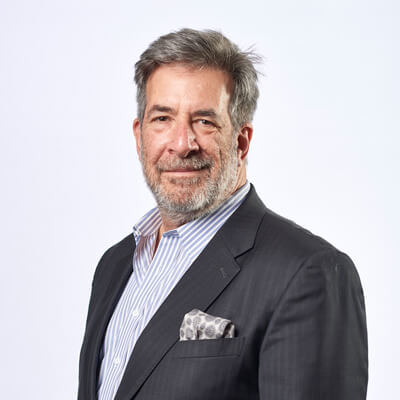
President of The New Cities Foundation