
AI-generated summary
In the past decade, artificial intelligence has evolved from operating solely in virtual spaces to actively engaging with the physical world through Embodied AI. This approach integrates sensory perception, cognitive reasoning, and real-time action, enabling machines to interact contextually and adaptively. Unlike traditional AI, which processes data digitally, physical AI uses advanced sensors to perceive and respond to real environments, revolutionizing fields such as healthcare, logistics, and autonomous mobility. Collaborative robots, or cobots, exemplify this shift by working safely alongside humans in diverse settings, learning via imitation and adapting to new tasks. This revolution also raises profound questions about human-machine relationships, including ethical integration, trust, and appropriate behavior.
A notable challenge is managing the “Uncanny Valley” effect, where robots that closely resemble humans—but not perfectly—can provoke discomfort. Designers often prefer non-human appearances that foster trust without confusion. Cognitive robotics further advances empathetic and meaningful interactions, particularly in care and education, highlighting the importance of artificial empathy and social bonds. For enterprises, physical AI offers efficiency and sustainability benefits, promoting digital transformation while demanding new business models and regulatory frameworks. Ensuring safety, transparency, and ethical guidelines in autonomous systems remains critical. Ultimately, the success of physical AI hinges not just on technology but on how society embraces and coexists with these increasingly human-like machines, prompting deeper reflections on empathy, intelligence, and our own humanity.
Physical AI and social robots: this is how our relationship with machines evolves
In the last decade, artificial intelligence has taken a decisive leap: it has gone from operating exclusively in virtual environments to inhabiting the physical world. We talk about the call Embodied AI, an approach that combines sensory perception, cognitive reasoning and the ability to act in real time. This change is not only technical: it affects our relationship with machines. What do we expect from them? How should they behave? To what extent can they resemble us without making us uncomfortable? And how can we ensure that their integration is ethical, useful and humane?
The Body Matters: The Physical AI Revolution
The big difference between traditional AI and physical AI is in the body. While the former processes information in a digital environment, the latter perceives, interprets and acts in the real world, thanks to state-of-the-art visual, acoustic and tactile sensors. This “embodiment” capability allows robots to not only execute tasks, but to do so in a contextual and adaptive way.
From industrial robotics to autonomous mobility, from health to finance, Smart sensors are redefining what a machine can do. In health, for example, the EllieQ assistive robot helps the elderly maintain routines and emotional well-being, while in logistics, collaborative robots speed up defect detection in real time.
In addition, the combination of physics, biology and deep learning enables molecular simulations to accelerate drug development, or even GPS-free navigation in extreme environments. But this revolution is not only technical. As neuroscientist Antonio Damasio warns, integrating emotions and perception into these systems can facilitate the social acceptance of AI and humanize its presence.
Robots that collaborate: frictionless productivity
One of the most visible applications of physical AI is collaborative robotics, which allows humans and machines to share space and tasks in factories, hospitals, or warehouses. Far from the rigid automatons of the past, today’s cobots learn by imitation, adapt to new tasks, and act safely alongside their human companions.
Francesco Ferro, CEO of PAL Robotics, sums it up like this: “The embodied AI combines artificial body and mind to generate a flexible and natural interaction.” His company has developed models such as TIAGo or Kangaroo, used in agriculture, healthcare and retail. In addition projects such as AGIMUS or Canopies show that it is possible to optimize production with open source solutions adaptable to the real needs of each sector.
The success of this robotics does not depend only on technology, but on factors such as co-design with users, data protection, supervised autonomy and a regulation that combines innovation and security. Europe, with initiatives such as ADRA or the European AI Office, aspires to lead this new stage.
The paradox of resemblance: how much human is too much?
One of the most curious dilemmas posed by physical robotics is the so-called Disturbing Valley. According to this theory, formulated by the Japanese Masahiro Mori in 1970, the more a robot resembles a human being, the more positive our reaction is… until the resemblance becomes almost exact but not perfect. At that point, rejection, discomfort, even fear appear.
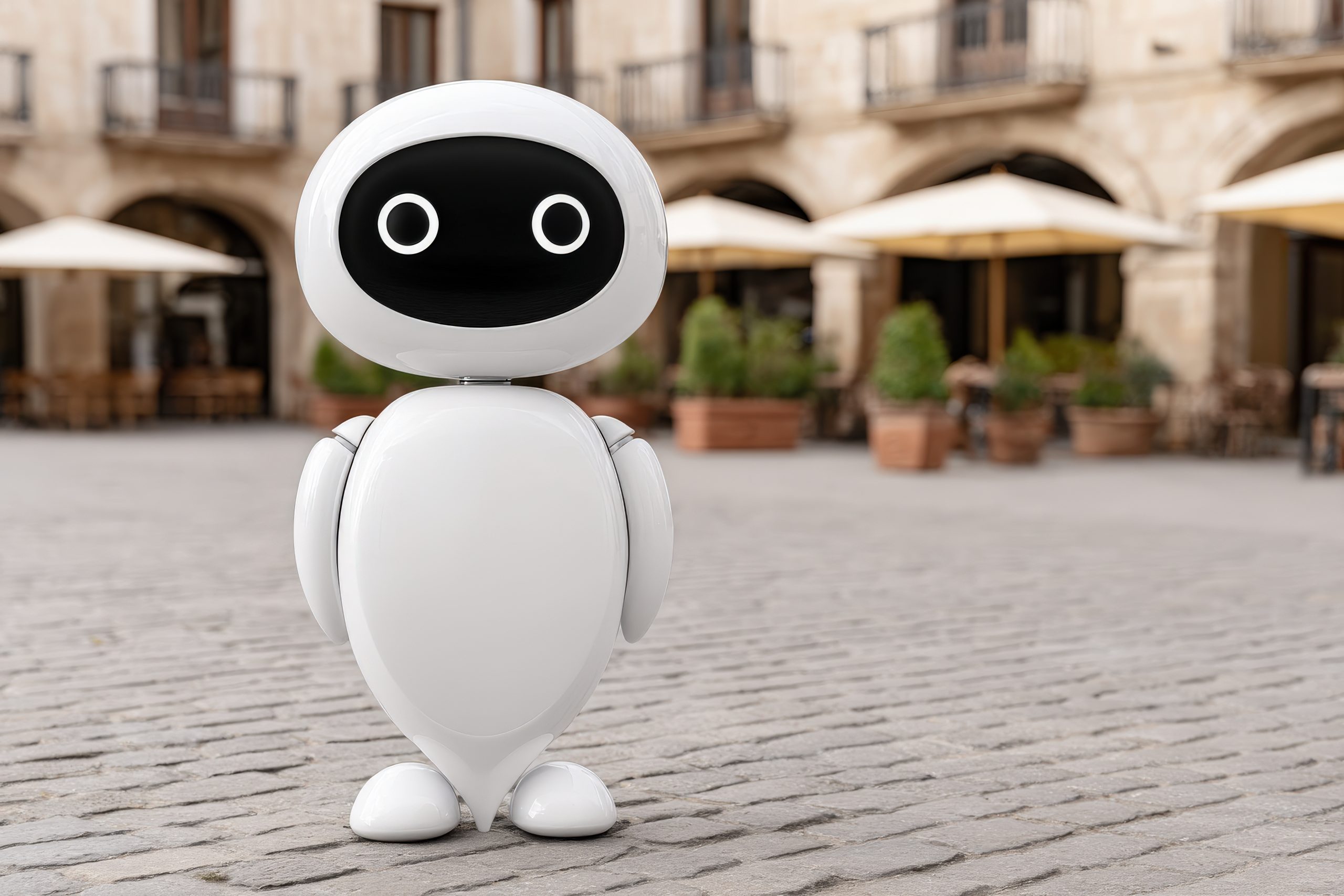
This phenomenon has been confirmed by neurological studies: overly realistic androids activate regions of the brain associated with cognitive dissonance. That’s why many designers opt for deliberately non-human looks, prioritizing functionality over imitation. This is the case of robotic prostheses or virtual assistants with a clear artificial voice, which generate greater trust than those that try to imitate (and fail) humans.
Avoiding falling into the Uncanny Valley isn’t just an aesthetic issue: it has ethical, psychological, and social implications. Designing machines that generate empathy without confusing us with their apparent humanity is one of the great challenges of the sector.
Social and cognitive robots: understanding to care
Beyond productivity, robots are learning to interact with us in empathetic, contextual, and meaningful ways. This is possible thanks to cognitive robotics, which endows machines with capabilities such as perception, reasoning and situational memory. The objective is not to replicate human beings, but to complement their work where it is most needed: in care, education or company.
Pioneering projects are being developed in Spain and Europe. The TIAGo robot participates in the SOCRATES program, which studies interaction with older people. PERRETE, a robotic dog designed for Alzheimer’s patients, has shown real emotional benefits. And the embodied approach applied to AI allows these robots to learn not only data, but contexts and relationships.
The impact is not only functional: it forces us to rethink what it means to “understand” the other, how artificial empathy is built and what kind of bonds we want with the machines that take care of us.
Physical AI in the Enterprise: Efficiency and Sustainability
For companies, physical AI represents an opportunity to improve processes, reduce costs and accelerate digital transformation. Learning robots, intelligent sensors and collaborative platforms make it possible to optimise production, energy consumption and decision-making.
According to the Future Trends Forum report, SMEs can also benefit from this revolution thanks to models such as Robots-as-a-Service (RaaS), which reduce barriers to entry. In addition, interoperability between manufacturers and continuous training of personnel are key factors in integrating this technology effectively.
It is not just about adopting new tools, but also about rethinking business models, incorporating ESG criteria and anticipating regulatory changes to compete in increasingly demanding global markets.
Ethics, regulation and trust: the great challenges
But every technological advance brings with it difficult questions. Who controls robots when they make autonomous decisions? How do we ensure that their actions are safe, explainable, and privacy-friendly? What rules should regulate systems that act in the real world?
The regulation of physical AI is one of the great challenges of today. Cases such as the self-replication of systems in China or the autonomy of driverless vehicles have put concepts such as human supervision, algorithmic transparency and ethical limits at the centre of the debate. Being inspired by the Three Laws of Robotics is no longer enough.
The European AI Act proposes to guarantee security and traceability, especially in sensitive sectors such as health or mobility. Collaboration between governments, companies and researchers will be essential to establish adaptive standards that protect without hindering innovation.
Towards a new human-machine coexistence
Physical AI is no longer a futuristic promise, but a reality that is taking shape in our factories, hospitals, homes, and cities. But beyond its technological power, its true impact will depend on how we decide to live with it.
Designing robots is not just a matter of efficiency: it is a profoundly human act that forces us to rethink empathy, autonomy, trust and the very limits of intelligence. Perhaps, by better understanding how machines relate to us, we will also learn something new about ourselves.