
AI-generated summary
The Future Trends Forum, organized by the Bankinter Innovation Foundation in Madrid under the theme “Smart Agriculture: the challenge of sustainable food,” convened leading experts to discuss food security, sustainability, and innovation in agriculture. Julia Espeso, Director of Ecosystems at Eatable Adventures, highlighted the transformative role of technology and collaboration in Foodtech and Agritech. She emphasized Spain’s rapid growth in these sectors, supported by startups driving innovation towards a more sustainable food system. Eatable Adventures fosters a global ecosystem of over 70 alliances, combining accelerators, research centers, and government programs, and has launched an investment fund to support early-stage startups, underscoring the importance of strategic collaboration and financial backing.
While Foodtech investment in Spain has surged, positioning the country as a European leader, Agritech faces challenges such as high capital requirements, regulatory hurdles, and an aging workforce. Innovations like precision agriculture, biomanufacturing, sustainable packaging, and smart supply chains are key focus areas. Startups like Ekonoke, Cocuus, Néboda, and Mmmico exemplify disruptive technologies ranging from soilless farming and 3D-printed food to vertical farming and sustainable fermentation. Espeso advocates for continued investment and collaboration to solidify Spain’s role as a global hub for sustainable food technology, addressing critical challenges and reshaping the future of agriculture.
Julia Espeso of Eatable Adventures explores how startups are changing the rules of the game in agriculture and food production, promoting sustainability and innovation
The think tank Future Trends Forum, under the slogan Smart Agriculture: the challenge of sustainable food, organised by the Bankinter Innovation Foundation in Madrid, has brought together leading experts and key figures in the field of agriculture and food. This event focused on examining current and future challenges related to food security, sustainability and innovation in the agricultural sector, underlining the critical role of emerging technologies and new methods to revolutionize these essential fields.
One of the participating experts was Julia Espeso, Director of Ecosystems at Eatable Adventures.
Julia Espeso’s presentation, entitled “Investing in FoodTech: A Tech-Forward Perspective“, offers a comprehensive look at how collaboration and advanced technology are shaping the future of the food sector. Espeso breaks down the investment strategies in Foodtech and Agritech, highlighting Spain’s significant growth in these fields and underlining the crucial role of startups in the transformation of agriculture and food production. Through concrete examples of innovations and collaborations, Espeso illustrates how Eatable Adventures is leading the way towards a more sustainable and technologically advanced food system.
If you want to see Julia Espeso’s presentation, you can do so in this video:
Julia Espeso: Investing in FoodTech: A Tech-Forward Perspective
Eatable Adventures: Creating the Future of the Food System
Eatable Adventures is positioned at the forefront in the field of food technology, both for its active participation in the global market, and for its commitment to innovation and collaboration. The organization has established an ecosystem where the mission goes beyond the mere pursuit of economic profit, focusing on building a sustainable and technologically advanced food system.
Eatable Adventures’ mission is clear: to build the food system of the future. This ambitious goal is underpinned by the belief that the complex challenges of today’s food system can only be effectively addressed through collaboration and the smart use of technology. Espeso stresses that every action within this system has systematic consequences and that collaboration is essential to make a positive and lasting impact.
Eatable Adventures has created a network of more than 70 global alliances that connects accelerators, research centers, universities, and other centers to amplify its message. These alliances function as strategic bridges that facilitate the exchange of knowledge and foster an environment of mutual cooperation that is vital to innovate and advance in the sector.
With ten accelerators and fifteen government programs, the organization has a global reach. This global expansion allows Eatable Adventures to access a diversity of markets and cultures, and strengthens its ability to influence change on a large scale, adapting and applying innovative solutions in diverse geographical and economic contexts.
Recognising the importance of financial support in the early stages of development, Eatable Adventures has launched its own investment fund. This fund is designed to support startups in the pre-seed to Series A stages, providing the necessary capital while offering guidance, resources, and a support network that is crucial to startup success.
Investment dynamics in Spain and Europe in Foodtech
The landscape of investment in Foodtech in Spain has undergone a remarkable transformation in recent years, reflecting accelerated growth and growing interest from both national and international investors. This shift aligns with a broader trend seen across Europe, where technology and innovation are starting to play central roles in transforming food systems.
Since the launch of Eatable Adventures’ startup program in Spain in 2019, the sector has seen a significant increase in investment, particularly after 2020. This increase has been characterized by a steady flow of capital into startups that promise to revolutionize the way we produce, distribute, and consume food. Although Spain ranks tenth in terms of total investment volume compared to other European nations, it stands out for its impressive compound annual growth rate from 2014 to 2022. This outstanding evolution in the sector is evident in investment, which almost doubles the rates of the countries that remain in second, third and fourth place.
At the European level, Spain is notably positioned in fifth place in terms of specific investments in Foodtech for 2022. This positioning is crucial and shows that Spain is poised to lead in terms of growth and adoption of new technologies in the food sector.
A critical point in the European comparison is the need to improve the visibility and promotion of the Spanish Foodtech sector. Despite the achievements and growth, there is a consensus that Spain could and should do more to promote its progress and better position the country as an innovative leader in this emerging space.
The accelerated growth in Foodtech investment and development in Spain suggests several implications and opportunities for the future. First, it indicates a healthy investment climate that could attract even more foreign investment, boosting economic and technological growth. Second, it highlights the opportunity to capitalize on new technologies to address persistent challenges in the food system, such as sustainability and efficiency.
In addition, the growing trend of investment in Foodtech points to the relevance of continuing to foster an ecosystem that supports continuous innovation and collaboration between startups, corporations, research centers, and the government. This approach will serve as a model for how technology can drive meaningful change in traditional sectors.
With continued support and investment, says Julia Espeso, Spain is well positioned to become a centre of excellence and an exporter of revolutionary technologies and business models on a global scale.
Investment profile in Agricultural Technology in Spain
The field of agricultural technology, or Agritech, although promising, has not yet reached the level of investment and development observed in the Foodtech sector in Spain. This difference in growth rate is attributed to several key factors influencing the nature of Agritech’s business model, as well as its investment structure.
In the context of technological investments, Agritech shows a different profile from Foodtech. While Foodtech has seen a sustained increase in investments, especially important since 2020, Agritech continues to struggle to capture the same level of attention and financial resources. This difference may be due in part to the perception of risk and the scale of implementation required in Agritech, which often involves significant changes in established agricultural infrastructures and practices, which may be seen as riskier or less attractive by traditional investors.
Agritech’s challenges include the need for high seed capitalization to develop technologies and adapt these in the field, and resistance to change within a historically conservative industry. In addition, Agritech faces regulatory barriers that can complicate the adoption of new technologies, such as the use of drones for crop monitoring or the implementation of advanced genetic techniques.
One of the most urgent problems facing Spanish agriculture is the ageing of its workforce. With an average age of 61.4 years, most agricultural workers are approaching retirement age, posing a significant risk to the continuity of the sector. This situation underscores the critical need for innovative solutions that attract young people to agriculture while also increasing efficiency and reducing reliance on labour-intensive labour.
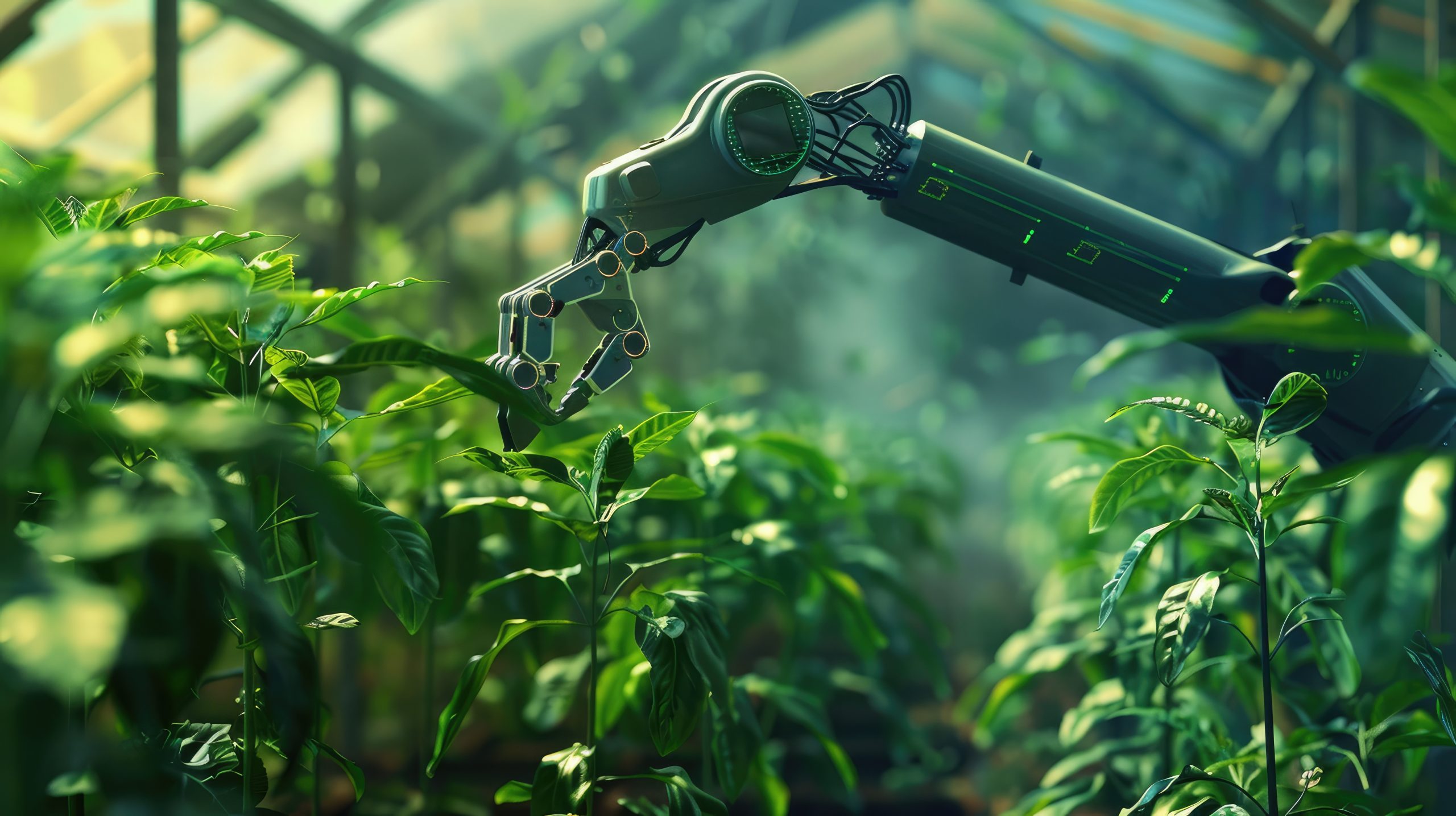
To address these challenges, innovation in Agritech can include the development of automation and robotics technologies that help compensate for the lack of labor. Also crucial is the promotion of precision agriculture techniques that optimize the use of resources and improve crop yields. Initiatives such as the integration of artificial intelligence and big data to monitor and manage crops more effectively are essential for the transformation of the sector.
The role of startups and collaboration
Startups have a vital role in introducing these disruptive innovations to the Agritech sector. Their agility and ability to innovate quickly can be instrumental in overcoming traditional challenges in agriculture. However, for startups to thrive, effective collaboration between governments, educational institutions, and the private sector is essential. This collaboration can facilitate the necessary investment, and the creation of a favorable regulatory and market environment for the adoption of Agritech.
Technology and startups at the heart of the Foodtech Ecosystem
Eatable Adventures believes in the transformative role of technology in the reconfiguration of global food systems and that it is startups who must lead that transformation. Julia Espeso tells us that they have identified key areas within Foodtech and Agritech technology where startups play a fundamental role in innovation and sustainable development:
Precision agriculture
Precision agriculture represents one of the pillars of Eatable Adventures’ technological vision. This technique uses advanced technologies such as IoT (Internet of Things), sensors, drones and artificial intelligence systems to optimize crop management and the use of resources such as water and fertilizers. By providing accurate, real-time data, farmers can make more informed decisions, improve efficiency, and increase yields while minimizing environmental impact.
Biomanufacturing and novel foods
Biomanufacturing is another area of interest, especially in the production of novel foods that can include everything from lab-grown meat to food ingredients produced using controlled biological processes. Startups in this field are exploring how to use cell cultures and bioreactors to create food products that are sustainable and scalable. For example, the production of alternative proteins through bioengineering microbes offers a promising route to meet global demand for protein without the extensive carbon footprints associated with traditional livestock farming.
Innovative packaging to reduce waste
Packaging plays a crucial role in reducing food waste, a significant problem worldwide. Eatable Adventures supports startups such as Bio2Coat, which is working on developing edible packaging that is biodegradable and extends the shelf life of perishable products such as fruits and vegetables. These innovative solutions offer environmental benefits by reducing waste and can change the way consumers interact with food.
Sustainable supply chain
Supply chain sustainability is another focus of Eatable Adventures. By integrating technology solutions that monitor and optimize the flow of resources, these companies can reduce carbon emissions, improve product traceability, and ensure that food is produced and distributed responsibly.
Innovative examples in the Eatable Adventures portfolio
In its effort to foster innovation in the food industry, Eatable Adventures has backed numerous startups that are making a difference with their disruptive technologies and novel approaches. Julia Espeso highlights four of these innovative companies during her presentation, each contributing in a unique way to the future of Foodtech:
Ekonoke It excels in the field of sustainable agriculture, using soilless farming techniques to optimize the use of space and natural resources. This startup focuses on the production of high-value crops with the least environmental impact, leveraging advanced technologies to improve water and nutrient efficiency, resulting in high-quality agricultural products with a reduced ecological footprint. Initially, it has specialized in sustainable and climate-resistant hops for brewing.
Cocuus it positions itself at the intersection of technology and gastronomy, using 3D printing to create food that is visually appealing and nutritious. This technology makes it possible to personalize food in terms of shape, texture, and nutritional composition, opening up new possibilities for the food industry, from fine dining restaurants to personalized health applications.
Néboda It is innovating in the field of vertical and urban farming with its focus on growing vegetables in controlled environments. Initially specialising in the production of basil, an herb that Spain imports in large quantities, Néboda seeks to reduce dependence on imports and the associated implications for sustainability. They use advanced automation techniques and collaborate closely with leading universities to optimize all aspects of their production, promoting a scalable and sustainable urban agriculture model.
Mmmico is a platform that revolutionizes the production of natural ingredients through the innovative convergence of fermentation, artificial intelligence, and our “directed evolution” of microorganisms. This startup is focused on developing accelerated fermentation to obtain proteins and other critical ingredients more sustainably. By selecting strains of microorganisms that can produce ingredients efficiently and with less environmental impact, Mmmico is helping to transform the food ingredients industry, offering more natural and sustainable alternatives to traditional synthetic production methods.
Have you been interested in what you have read? You can see the presentation here:
Julia Espeso: Investing in FoodTech: A Tech-Forward Perspective
If you want to delve deeper into the opportunities and challenges of agriculture and food, don’t miss the report Smart Agriculture: The Sustainable Food Challenge.
You can also read articles about other presentations by experts participating in this Future Trends Forum:
- Economic paradoxes in food security and long-term climate adaptation, with Gonzalo Delacámara.
- Deciphering soil DNA: the importance of the microbiome in sustainable agriculture, with Adrián Ferrero.
- The future of agriculture through water, with Miguel Calatayud.
- Big bets for the future of Agriculture: the vision of Rajiv Shah.
- A look at the future of food technology -Foodtech-, with Alessio D’Antino.