AI-generated summary
The concept of robots that truly “understand” humans often conjures images of conscious androids from science fiction. However, in reality, this understanding emerges through cognitive robotics and embodied artificial intelligence (AI), where the robot’s body, environment, and artificial mind interact dynamically. Unlike traditional rigid robots, modern cognitive robots perceive, interpret, learn from their surroundings, and adapt their actions accordingly. Central to this progress is intentionality—the capacity not just to perform tasks but to understand, anticipate, and adapt in changing contexts, reflecting deeply human traits.
Agentic AI exemplifies this shift by enabling machines to autonomously set goals, strategize, and make decisions, with applications ranging from advanced driver assistance systems to collaborative robots in factories and healthcare. European projects like SOCRATES and the Perrete robotic dog illustrate social robots’ potential to support elderly and Alzheimer’s patients empathetically, enhancing well-being through adaptive, context-aware interaction. Meanwhile, initiatives such as DVPS explore embodied AI that learns from physical environments, promising advances in medicine, social care, and beyond.
As cognitive robots increasingly assist rather than replace humans—addressing labor shortages and augmenting complex tasks—they prompt vital ethical and regulatory considerations, exemplified by the European AI Act. Ultimately, this technology challenges us to reflect on human nature itself, fostering a collaborative future where robots act as empathetic allies, complementing human abilities and deepening our understanding of ourselves.
We discover the evolution of language models and physical AI applied to cognitive robotics and their economic and social implications
When we talk about Robots that “get us”, the imagination is fired towards androids with consciousness, as in the movies. But beyond fiction, what does it really mean for a machine to understand a human being? How does a fluid, adaptive, and trustworthy relationship between people and robots develop? The answer takes us to one of the most fascinating fields of current technology: cognitive robotics and “embodied” artificial intelligence (embodied AI) –see FTF report dedicated to elIo-, where the body, the environment and the artificial mind are intertwined.
For decades, robots were highly precise but rigid mechanical arms, unable to adapt to changing environments or human interactions. Today, however, we are facing a new paradigm: robots capable of perceiving their environment, interpreting it, learning from it and acting accordingly. This is what the Cognitive robotics: Endowing machines with human-like capabilities to perceive, reason, and decide. And, at least in theory, to simplify our lives.
Of course, intelligence, both natural and artificial, is forged through the body. Hence the importance of the embodied approach: an AI “incarnated” in a physical system that acts in the real world, as is the case with humans and animals. Now, what differentiates an “intelligent” robot from a merely functional one? According to many experts, the key is intentionality. A robot can grab an object because it has been programmed to do so, but that does not mean that it “knows” why it does it, nor that it can decide to do it differently if conditions change. Understanding the other, anticipating, remembering, adapting, are profoundly human capacities, and still very difficult to replicate.
This is where the so-called Agentic AI, or agent artificial intelligence, comes into play. These systems don’t just process information: they set goals, perceive their environment, strategize, and make autonomous decisions. We see it in systems such as the ADAS in cars, but also in robots capable of collaborating in factories or assisting people in hospitals. The qualitative leap is evident: we went from executing machines to agents with autonomous, yet supervised, behavior.
Social robots, from Spain and Europe
One of the most significant projects in cognitive robotics applied to the social environment is SOCRATES, a European initiative with Spanish participation that studies how robots can interact with older people in an empathetic and adaptive way. It uses the TIAGo robot, developed by the company PAL Robotics (Barcelona), equipped with mobility, visual sensors and language capacity. Its objective is not to replace caregivers, but to complement their work by helping with routine tasks or cognitively stimulating users. The key is in their ability to learn from social interaction and respond in a contextual way.
Another innovative case is the robot PERRETE, a robotic dog designed in Spain to accompany Alzheimer’s patients. Equipped with sensors and realistic behaviors, the machine interacts with users generating positive sensory and emotional stimuli. Its success in residential settings has not only improved patients’ well-being, but demonstrates how embodied and affective design can strengthen the human-robot relationship.
Finally, the European project stands out DVPS (Diversibus Viis Plurima Solvo), which explores new forms of artificial intelligence capable of learning directly from the physical environment by combining vision, language and sensory perception. This type of embodied AI represents an alternative to purely statistical models: here it is not only about processing data, but about generating situated, contextual and adaptable knowledge. An approach with promising applications in medicine, social robotics, environment and translation.
Coexistence, trust and collaboration
If in contexts such as care for the elderly or education, positive effects have already been observed on the quality of service and on the emotional load of human personnel, in the industrial field, cognitive robots help to automate complex tasks without necessarily displacing the worker, but freeing them up for functions with greater added value. The fact is that, according to McKinsey, 60% of tasks could be automated.
In addition, the increasing use of robotic solutions also responds to the need to alleviate labour shortages, a problem that affects many countries around the world. In the European Union, it has gone from 269 million in 2012 to 264 million in 2021. The following year, the number of employed people aged 20-64 stood at 193.5 million, and the working-age population in the EU is expected to decline further, with a further loss of 35 million people by 2050.
But this integration also requires a redesign of the regulatory and cultural framework. The new European AI Act establishes criteria of security, transparency and human control to prevent misuse of artificial intelligence. Regulation must accompany innovation, especially when we are talking about agents that interact with vulnerable people. Cognitive robotics, well applied, can be a strategic ally. But it’s not just about efficiency or automation: what’s most interesting about this revolution is that it forces us to ask ourselves what really makes us human.
Designing a robot capable of recognizing emotions, remembering a conversation or choosing the right way to deliver medicine forces us to better understand how our mind works, how the sense of self is born, how we learn and relate to each other. It is in this shared process of research—between engineers, neuroscientists, designers, and philosophers—that the true value of this technology lies.
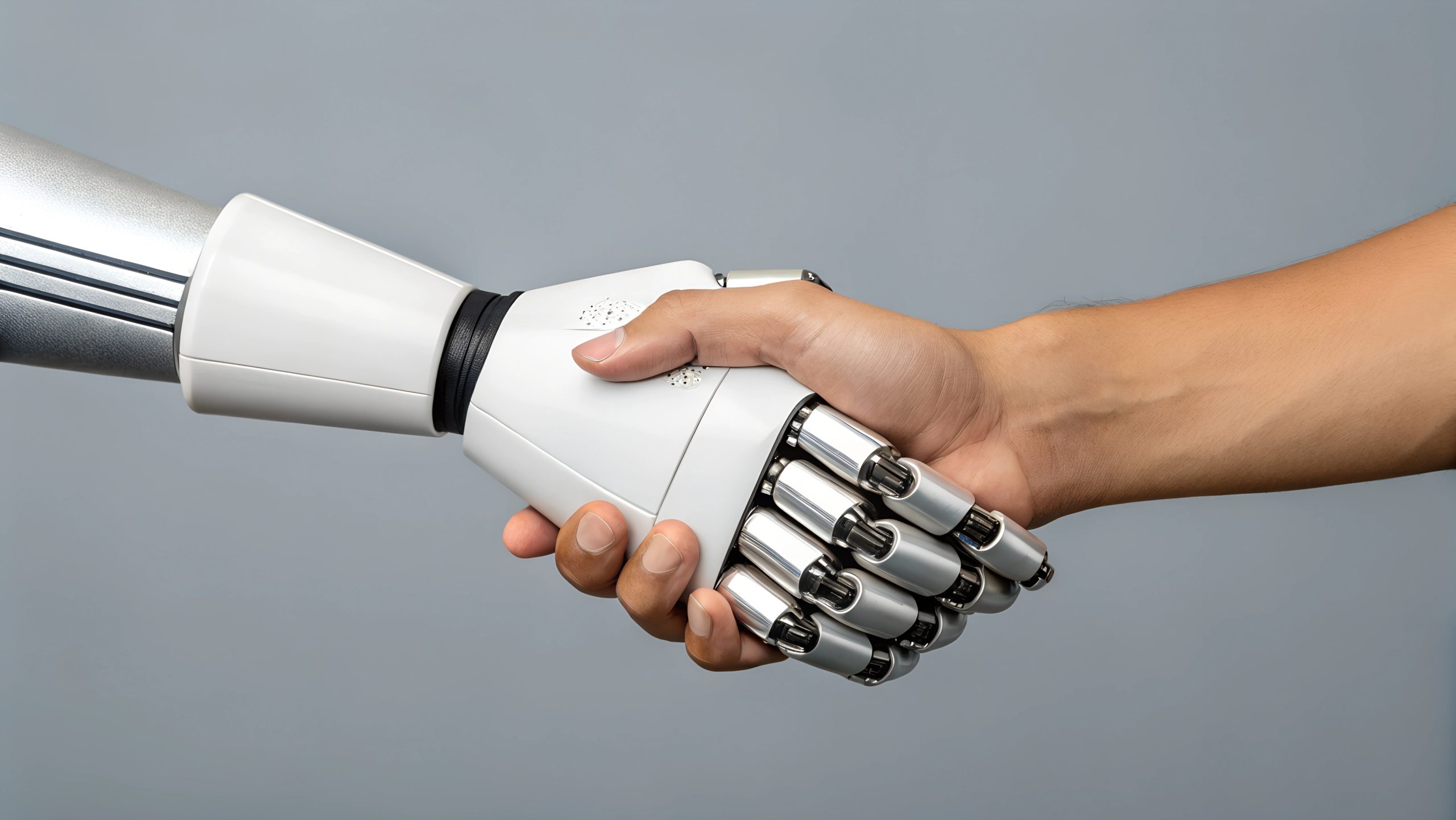
Cognitive robotics and embodied AI are not intended to supplant humans, but to complement their capabilities. It is not about to build our own replicas, but to create technological allies that act in our world with empathy, autonomy and responsibility. As with social robots such as TIAGo or Perrete, the objective is not to dehumanize, but to return the focus to people.
In the face of fears—of unemployment, of loss of control, of depersonalization—there is room for a more nuanced view: the one that sees in these developments an opportunity to redefine our relationship with technology. And perhaps, in doing so, also our relationship with ourselves.