
AI-generated summary
The space industry is rapidly evolving with ten key application areas shaping its future. Manufacturing in space leverages unique conditions like microgravity and vacuum to create superior materials and components, exemplified by companies like Made in Space developing 3D printers and robotic assembly modules on the International Space Station. Although currently costly due to launch expenses, advancements in launch affordability and asteroid mining could make in-orbit manufacturing more viable. Research continues to be a cornerstone, driven largely by government investment, but the rise of affordable CubeSats and launch services is enabling private companies to conduct space-based experiments, expanding opportunities for scientific discovery.
Earth observation and communication represent thriving commercial sectors. Satellites monitor environmental parameters, support disaster management, and provide valuable data services to agriculture, urban planning, and navigation markets. Private firms like Planet Labs are increasing data availability, fueling an $22 billion market growing at 18% annually. Communication satellites play a critical role in connecting remote areas and supporting emerging technologies like IoT and autonomous vehicles, with new constellations aiming to expand internet access globally. Defense applications remain significant, with governments investing billions in secure communications, reconnaissance, and space traffic management, often utilizing commercial satellite infrastructure.
Other emerging areas include space mining, which faces technical and economic challenges; space exploration, mainly government-funded missions to study the solar system; pharmaceutical manufacturing exploiting microgravity to develop novel compounds; and nascent space tourism, which may grow with upcoming suborbital flights yet remains limited by high costs. Lastly, launch services are undergoing disruption through reusable rockets by companies like SpaceX and Rocket Lab, dramatically reducing costs and increasing launch frequency. This segment, valued at around €10 billion, is expected to expand substantially as more customers access affordable space transport. Together, these applications illustrate a dynamic and expanding space economy with profound implications for science, industry, and society.
Presentation of the top 10 applications of the space industry: manufacturing, research, observation, communication, defense, mining, exploration, pharmaceuticals, tourism, and shuttles.
Below we detail the 10 main applications that are being developed in the space industry:
1.- Manufacturing in Space
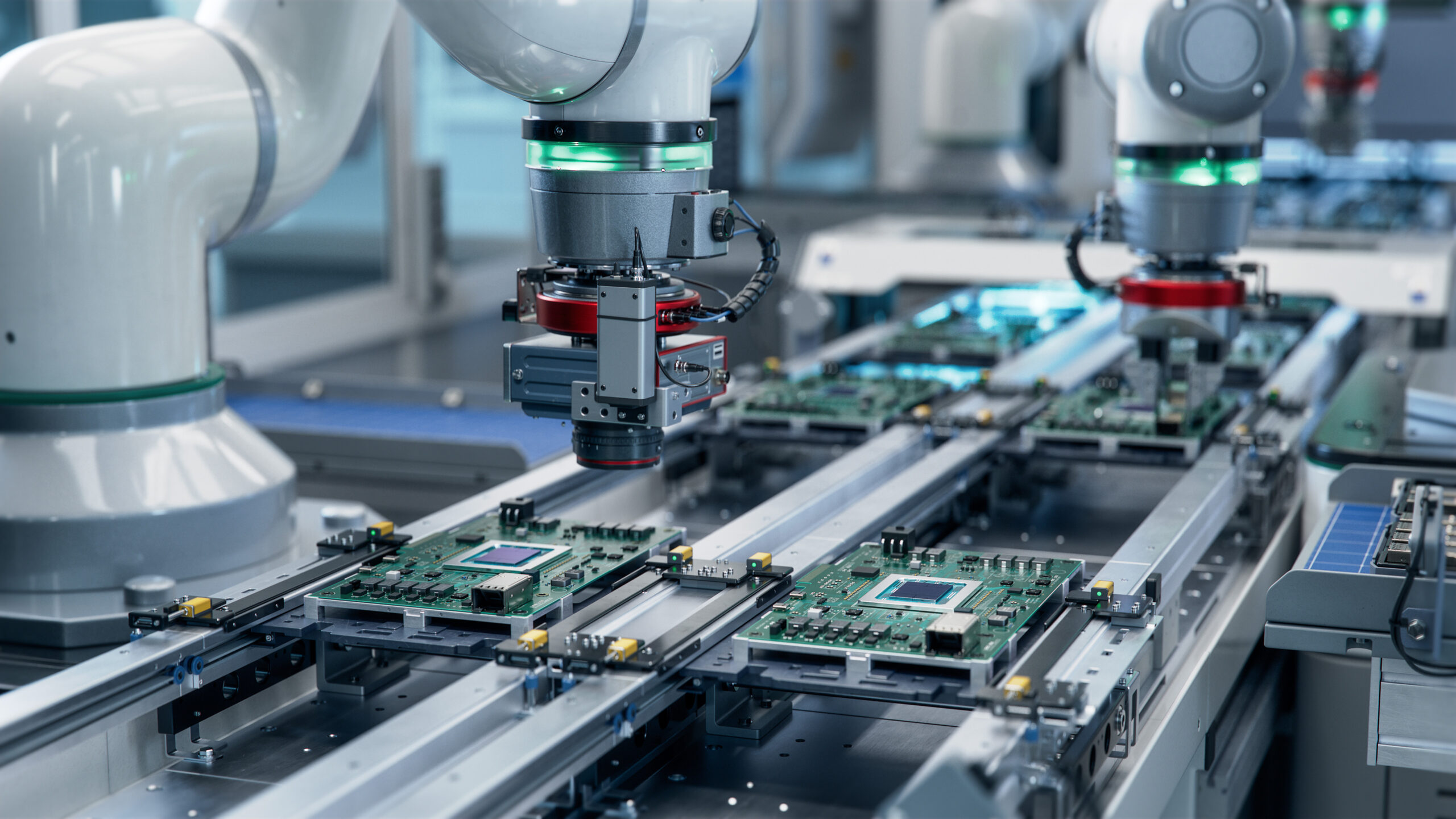
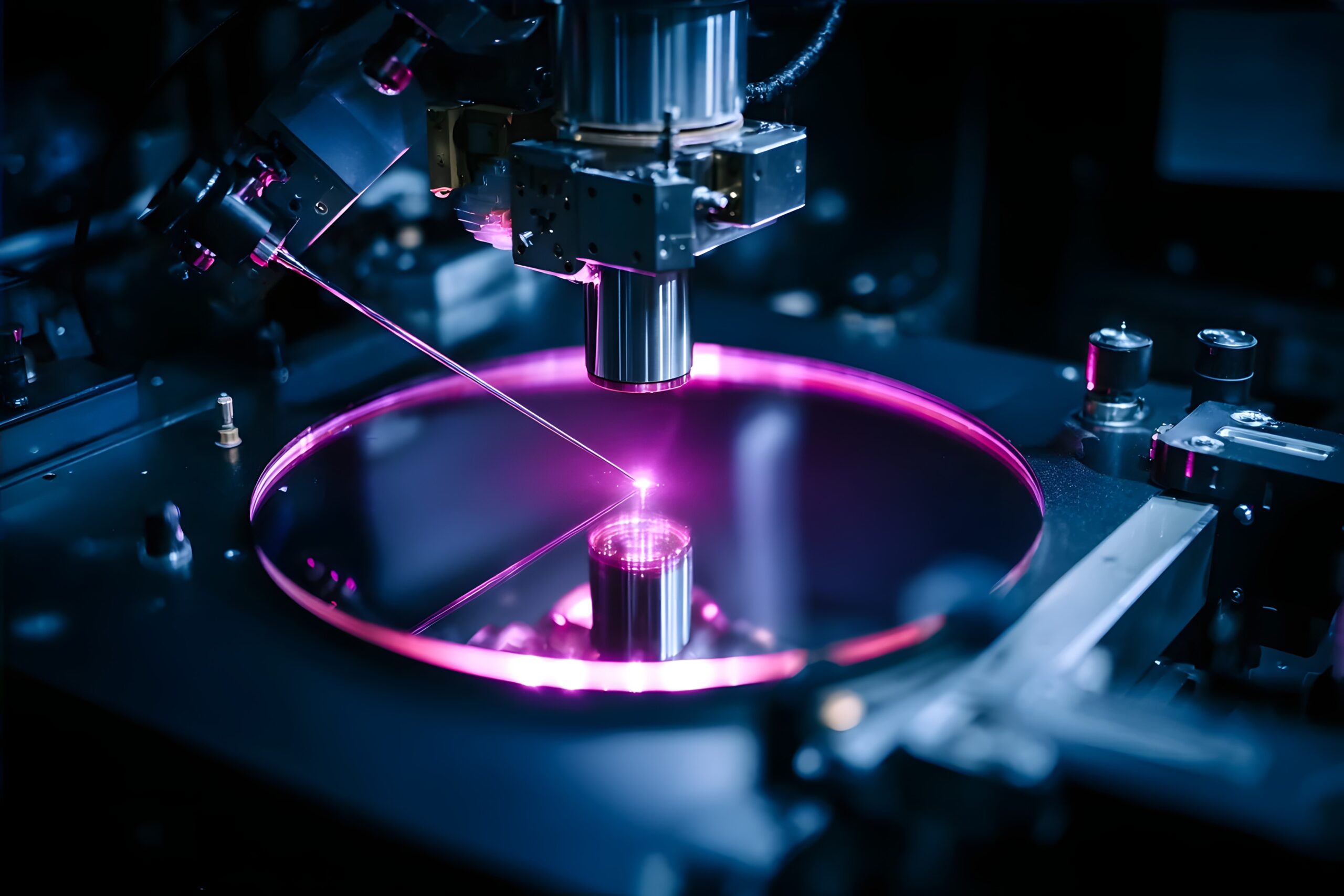
In space there are several conditions that are impossible on Earth, especially microgravity, which allows things like manufacturing products without needing the supports that would be necessary on Earth, which allows their shape to be optimized, and even give them impossible shapes under Earth’s gravity. Microgravity also allows materials to mix more evenly, reducing their impurities, which are further reduced if manufacturing is done in a vacuum. Thus, samples of fiber optics, protein crystals, or even metal alloys have been manufactured in a small electric furnace on board the International Space Station, to name a few examples.
The most practical example so far is perhaps that of Made in Space, the American company that has manufactured the Additive Manufacturing Facility, which to put it bluntly is a 3D printer installed on the International Space Station that allows both manufacturing parts and testing new ideas and concepts in terms of manufacturing in microgravity. But his plans are much more ambitious, and he is working together with Northrop Grumman and Oceaneering Space Systems on the development of Archinaut, a module that would be mounted outside the ISS capable of manufacturing, assembling and repairing structures and machines, since in addition to printing in 3D it will be equipped with three robot arms capable of manipulating the parts it manufactures.
The main problem is that it is still expensive to put raw materials into orbit, so for now it is difficult to justify these processes. Although in the future, with the cheapening of space launches and – even more in the long term – with the exploitation of materials that can be extracted from asteroids, things could change.
According to the IDA in its study on the market for a commercial space station, manufacturing in space could reach about €320 million a year, although it is very tentative because in reality very little has been done yet. In fact, this figure corresponds to the hypothesis of the launch into orbit of a possible private space station that could be operational in the mid-2020s and beyond.
How can the space industry solve tomorrow’s problems?
Lecture by Jason Dunn, Co-founder and Director of Made in Space, at the XXXI meeting of the Future Trends Forum on the Commercialization of Space.
Jason Dunn reflects on how technology and the pace of growth have changed and wonders how the space industry can solve tomorrow’s problems and not just today’s or yesterday’s.
2.-Research
Since day one of the space age we have been researching things about space and in space. Sputnik 1 made it possible to study the density of the highest parts of the atmosphere due to the effects that friction with it had on the satellite’s orbit; The propagation of the radio signals it emitted also served to study the ionosphere. So this is probably one of the most common applications of the space industry when it comes to manufacturing satellites, space probes and the instruments and systems that go on board them.
Until now, the clients have been mainly government agencies – including space agencies – and institutions such as universities and large laboratories that research in practically all fields such as astronomy, materials science, biology, etc.
But thanks to the popularization of CubeSat, microsatellites that are manufactured with standard components, which gives them a very affordable price for satellites, and the cheapening of launches, there are more and more companies that are being encouraged to launch their own experiments into space either to develop new technologies to sell to other companies or to do their own research. Companies such as NanoRacks, which help institutions and other companies in the process of designing their own experiments and satellites and putting them into orbit are opening up this market segment even more.
In any case, the most foreseeable thing is that in the future, and especially if we talk about basic research, it will continue to be dominated by investments made by governments, which are currently close to 73,000 million Euros per year and that by 2040 are estimated at about 160,000 million Euros, although it must be taken into account that this money is also what finances space exploration.
The benefits of space for scientific research
Interview with Álvaro Giménez, Director of the CSIC Foundation, at the XXXI meeting of the Future Trends Forum on the Commercialisation of Space
Álvaro highlights the ability of Spanish companies to find new opportunities in the space. In Álvaro’s opinion, the commercialization of the space will allow more science to be done with the same investment.
3.- Observation
It is another field in which the different space agencies have been active almost since the beginning of the space age. In fact, the first meteorological satellite was NASA’s TIROS-1 , launched in 1960. It was followed by more satellites of this type and others dedicated to orobserving other parameters such as the vegetation cover of the planet, the level and temperature of seas, rivers and lakes, the thickness of the ice sheet at the poles, the presence of greenhouse gases and atmospheric pollution. The data obtained by this type of satellite is also used for the prevention and mitigation of natural and man-made disasters.
But most, if not all, of the satellites and Earth observation instruments that are in orbit today have been funded with public money, so the data they get is freely available. So here the business is in processing that data and offering services based on it that allow things like advising farmers when exploiting their fields to study growth patterns of cities to decide where to build a future shopping center and then study the occupancy rate of their parking lot, as long as it is not underground, to get an idea of how it is doing, or to use images of iceberg coverage in the ocean to optimize ship routes, to name a few examples.
In any case, in recent years, and once again thanks to the cheaper launches and construction of satellites, companies such as DigitalGlobe, ImageSat International or Planet Labs have appeared that are launching their own fleets of satellites to collect the data themselves that they then sell. Planet Labs, for example, is able to photograph the entire surface of the Earth every day with its constellation of satellites, and that daily information can be very valuable.
It is a market whose value is estimated at about 22,000 million dollars today and which has an annual growth rate of around 18%
The opportunities of Earth observation
Lecture by Marco Brancati, Chief Technology Officer of Telespazio Group, at the XXXI meeting of the Future Trends Forum on the Commercialization of Space.
Marco explains the evolution of the field of Earth observation and the opportunities it offers.
4.- Communication
It is another of the traditional fields of application of space technology. Telephone, radio, television and, increasingly, data signals are sent through satellites, which allows links to be established without the need to install communications cables, although it is worth noting the fact that the submarine cables that interconnect the world are responsible for carrying the largest amount of traffic of this type. In any case, its use is especially important when it comes to bringing this type of service to remote areas to which it would otherwise be unfeasible to take them due to the cost of installing terrestrial communication infrastructures.
It’s a field in which traditional telecommunications companies have always been active, and in fact the first telecommunications satellite proper, Telstar 1, was owned by the operator AT&T. But more and more startups are keen to carve out a niche for themselves in this market and launch their own constellation of satellites to bring Internet access to remote areas or vehicles in the air or offshore that would otherwise be disconnected. The reduction in the cost of launches and the manufacture of the satellites necessary to provide the service are, also in this area of the space industry, two fundamental factors when it comes to opening the door to new companies.
The demand for data transmission is also expected to grow more and more with the increasingly intensive use of mobile devices, autonomous cars and devices connected to the Internet of Things, so it is one of the fields in which the greatest growth is expected in the coming years.
Satellites will play a key role in connecting the ‘unconnected’
Lecture by Antonio Abad, Technical and Operations Director at HISPASAT, at the XXXI meeting of the Future Trends Forum on Space Commercialisation.
Antonio Abad explains the important role of satellites in connecting the unconnected to the internet.
5.- Defense
It is another of the fields that have always been present in the space age; In fact , the first developments of rockets for civilian use are based on intercontinental missile designs. Leaving aside the issue that the Outer Space Treaty prohibits weapons in space, military needs have been a clear driver of the development of the space industry, in which governments have invested huge amounts of money through traditional aerospace companies for the construction of spy satellites as well as in military communications networks. But even something that seems as everyday as GPS was born as a military project of the United States so that its armed forces could have a system that would allow them to determine their position and time at any time anywhere in the world.
The truth is that it seems difficult for companies in the “new space” to make a name for themselves here. But there are things that commercial operators such as Thales Alenia can offer in the field of security, especially in those things for which governments do not have infrastructure.
One of them may be to provide them with data about everything that is being launched, as space is increasingly crowded. In this sense, an initiative such as the Space Data Association, which shares data both on the orbits of commercial satellites and the use they make of radio frequencies, may be of interest to the military, who would not have to worry about obtaining it. This helps to avoid collisions or too close approaches between satellites. Another is the use of commercial satellites to give them the bandwidth they don’t otherwise have. It can be by installing military transmitters on commercial satellites or by renting channels, transmitters, or even entire satellites. In fact, the U.S. Department of Defense thus obtains 80% of the capacity it needs, with an annual investment of about 1,000 million dollars. There is also the use of pseudosatellites – planes, balloons or airships that fly at an altitude of between 20 and 50 kilometres – from which communications and observation services can be provided, the use of private reconnaissance satellites, the control of drones via satellites or the use of new anti-interference and nuclear radiation protection technologies developed by private initiative.
For 2019 about 11,000 million Euros only for the US according to SpaceNews. Revenues were 605.6 billion Euros worldwide in 2017 according to Deloitte. So the total value of the market is estimated at more than 22,500 million Euros.
The role of companies in defence space operations
6.- Mining
The idea is to take advantage of the raw materials available in asteroids. But it’s a bit like space tourism, one of those old dreams that never quite arrives. Although in this case it seems that it is even further away because except for a few hundred kilos of samples from the Moon and a few milligrams of particles collected in space, in the tail of a comet and in an asteroid we have never brought anything back to Earth or even to Earth orbit for processing. And we are not able to establish an exploitation plant in situ on the surface or in the vicinity of any asteroid.
In fact, Deep Space Industries and Planetary Resources, two companies created in 2012 after the Obama administration announced a NASA mission to study how to redirect an asteroid, have ended up disappearing, absorbed by other companies.
7.- Exploration
It’s another thing we’ve been doing almost since the beginning of the space age, always trying to go beyond our planet… although it took us until July 14, 2014 to reach Pluto, the last planet – at least it was when the New Horizons probe was launched towards it – unexplored in the solar system. That’s almost 57 years since the USSR put Sputnik 1 into orbit.
The manufacture of probes of all kinds, their launch and the monitoring of missions from Earth is what generates business in this section and just as research is an aspect of the space industry that has always depended basically on the government initiative, which has been in charge of financing all exploration missions to date through the corresponding space agencies. which is expected to continue to be the case.
It is about 73,000 million euros a year, with a forecast that it will grow to 160,000 by 2040, although this money is shared with the research programs closest to Earth and Earth observation satellites.
The potential of space exploration is limitless
Interview with Charles Bolden, President of The Bolden Consulting Group and former NASA Administrator, at the XXXI meeting of the Future Trends Forum on the Commercialization of Space.
8.- Pharmacy
Historically, great superpowers and then space agencies have done experiments to synthesize molecules in orbit, which results are very different from those obtained on Earth, not to mention that many of those results cannot be reproduced under the effects of gravity.
But for some companies, such as Space Pharma , life sciences in orbit or microgravity are a revolution about to explode; They call it the fourth space revolution. The idea is to set up miniaturized laboratories controlled remotely on satellites or in space stations in which to produce these molecules that work much better than their terrestrial equivalents. The business model is that they are much more usable molecules and that from one gram of these substances produced in space one kilo of derived material can be produced on Earth, a return of 1,000 to one.
The question is to see if these ideas can be put into practice and what volume of business they can entail.
A laboratory in space for health on Earth
Lecture by Yossi Yamin, CEO of Space Pharma, at the XXXI meeting of the Future Trends Forum on Space Commercialization.
Yossi explains the benefits of microgravity in medical, pharmaceutical, and biotechnology research.
9.- Tourism
The eternal promise. So far only seven people have been able to visit space, specifically the International Space Station, by paying for their ticket. The first was Dennis Tito, who spent seven days on board between April and May 2001. The latest so far has been Guy Laliberté, who spent several days there in September 2009. These trips to the International Space Station were put on hold after NASA retired the space shuttles from service in 2011, as that left manned Soyuz capsules as the only option to reach the Station and since then all seats have been occupied by astronauts from the agencies participating in the Station.
But 2019 may be the year in which space tourism finally drops in prices from many millions of euros to “only” a few hundred thousand with the first manned flights of Blue Origin’s New Shepard rocket – a company owned by Jezz Bezos, the owner of Amazon – and Virgin Galactic’s SpaceShipTwo rocket plane. owned by Richard Branson. The two will offer brief trips into space in which participants will experience a few minutes of weightlessness before returning to earth. It should not be forgotten, however, that in October 2004 SpaceShipOne reached space twice, which seemed to augur that this type of flight was just around the corner… and that 15 years later we are still waiting, with a fatal accident in between.
And we’ll still have to wait a little longer to see space tourists in orbit again, either on the ISS or on private space stations – we could think of them as space hotels – that companies like Bigelow Aerospace and Axiom Space want to build. Not only do these space hotels have to be built – Bigelow has an advantage with the experience it has gained with the Bigelow Expandable Activity Module, a module it has been on the ISS since 2016 – but also because they will need spacecraft with which to reach them.
In this sense, both Boeing and SpaceX are a few months away – if things don’t go wrong – from putting into service the CST-100 Starliner and the Crew Dragon, their manned spacecraft with the capacity to put astronauts into orbit. The two companies have contracts with NASA to take crew members to the ISS, but nothing prevents them from marketing flights with them.
However, given the prices, it is a relatively small market; Estimates speak of about 1,300 million dollars within five years. And that’s assuming that things don’t go wrong and tourists can really start flying into space.
It is also difficult for major advances to be made in the coming years because developing manned spacecraft is expensive and complicated, so for a long time it will be an intriguing but small market segment. However, the Russian space agency, Roscosmos, and the US company Space Adventure signed an agreement at the beginning of 2019 to take two new space tourists at the end of 2021, although it remains to be seen if it is substantiated.
The factors that drive a commercial space station.
Lecture by Michael Lopez Alegría, former US Navy test pilot and NASA astronaut, consultant and speaker, at the XXXI meeting of the Future Trends Forum on the Commercialization of Space.
Michael explains the reasons why it is necessary to develop a commercial space station.
10.- Shuttles
The field of space launches has traditionally been dominated by large historical companies in the aerospace industry that basically manufactured to the specifications of government agencies, although they then used their rockets for commercial launches.
But it is a field that is changing the most in recent years along with the manufacture of satellites. The main disruption has so far come from SpaceX, Elon Musk’s company. Founded in 2002, it has been successfully using its Falcon 9 rocket since 2010, which, among other innovative features, allows it to recover its first stage for future use. With this, the company has managed to reduce the cost of launches by an order of magnitude. But it has also shown great agility, being able to carry out no more and no less than 21 launches in 2018, which makes it the company in the world that made the most launches that year. And it is also willing to turn the heavy launcher segment upside down with the Falcon Heavy, which is scheduled to enter service in 2019, and in the longer term with the Starship/Super Heavy super-heavy launcher. Blue Origin, Jeff Bezos’ company, is also developing a heavy launcher, the New Glenn, whose first stage will also be reusable, again with the idea of offering more affordable launches, although it is not expected to enter service before 2021.
At the other end of the market, another company that is rewriting the rules is Rocket Lab, which with its Electron rocket promises frequent launches, although not especially cheaper than those of SpaceX. In this case, the idea is that any customer who has a satellite weighing up to about 225 kilos to launch into low Earth orbit can have an Electron for launch almost immediately: the company has a factory capable of producing one rocket a week. The Electron entered service in 2018 and throughout 2019 the company’s goal is to increase the rate of launches to at least one per month, which will be facilitated when its second launch complex in the United States comes into service, which will be added to the one it already has in New Zealand.
In fact, the small satellite launcher segment is the one that is moving the most, with a myriad of companies working on their own launchers, such as PLD Space in Spain, whose Miura 5, which has its first test flight scheduled for the end of 2021, has been chosen by the European Space Agency as the future European launcher for microsatellites. There are also dozens of Chinese companies working in this segment following the liberalization of the space industry by the authorities.
With a total of 114 orbital launches in 2018 – the year with the most launches since 1990 – the valuation of this segment of space activity is about 27,000 million dollars. And although launches are getting cheaper, forecasts indicate that demand will grow because more and more customers will be able to afford a launch that was previously above their means. Estimates vary widely but are in a band that says that the segment can increase eightfold by 2040, as seen by Bank of America Merrill Lynch, or that it may even multiply by just over two times according to Morgan Stanley.
Estimates speak of a market that could exceed 10,300 million Euros by the end of 2019.