AI-generated summary
In recent years, robotics has moved beyond laboratories into practical use in healthcare settings such as hospitals, nursing homes, and rehabilitation centers, especially in aging societies like Spain. With the global population over 65 projected to more than double by 2050 and dementia affecting millions at enormous societal cost, affective robots are emerging as empathetic companions capable of supporting emotional care, cognitive rehabilitation, and assistance in neurodegenerative diseases. These robots integrate embodied AI, cognitive robotics, and affective sensors—such as voice recognition and facial expression analysis—to create dynamic, emotionally responsive interactions that adapt to users’ routines and states. Successful examples include Japan’s Paro robotic seal and Israel’s Pepper humanoid, both shown to improve emotional well-being and rehabilitation outcomes in clinical studies.
Despite their promise, adoption of affective robots faces challenges including limited user involvement in design, technical complexity, maintenance needs, and ethical concerns over privacy and usability. Regulatory frameworks like the EU’s upcoming 2027 legislation aim to address these issues, ensuring safety, privacy, and accountability. Additionally, the environmental impact of the extensive data processing required for these systems is a growing concern. Nonetheless, the rehabilitative robotics market is rapidly expanding, and regions like Europe have a unique opportunity to lead in both technological innovation and ethical governance. The ultimate challenge lies in shaping meaningful human-machine relationships that enhance care and quality of life in the 21st century.
How the convergence between embodied AI, cognitive robotics and affective sensors is applied to the care of dependent people and emotional well-being in mental health.
In recent years, the robotics has transcended laboratories and fairs to consolidate itself in hospitals, nursing homes, homes and rehabilitation centers, especially in countries such as Spain, where demographic aging puts pressure on health systems. It is no longer a question of whether machines can help, but rather how and to what extent they are capable of taking charge of sensitive areas such as emotional care, cognitive rehabilitation or support in neurodegenerative diseases.
The urgency of responses is evident in the figures: in 2019 there were 703 million people over 65 years of age in the world, and according to the UN the figure will reach 1,500 million by 2050. In addition, the same organization estimates that 1 in 85 inhabitants of the planet will suffer from dementia, with a global cost of close to 818 billion dollars, much of it due to institutional care. Faced with this pressure, affective robots emerge as an alternative, capable of acting as true empathetic companions.
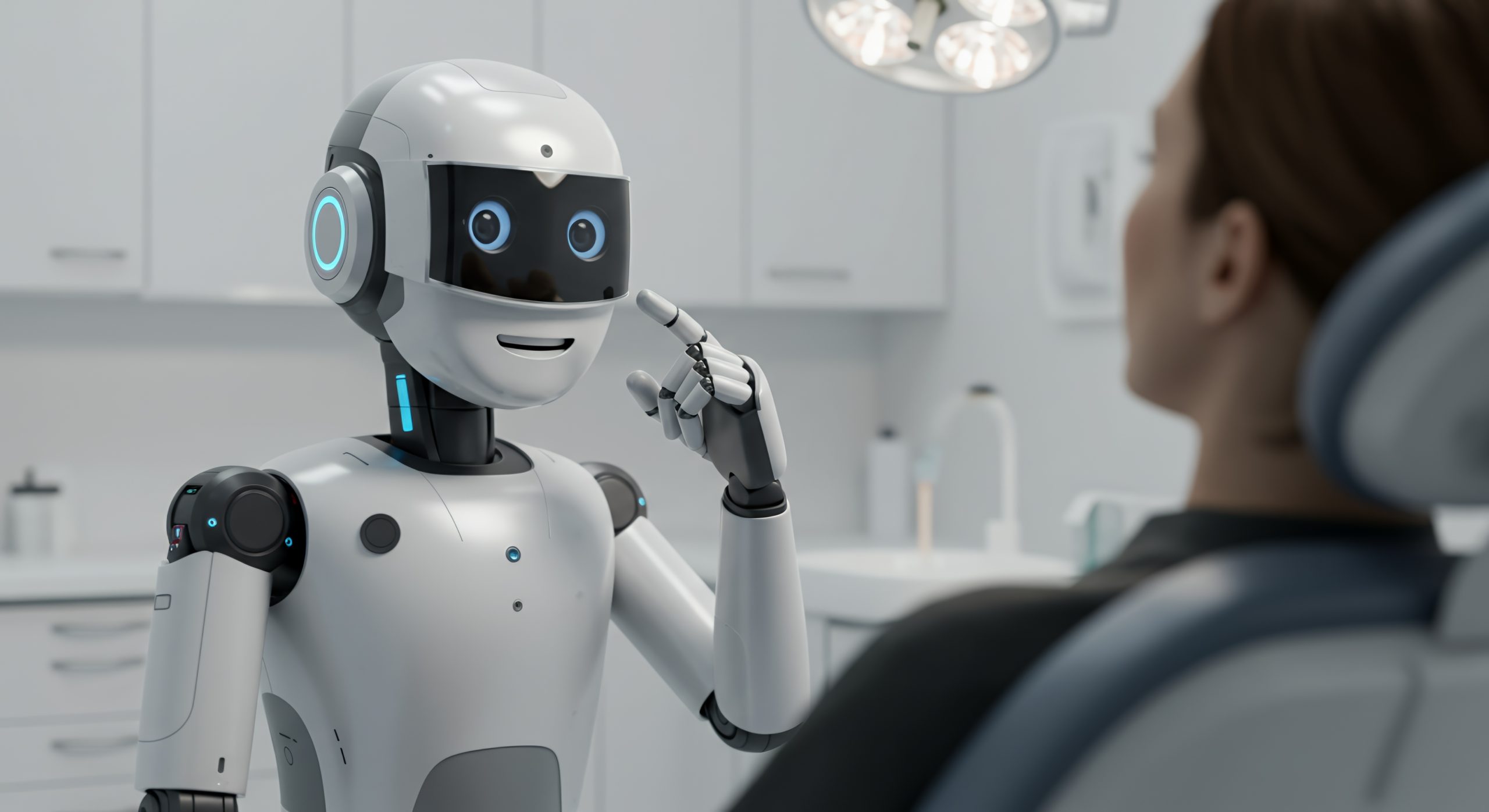
These robots combine embodied AI (embodied AI), cognitive robotics and affective sensors (voice recognition, facial expressions, prosody, touch), forming a sensory and emotional continuum. Of course, it is not a matter of imitating the human, but of coexisting in a hybrid environment that adapts to routines and emotional states. Examples of success are ElliQ (from Intuition Robotics), Furhat Robotics or European projects such as PAL, which already explore sensory and emotional interaction in real environments.
Real applications
This interaction, in fact, is not a futuristic dream. In Japan, with an elderly population and strong resistance to immigration, Companion robots are already part of the day-to-day life in nursing homes, where models such as Paro (robotic seal). A A 2024 study confirmed that dementia patients showed a significant improvement in positive emotions when the robot offered them visual, auditory and tactile stimuli, proof that sensor synergy truly stimulates emotional state.
In Israel, a A two-year clinical trial at the Adi Negev center compared three groups of post-stroke patients: one trained by the robot Pepper (humanoid with emotional recognition), another assisted by a computer and a third only with conventional therapy. The group that performed the rehabilitation with the Social robot showed more significant improvements in arm coordination and movement, as well as in their perception of overall well-being.
These improvements were measured with specific clinical tests – such as the ARAT test and the FMA-EU index – and all patients in the robotic group achieved progress considered clinically relevant by specialists. While humans intervene physically or psychologically, Pepper operates as an ongoing, neutral, and motivating coach.
These affective robots are trained through supervised learning of multimodal models: neural networks that integrate facial vision, voice analysis and gesture detection, fed with large corpora of emotional data. This combination allows us to respond with dynamic, unprogrammed empathy, adapting to the changing state of the user.
In the field of Alzheimer’s, Paro and Pepper have been shown to reduce agitation and provoke positive emotional reactions in patients. While they do not replace human connections, they help maintain routines, activate memories, and combat loneliness by assisting caregivers, often family members under physical and emotional pressure.
The limits to be overcome
However, the adoption of affective robots is still limited. There are information gaps between designers and users: many devices are made without the real participation of elderly patients or those with cognitive impairment who do not provide feedback. This generates very sophisticated solutions but not very useful or rejected, as they confirm some studies, and reinforces the need for participatory research and user-centered design. In addition, although affective robots show potential, healthcare professionals warn about the technical complexity, the requirement of maintenance and the ethical risks related to privacy and usability.
It is precisely these ethical, legal and environmental dilemmas that are intended to be addressed from the regulations: affective delegation must be regulated and supervised, as required by the new EU Regulation 2023/1230, which will enter into force from January 2027, imposing security, privacy and liability guarantees on interactive systems. And sustainability requires measuring and mitigating the CO₂ footprint derived from the massive training of these systems. In fact, achieving this “artificial empathy” requires enormous amounts of data and processing, which poses significant environmental challenges.
Despite all this, the signs of technological advancement and interest in these solutions are clear. The Global Rehabilitative Robotics Market, According to Kings Research, will go from $457 million in 2024 to more than $1.4 billion in 2031. The experience of Japan or Israel shows how much this integration can be accelerated when public policies, industrial investment and technological culture converge.
For its part, Europe is facing a historic opportunity: it can not only lead technical research, but also ethical reflection, inclusive regulation and the construction of new human-machine relationships. The technology exists, clinical and emotional data grow, but the real challenge is to decide what will be the link we want to weave between people and machines in the care of the 21st century.