AI-generated summary
In 1970, Japanese professor Masahiro Mori introduced the “Uncanny Valley” hypothesis, which describes how human reactions to robots and animated figures become more positive as they grow more human-like, but suddenly shift to discomfort and rejection when they approach near-human likeness without being fully indistinguishable. This theory, supported by later studies including brain imaging research, reveals that androids provoke cognitive dissonance because of the mismatch between their human appearance and robotic behavior. The phenomenon has deep implications for robot design, human psychology, and societal acceptance of technology, raising questions about the ideal appearance and function of robots.
The Uncanny Valley has influenced robotics pioneers like Hiroshi Ishiguro, who creates highly realistic androids to explore identity and human-machine relationships. As AI and robotic technology become more prevalent—from virtual assistants to political avatars—the challenge remains to avoid the unsettling effects of near-human robots. Some experts advocate for deliberately non-humanoid designs emphasizing functionality over mimicry, while others stress the importance of educating the public to reduce negative responses. Ongoing research aims to adjust human expectations and improve robot interfaces, suggesting the Uncanny Valley may diminish with increased familiarity. Ultimately, Mori’s theory provides a crucial framework for developing robots that are both effective and emotionally accepted, envisioning a future where humans and machines coexist harmoniously.
This famous theory suggests that robots cannot resemble humans too much if they do not want to provoke rejection, which has implications for robotic design
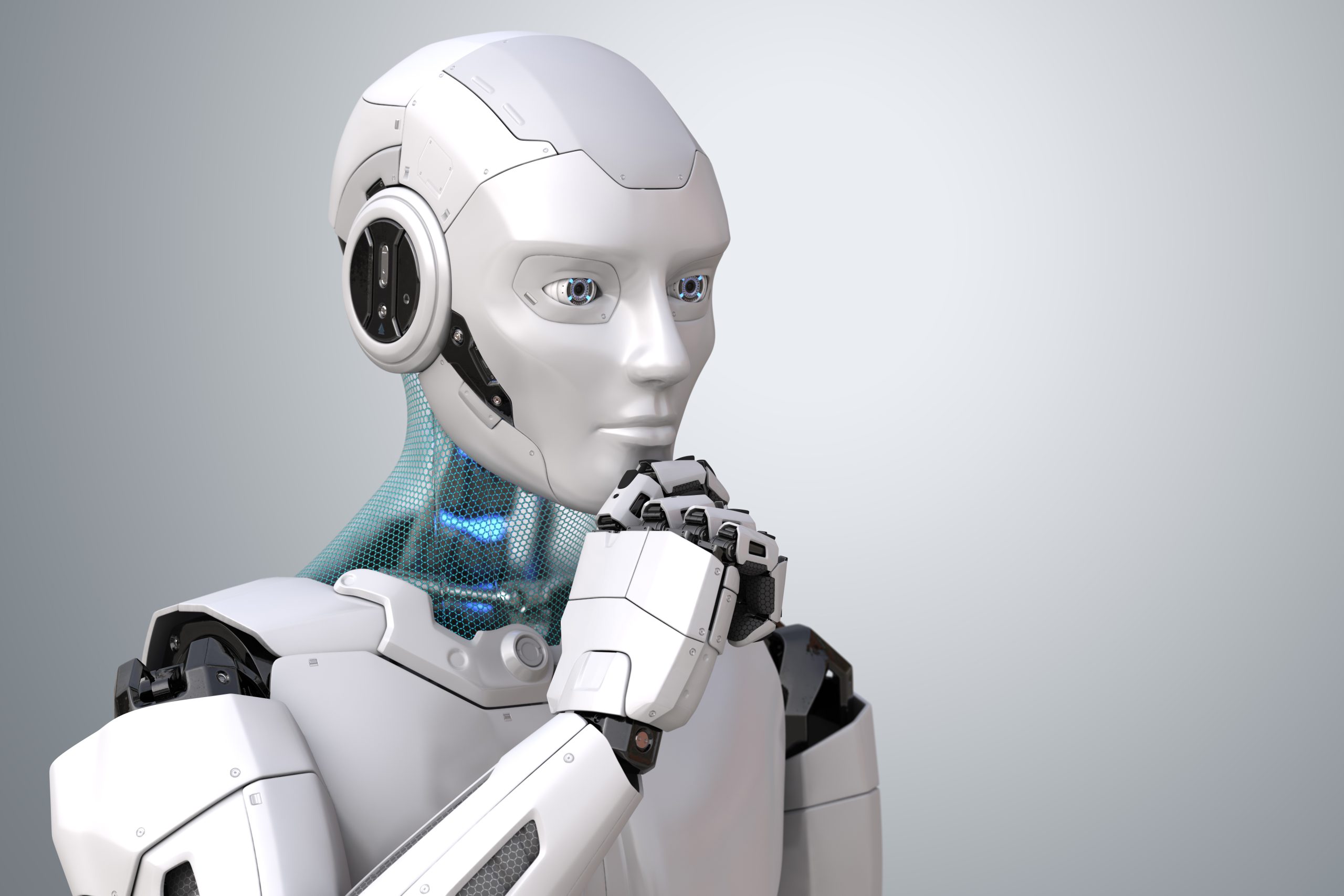
In 1970, Japanese professor Masahiro Mori formulated a hypothesis that would revolutionize the understanding of how humans perceive robots and animated figures. His theory, known as ‘The Uncanny Valley‘, holds that, as robots and artificial characters become more like humans, our reactions to them become more positive, until they reach a point of almost human resemblance that then causes discomfort and rejection. This phenomenon has profound implications for robot design, human psychology, and the acceptance of technology in modern society.
Mori proposed that human reactions to artificial objects are determined by two key factors: their degree of similarity to humans and the sense of familiarity they evoke. Initially, as a robot or animated figure takes on human characteristics, our empathy for them increases. However, when they reach a level of likeness that borders on the human without becoming completely indistinguishable, our perception changes drastically: instead of finding these figures attractive, we consider them strange or even disturbing.
The Disturbing Valley theory has been corroborated and refined over the years through various studies. In 2011, a team from the University of San Diego conducted a Experiment to evaluate brain responses to three figures: a non-humanoid robot, an android with a human appearance and a real human being. With functional MRI, the researchers found that the android caused significant activation in brain regions associated with cognitive dissonance. While robots and humans generated predictable responses, androids triggered emotions of discomfort due to the discrepancy between their human appearance and their robotic behavior.
The explanation can be found in cultural and religious factors, and now that robotics is one of the most advanced frontiers of technology, this can represent a significant problem that opens the door to various questions. For example
Implications in robotic design
The controversial Disturbing Valley hypothesis has fascinated Japanese robotics wizards such as Hiroshi Ishiguro, who has worked extensively on the creation of androids with a high degree of human similarity. Ishiguro even developed a robotic twin that can attend lectures instead, raising
In recent years, we’ve seen an increase in interaction with AI-based technology, from virtual assistants like Alexa and Siri to social robots. In South Korea, politician Yoon Suk-yeol used a digital avatar generated by deepfake techniques during his election campaign, marking a milestone in the use of robots and simulations in the public sphere. While these advances show how robots can be integrated into our lives, they also raise ethical and psychological concerns and one of the biggest challenges for robot designers is precisely to avoid falling into the Uncanny Valley.
In this regard, some researchers propose that deliberately non-humanoid design may be an effective solution. For example, robotic prosthetics that emphasize their functionality rather than attempt to mimic human appearance tend to be more accepted, and this same principle also applies to virtual assistants and callbots, where a clearly artificial but efficient voice may be preferable to one that tries to sound human and fails in the attempt.
Functional designs
The debate is still open and Jerry Kaplan, an expert in artificial intelligence and professor at Stanford University, He argues that humanoid robots are necessary to better understand how machines interact in social and physical environments. However, he also warns that trying to fully replicate human qualities can be an unnecessary effort. Rather than seeking to create machines that are indistinguishable from humans, Kaplan suggests focusing on designs that are functionally and emotionally adapted to the environments in which they operate.
The Bankinter Innovation Foundation’s upcoming Future Trends Forum report, among other things, will attempt to build a renewed focus on how society can overcome the challenges of the Uncanny Valley. Undoubtedly, one of the key proposals is
Research is already underway on how to modify human expectations to reduce cognitive dissonance. For example, providing more natural voices or designing interfaces that clearly communicate the robots’ capabilities and limitations could help flatten the curve of the Uncanny Valley. In addition, we must take into account that since the year in which Mori’s theory was developed, in 1970, we have experienced a remarkable evolution and familiarity in the field of technology. Therefore, there is a possibility that this curve has already flattened out and even tends to disappear.
Nonetheless, theory is still important for understanding the relationship between humans and robots. Although it poses significant challenges to the design and acceptance of technology, it also offers a roadmap for developing machines that are not only functional, but also emotionally compatible with humans. With advances in education, design, and technology, we can imagine a future where robots are not viewed with suspicion, but as a natural and welcome extension of our human capabilities.