
AI-generated summary
At the core of the quantum technology revolution lies the qubit, the fundamental unit of information in quantum computing. Unlike classical bits, which represent either 0 or 1, qubits can exist in multiple states simultaneously due to quantum superposition. This unique property enables quantum computers to process complex calculations exponentially faster than traditional systems by evaluating many possibilities at once. Practical applications, such as Grover’s algorithm for database searches and molecular simulations for pharmaceutical research, showcase qubits’ transformative potential. The Bloch sphere is commonly used to represent qubits, visually illustrating their superposition states.
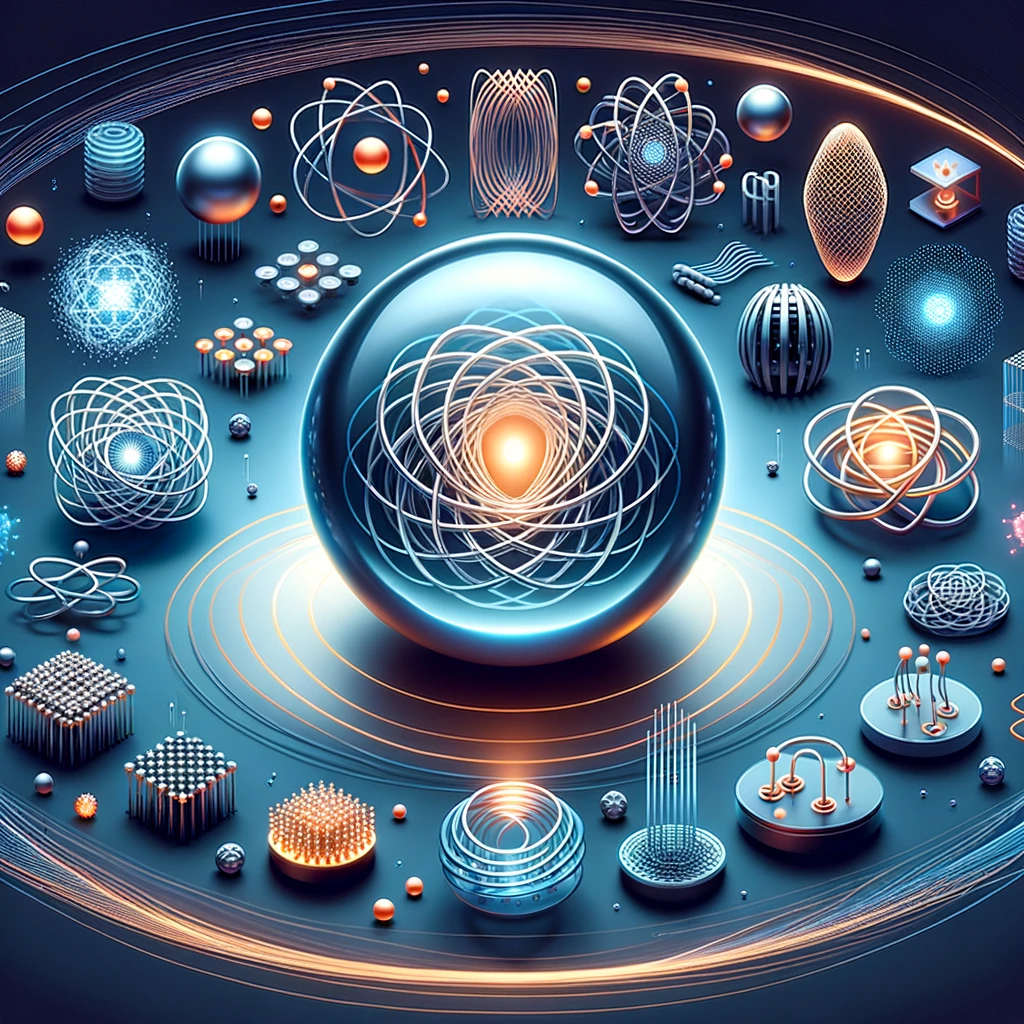
There are several types of qubits, each with distinct characteristics suited to different quantum technologies. Ion-trap qubits offer high fidelity and stability, making them ideal for advanced research, while superconducting qubits, favored by tech giants like IBM and Google, excel in scalability and commercial applications. Emerging topological qubits promise exceptional stability and error resistance, though they remain experimental. Photon qubits, vital for quantum cryptography and communications, enable secure data transfer over long distances. Each qubit type faces specific challenges—such as scaling difficulties for ion-traps, decoherence for superconducting qubits, and photon loss in photon qubits—that are being addressed through interdisciplinary research. The strategic adaptation of these qubits across computing, cryptography, communications, and sensing underscores their versatility and the ongoing evolution of quantum technologies, heralding a new era in science and technology.
Exploring the Nature, Types, and Present and Future Applications of Qubits in Quantum Technologies
At the forefront of the technological revolution is a word that resonates with mystery and promise: qubit. These elements are at the heart of quantum technology, a sphere that promises to transform the way we process information. This article explores what qubits are, how they are represented, their types, and their suitability in different areas of quantum technology.
What is a qubit?
A qubit or quantum bit is the basic unit of information in quantum computing. Unlike a classical bit that can exist as 0 or 1, a qubit can exist simultaneously in both states thanks to the phenomenon of quantum superposition. This property allows for much more complex calculations to be performed at an exponentially higher speed compared to traditional computer systems. While a classical bit can process one operation at a time, a qubit can process multiple operations simultaneously, thanks to its ability to exist in multiple states. To understand how this amplifies computational power, let’s consider a simple example. On a classic 3-bit system, there are 8 possible configurations (000, 001, 010, 011, 100, 101, 110, 111). A classical computer would check each configuration one by one to solve a problem. By contrast, a quantum system with 3 qubits can represent all of these configurations at the same time. This means that you can theoretically evaluate all possibilities simultaneously, resulting in an exponential increase in processing speed.
A practical example of the application of qubits is in the field of problem optimization. Quantum algorithms, such as Grover’s algorithm, can search unstructured databases much more quickly than their classical counterparts. While a classical algorithm might need to review each entry in the database one by one, Grover’s algorithm can find the correct answer with a significantly smaller number of steps, taking advantage of the overlap of qubits to review multiple inputs simultaneously. An illustrative example of the difference between classical and quantum computing is the representation of the caffeine molecule, as Future Trends Forum expert Marc Manzano, Managing Director of Quantum Security at SandboxAQ, tells us. This molecule, composed of 24 atoms, would require 1048 bits to be represented by a classical computer and only 160 qubits to be represented by a quantum computer.
This leap in processing capacity opens doors to solving problems that are unmanageable for classical computers, such as the simulation of complex molecules for pharmaceutical research or the optimization of large-scale logistics systems. In short, quantum superposition not only redefines what is possible in terms of information processing, but also paves the way for revolutionary advances in multiple fields of science and technology.
Representation of qubits
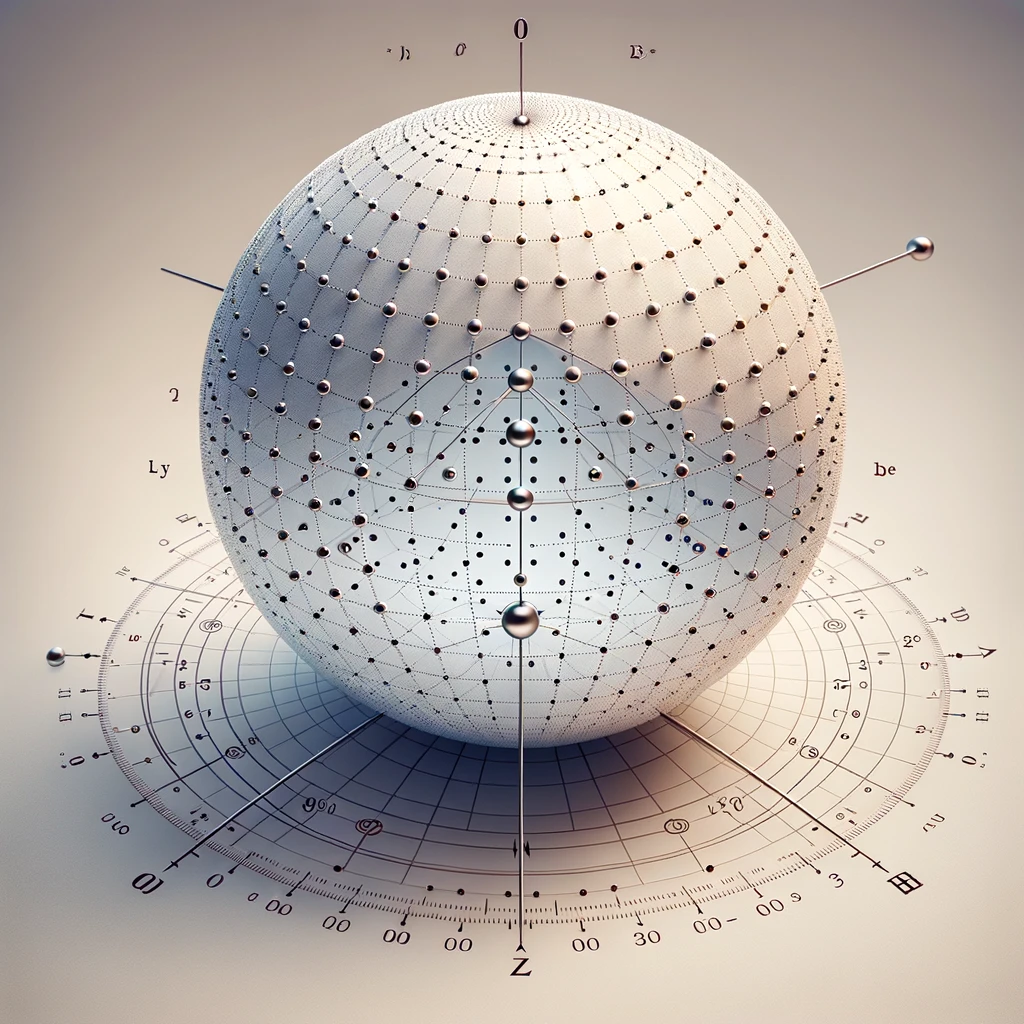
Qubits are often represented using the Bloch sphere, a geometric representation that illustrates the superposition state of a qubit. In this sphere, the points at the poles represent the pure states 0 and 1, while any point on the surface is a superposition of these states.
Source: DALL· E 3
Types of qubits and their applications
In the realm of quantum computing, the diversity of available qubits reflects the richness and potential of this evolving field. Each type of qubit offers unique features and is tailored to specific applications.
Ion-trap qubits, which use individual ions trapped by electromagnetic fields, are known for their high fidelity in quantum operations and relatively long coherence times. Companies such as IonQ and Honeywell are at the forefront of its development, with crucial support from universities and research labs. These qubits are ideal for applications that require a high degree of quantum control, such as in advanced research in quantum computing.
On the other hand, superconducting qubits, made from circuits made of superconducting materials, are the basis of many commercial quantum computers today, powered by tech giants such as Google and IBM. Operating at extremely low temperatures, these qubits are easier to mass produce and are critical in a wide range of applications, from algorithm optimization to quantum physics research.
Topological qubits, still in the experimental phase, use quantum states anchored in topological structures. Microsoft, through its StationQ project, is leading research in this area, seeking to stabilize these quantum states. Although in the early stages of development, these qubits promise to be extremely stable and error-resistant, making them ideal for long-term applications in quantum computing.
Finally, photon qubits, which use states of light to represent quantum information, are fundamental in cryptography and quantum communications. Companies such as Xanadu Quantum Technologies are focused on its development, supported by academic institutions and research laboratories. These qubits are ideal for secure data transfer over long distances and hold promise for the development of quantum networks and the performance of distributed quantum calculations.
Each type of qubit carries with it unique promises and is finding its place in the broad spectrum of quantum applications. The evolution of these technologies is a testament to the growing enthusiasm and potential in the field of quantum computing.
Currently, superconducting qubits seem to have the upper hand due to their scalability and significant investment from large tech companies. However, topological qubits represent a promising future given their stability and resistance to noise, a critical challenge in quantum computing.
Challenges and solutions in the development of different types of qubits
Each type of qubit faces its own specific obstacles, and in turn, the strategies for overcoming these challenges are as diverse as the qubits themselves.
Ion-trap qubits, known for their high precision and control, face challenges related to technical complexity and scaling. As the number of qubits increases, keeping ions in stable traps and controlling them with laser precision becomes more difficult. To address this, new architectures are being researched that simplify ion traps and improve laser control. One promising approach is modularity, where multiple small traps operate together, facilitating scalability.
In the case of superconducting qubits, decoherence, caused by unwanted interactions with the environment, represents a significant problem. Added to this is the difficulty in scaling and operational errors. To mitigate these problems, progress is being made in developing materials with lower error rates and improving circuit designs to reduce inconsistency. In addition, quantum error correction strategies and redundant qubit systems are key areas of research.
Topological qubits, while promising to be extremely stable and error-resistant, face the challenge of practical realization. Creating and manipulating topological quantum states is a very difficult task. Current research is focused on finding new materials and methods to stabilize these quantum states, and exploring new theories in quantum physics is critical to overcoming these obstacles.
On the other hand, photon qubits, essential in cryptography and quantum communications, struggle with efficient photon generation, manipulation, and detection. In addition, photon loss and noise in communication channels pose significant challenges. To counter this, work is underway to develop more efficient single-photon sources and more accurate detection systems. Improving light guidance technologies and quantum protocols is also helping to reduce loss and noise.
In short, the move toward fully functional quantum computers applicable to real world problems requires interdisciplinary collaboration between physicists, engineers, computer scientists, and mathematicians. This collaboration is critical to innovating in both quantum hardware and software, overcoming the specific challenges that each type of qubit presents and bringing us step by step closer to the full potential of quantum computing.
Adaptation of qubits in different quantum technologies
The matching of different types of qubits in specific quantum technologies is a crucial aspect in the development and application of these emerging technologies. Each type of qubit, with its unique characteristics, is optimally suited to certain applications, leading the way to significant advances in various fields.
In the field of quantum computing, superconducting and ion-trap qubits are particularly prominent. Superconducting qubits, used by tech giants such as IBM and Google, benefit from their relative ease of manufacture and scalability, making them suitable for a wide range of complex calculations. Ion trap qubits, with their high precision and stability, are excellent for research and development in quantum computing, especially in applications that require a high degree of quantum control.
In the field of quantum cryptography, photon qubits take center stage. Their ability to represent and transmit information through light makes them ideal for secure data transfer over long distances. This property is essential for the development of secure quantum communication systems, a priority in the information age where data security is paramount.
Quantum communications also benefit greatly from photon qubits. Their efficiency in transferring data over long distances makes them ideal for this application. These qubits are at the heart of the development of future quantum networks that could revolutionize the way we transmit information, offering unprecedented security and speed.
In the field of quantum sensorics, superconducting and ion-trap qubits are again fundamental. These qubits are capable of detecting extremely small variations in their environment, making them useful in applications that require high-precision and sensitive measurements. From the detection of magnetic fields to the monitoring of physical phenomena at microscopic scales, quantum sensing opens up new possibilities in fields as diverse as medicine, geology and fundamental physics.
The specific suitability of each type of qubit to different quantum technologies not only demonstrates the diversity and versatility of these fundamental elements but also underlines the importance of continuous research and development in this field. As these technologies mature and find practical applications, we are witnessing the opening of a new chapter in the history of science and technology, driven by the unique and powerful world of qubits.
If you want to learn more about the opportunities and challenges of quantum technologies, we recommend you read the Future Trends Forum report Quantum Computing and Artificial Intelligence: The Silent Revolution.