
AI-generated summary
The Future Trends Forum experts have identified key innovation trends for 2021, centered around the macro trend “Tech for Good,” emphasizing technology’s role in advancing the United Nations Sustainable Development Goals (SDGs) by 2030. This theme also encompasses the future of education and the design of a post-pandemic world. The Bankinter Innovation Foundation surveyed over 650 global experts to highlight the most impactful trends, many of which focus on how technology can drive collective human progress while addressing societal challenges.
Among the top trends are the harnessing of the digital economy for the common good, data protection and digital regulation reforms, and challenges around digital disintermediation and trust in a data-driven world. Other notable trends include the rise of autonomous vehicles and drones for efficient transportation, debates over regulating tech monopolies, and advancements in spatial computing that combine AI, IoT, VR, and AR. Experts also warn of the “balkanization” of the internet due to geopolitical tensions, the economic impact of cybercrime, and the need for a new social contract to address inequalities exacerbated by technology. Additionally, the rapid growth of digital assets like cryptocurrencies and blockchain technologies is reshaping finance and trade. Future discussions will explore related developments such as affordable energy storage and accelerated scientific discovery through quantum computing and AI.
The big macro trend for 2021: Tech for Good, the role of technology in helping to achieve the Sustainable Development Goals (SDGs). Along with the future of Education and the design of the post-pandemic world.
The experts of the Future Trends Forum point out the innovation trends of 2021. The big macro trend for 2021: Tech for Good, the role of technology in helping to achieve the Sustainable Development Goals (SDGs). Along with the future of Education and the design of the post-pandemic world.
As every year, from the Bankinter Innovation Foundation, we asked the more than 650 world experts of our think tank Future Trends Forum, what will be the most powerful trends for 2021.
Many of the trends pointed out can be included in the macrotrend called Tech for Good. The UN calendar points to 2030 for the fulfillment of the SDGs:
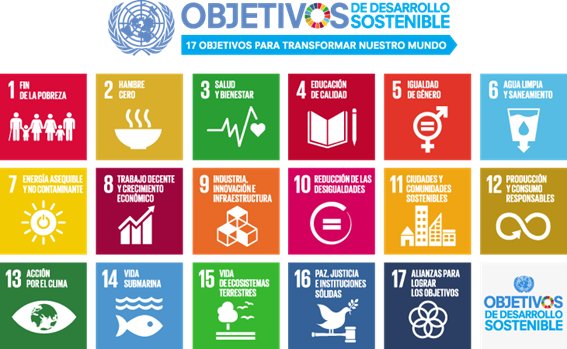
Technology can provide very powerful tools to accelerate the fulfillment of these objectives.
Within this macro trend, experts point to the following 10 trends to be aware of:
- How to harness the digital economy for the common good. Data is the new asset that is driving change in our economies and societies. What combination of institutional, corporate, and citizen rights to data could create the conditions for collective human progress and foster personal development?
- Data protection and digital regulation. If data is a primary asset, we should expect legal reform across society. How will it be done? How will we regulate data as an intangible asset? What are the expectations of citizens?
- Digital disintermediation. Our interaction and experience with the social world is increasingly mediated by technology. What happens when we stop seeing ourselves as individuals, and we are all seen as nothing more than constellations of data points in the cloud? How do you build relationships of trust?
- Autonomous vehicles and drones. Autonomous vehicles and drones have the potential to enable huge societal benefits through improved, cheaper, and more efficient transportation. Advances in
machine learning andautomation are ushering in a new era of digital workers. In the near future, drones, driverless cars, and artificial intelligence will seamlessly coordinate and transport goods and people around the world at very low cost. - Should the big monopolies (Facebook, Google, Amazon, …) be broken? How could it be done within the laws and ethics? Would it be effective?
- Spatial Computing. Beyond Virtual Reality (VR) and Augmented Reality (AR), the use of Artificial Intelligence (AI) and the Internet of Things (IoT) will mark a new way of interacting with each other and with machines.
- The Balkanization of the Internet. The technological fractures between the United States and China pose significant challenges for the world. Divergent technology, trade, politics, and national interests can lead to what’s called the “splinternet”: an internet divided into regions, with access passports and specific rules.
- The impact of cybercrime on the global economy. Cybercrime is a drag on the global economy of almost €1 trillion and accounts for 1% of global GDP. How can we fight to reduce these figures?
- New social contract. While technology has been good in many ways, it has also had negative effects, such as increasing inequalities or losing trust. A new digital agenda and a new economic model are needed to mitigate these effects.
- Digital assets. Due to the rapid development of information and communication technologies (ICTs), many activities of our daily lives occur online and have become more flexible and efficient. This has led to a parallel growth of
cryptocurrencies and, in general,digital money . From the emergence ofBitcoin in 2008 to the recent announcement that we will soon have adigital euro, the universe of digital assets has only just kicked off. DLT (Distributed Ledger Technologies) and in particular, Blockchain, will allow the exchange of digitized assets and new forms of investment and trade.
In future posts, we will continue to unravel the trends pointed out by the experts of the Future Trends Forum for 2021, including some as interesting as the affordable storage of electricity or the acceleration of scientific discoveries thanks to quantum computing and AI.
Thanks for reading!