AI-generated summary
The digital convergence of physical and virtual worlds is transforming the traditional laboratory into powerful virtual platforms that simulate experiments with high fidelity. Virtual labs use mathematical models, physics algorithms, AI, and immersive tech (VR/AR/MR) to recreate instruments, reagents, and processes so users can manipulate experiments, observe outcomes, and receive instant feedback. Beyond education, these tools now support industrial R&D, enabling safer exploration of hazardous scenarios, huge savings on consumables, and global, real-time collaboration among distributed teams.
Modern virtual labs integrate with digital twins and leverage advances in AI, quantum computing, and specialized semiconductors. Digital twins mirror real plants and processes using IoT data, allowing companies to test changes, predict failures, and accelerate innovation without disrupting production. AI and ML speed discovery by predicting experimental results; immersive environments improve training and retention; and future quantum machines promise atom-level molecular simulations that could revolutionize drug discovery, materials design, and personalized medicine. Together, these technologies drive an “in-silico” revolution—lowering costs, reducing risk, and vastly increasing experimentation scale—positioning virtual laboratories as essential Deep Tech infrastructure for the next decade.
From simple educational simulations to complex 'deep tech' environments, these digital platforms are redefining corporate R+D and scientific training by removing physical barriers, reducing costs and ensuring absolute safety in complex experiments.
The digitalization of society and industry has reached a turning point where the physical and virtual worlds are converging at an accelerated rate. In this context, the traditional concept of the laboratory – a physical space full of expensive equipment, reagents and strict security measures – is undergoing a profound metamorphosis.
A virtual laboratory is much more than just a web page with animations. It is an advanced technological platform that models and simulates experimental environments, allowing researchers, engineers, and students to interact with equipment, perform tests, and analyze data in a high-fidelity digital environment. These tools are democratizing access to cutting-edge science, especially valuable in scenarios where material resources are limited or operational risks are high. However, their recent evolution has taken them far beyond mere teaching, making them pillars of industrial innovation and advanced scientific research.
What is a virtual lab and how does it work?
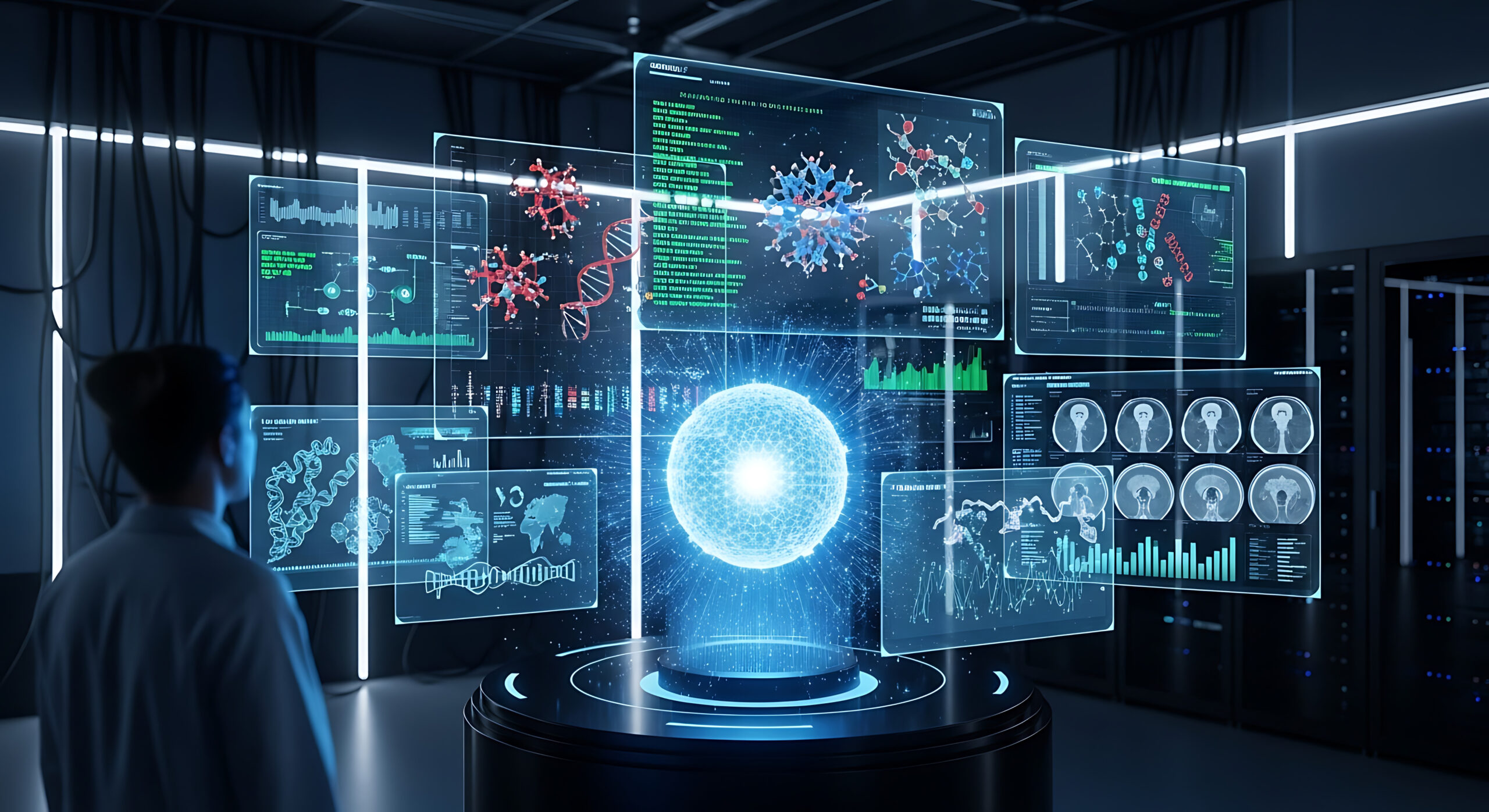
At its core, a virtual lab is a software environment that mimics the conditions, instrumentation, and processes of a physical lab. Using complex mathematical models and physics algorithms, these platforms reproduce the behavior of biological, chemical, or physical systems with astonishing accuracy. Users access via computers, mobile devices, or, increasingly, extended reality (XR) viewers, interacting with equipment and reagents intuitively.
The operation is based on advanced computing. When a user manipulates a virtual instrument or mixes two simulated substances, the software instantly calculates the consequences of that action based on rigorous scientific principles and displays the result visually. This not only includes the success of the experiment, but also possible errors, equipment failures or unforeseen reactions, providing immediate and valuable feedback for learning or hypothesis validation.
Technological evolution: from the 2D screen to immersive reality and quantum computing
To understand the current impact of virtual labs, it is crucial to differentiate simple tools from next-generation platforms. For years, and especially popularized during the pandemic, 2D simulators predominated. These were useful tools for understanding basic concepts, but limited in realism and interactivity, looking more like an educational video game than a real R+D environment.
Today, the concept has been elevated to the Deep Tech standard, driven by unprecedented sophistication and the convergence of several critical technologies:
- Artificial Intelligence and Machine Learning: AI algorithms model complex behaviors and, in addition, can predict results of chemical or biological experiments with an accuracy that rivals reality, dramatically accelerating the discovery of new drugs or materials.
- Mixed Reality (MR) and Immersive Environments: The integration of Virtual Reality (VR) and Augmented Reality (AR) allows users to “be” inside the lab, manipulate objects with their hands, and collaborate with colleagues in a shared virtual space, improving knowledge retention and efficiency in operational training.
- Applied quantum computing: On the horizon, quantum computing promises to revolutionize molecular simulation. The virtual laboratories of the future will be able to model atomic and molecular interactions with a fidelity impossible for classical computers, opening the door to advances in personalized medicine and new materials in a purely digital way.
Digital Twins in the Corporate Sector: The Maturity of Simulation
One of the most powerful applications of this evolution is the integration of virtual laboratories with the Digital Twin concept. In the corporate and industrial sector, a virtual laboratory is an exact digital replica of a production process, a chemical plant or a real logistics system, fed by real-time data from IoT sensors.
This connection allows companies to test process changes, simulate machinery failures, or test new formulations in the digital twin before deploying them in the physical world. The strategic advantages are clear: the risks of production disruption are eliminated, predictive maintenance is optimized, and the time-to-market of new innovations is accelerated, all validated in a rigorous virtual environment.
Strategic differences and advantages compared to a physical laboratory
While physical labs will continue to be required for final validation and production, virtual platforms offer competitive advantages that make them indispensable in a modern innovation strategy:
Absolute security and zero operational risk
Scientific experimentation carries inherent risks, from handling dangerous pathogens to unstable chemical reactions to handling high voltage. In a virtual lab, these risks disappear entirely. A researcher can explore extreme scenarios or make critical errors without danger to their physical integrity or that of the equipment, enabling deeper, exploration-based learning without fear of failure.
Massive savings on consumables, reagents and equipment
Maintaining a physical laboratory is extremely expensive. It requires investment in high-precision equipment that quickly becomes obsolete, recurring purchase of reagents and disposable materials, and hazardous waste management costs. Virtual laboratories eliminate these operational costs almost completely. Once the platform is developed, performing an experiment a thousand times has a marginal cost close to zero, allowing for massive iteration that would be economically unfeasible in the physical world.
Global accessibility and real-time multi-user collaboration
These platforms break down geographical and temporal barriers. Students and researchers from anywhere in the world can access cutting-edge equipment that would otherwise be out of reach. In addition, modern virtual environments allow for real-time, multi-user collaboration: a team of scientists in Madrid, Boston, and Singapore can simultaneously work on the same virtual experiment, sharing visualizations and data seamlessly.
Disruptive use cases today
The application of advanced virtual labs is transforming critical industries at an accelerated speed:
Education and immersive medicine
Universities and VET centres are adopting these tools to complement practical training. In medicine, for example, students can practice complex surgeries or diagnostic procedures in high-fidelity VR-based human anatomy simulators, repeating the process as many times as necessary until they reach mastery, without risk to any patient.
Pharmaceutical and materials science
R+D in pharma and advanced materials is slow and expensive. Virtual laboratories, powered by AI, allow high-throughput screening of millions of drug candidates in a matter of days in a purely digital environment. Molecular interactions and toxicity are simulated, filtering the most promising candidates before moving on to the physical synthesis and clinical trial phases, shortening the development process by years.
Main modern scientific simulation platforms
The market for virtual laboratories and advanced simulation is in full swing, populated by both specialized startups and technology giants. Prominent examples include:
- Labster: Very focused on the education sector, it offers high-quality gamified simulations in biology, chemistry and physics for universities and schools.
- NVIDIA with Omniverse: This platform is fundamental for the creation of industrial digital twins and physically accurate simulations, allowing companies to build complex virtual laboratories by connecting different software tools.
- Schrödinger: Leader in software for advanced chemical and biological simulation, crucial for drug discovery in the pharmaceutical industry.
- Siemens (with solutions such as Simcenter): Offers powerful tools for the simulation of physical systems and digital twins in engineering and industry.
Towards the “In-Silico Revolution”: The Deep Tech Horizon of Experimentation
The adoption of virtual laboratories is a fundamental pillar for sustainable and competitive innovation. By eliminating economic, geographical, and security barriers, these platforms act as transversal accelerators of scientific discovery and industrial optimization. We are witnessing a historic transition from the hegemony of in-vitro or in-vivo experimentation to a future dominated by in-silico (on-chip ) experimentation, allowing organizations to explore futuristic scenarios in a secure, infinitely scalable, and high-fidelity digital environment.
This paradigm shift, characterised by unprecedented technological convergence, defines the frontier of what the experts at the Bankinter Innovation Foundation’s Future Trends Forum identify as the forces that will shape the next decade. The ability of these laboratories to model and interact with reality with atomic precision is underpinned by three critical vectors that will redefine science and industry:
1. Physical Artificial Intelligence (Embodied AI)
Artificial Intelligence has evolved beyond data processing to begin to understand and predict the laws of physics. This Artificial Intelligence applied to the physical world will allow virtual laboratories to transcend the simulation of known processes to autonomously discover new scientific principles, materials or chemical compounds, acting as intelligent co-pilots for human researchers and automating the hypothesis-experimentation cycle.
2. The quantum leap in molecular simulation
Looking to the horizon, quantum computing is the technology destined to unlock the true potential of simulation. By working with qubits, these machines will be able to model complex molecular and subatomic interactions, a computationally impossible task for today’s classical supercomputers. This will open the doors to an era of ultra-personalized medicine, next-generation batteries, and materials with properties designed to order, all virtually validated before manufacture.
3. The advanced semiconductor infrastructure
All this deployment of computational power and immersive rendering requires a robust and specialized hardware base. Advances in the semiconductor industry, with chips specifically designed for AI (NPUs) and massive data processing at the edge, will be essential to ensure low latency in immersive virtual labs and process the huge amount of information needed for Deep Tech simulations to work in real time.