
AI-generated summary
Adrian Woolfson argues that biology is entering a new era in which artificial intelligence and DNA-writing technologies let us deliberately explore biological possibilities beyond what evolution has produced. He coins “artivolution” to describe the intentional, AI-guided design of organisms. After decades of reading genomes and learning to edit them (e.g., CRISPR), we are beginning to develop the tools to write genomes, advancing from sequencing to editing and eventually to constructing whole genomes. Early examples—synthetic yeast chromosomes, designed bacteriophages, and genome transplantation—show potential but remain limited to simple life forms. Woolfson likens genomes to “spaghetti code”: tangled by evolutionary history, they resist clean, independent changes and would be hazardous to refactor at large scale in humans.
Woolfson envisions applications spanning medicine, agriculture, bioenergy, materials, and biocomputing, while stressing major scientific, ethical, and ecological challenges. AI can propose novel sequences but requires experimental validation and faces training-data limits rooted in evolution’s narrow sampling of possibility space. He warns of ecosystem risks, bioweapons misuse, and difficult ethical choices—especially around human genome modification if AI surpasses human cognition. Woolfson calls for broad public debate, international governance, and cautious, principled progress as we move from discovering life to intentionally authoring it.
Adrian Woolfson explores how artificial intelligence and genome writing could open a new chapter in biology, from designing new forms of life to biosafety challenges and the potential modification of human biology.
For as long as life has existed on Earth, evolution has generated new biological forms. Adrian Woolfson believes we are now entering a different era: one in which artificial intelligence and DNA-writing technologies are beginning to let us deliberately explore biological possibilities that evolution has never reached.
Woolfson, President and CEO of Genyro, develops this idea in his latest book, On the Future of Species: Authoring Life by Means of Artificial Biological Intelligence. His argument begins with a transition now reshaping synthetic biology: after learning to read genomes and developing tools to edit them, we are beginning to acquire the ability to write them.
To describe this shift, he coined the term “artivolution”: the deliberate, rational creation of biological forms using artificial intelligence and genome-writing technologies. These capabilities are still at an early stage, and significant scientific challenges remain.
The idea connects directly with one of the central questions explored by the Bankinter Innovation Foundation’s Future Trends Forum on Synthetic Biology: how far can we move from modifying individual parts of a living system toward designing biological systems with increasing predictability?
Marce Cancho, Director of the Future Trends Forum at the Bankinter Innovation Foundation, talks with Woolfson about the “grammar of life,” the limits of CRISPR gene editing, biosafety, and one particularly provocative question: if AI eventually surpasses our cognitive abilities, would we eventually consider modifying our own biology?
You have already written two books on genomics. Why was this the right moment to write about where synthetic genomics is heading?
Woolfson traces the origins of the book to what he sees as a unique moment in the history of biology: we are beginning to glimpse the possibility of comprehending the “grammatical structure” of life.
Reading a language allows us to understand what others have written. Knowing its generative grammar also allows us to create something new.
“Grammar enables you to generate and author things—to write new narratives. Artificial intelligence, in the form of genome language models, together with new technologies for writing DNA, for the first time enables us to establish a completely new relationship with the process of life: to create it.”
For decades, he explains, modern biology has looked backward. Synthetic genomics offers another direction: toward what has yet to exist.
“What hasn’t existed is far larger than what has existed. Evolution is just touching the edge of the possibility space of life.”
Where do you think AI applications in gene editing and genetic design are taking us?
Woolfson identifies three phases in our relationship with genomes: reading, editing, and writing. Sequencing can now decode an entire genome in less than a day and at relatively low cost. Gene-editing tools such as CRISPR allow scientists to introduce targeted changes into existing genomes. Genome writing, still at a much earlier stage, aims at something more ambitious: making extensive changes and, eventually, constructing complete genomes.
“We’re at the very beginning of this curve. In ten, twenty, or thirty years, our knowledge of the grammar of life will increase enormously, and likely to the point where we can anticipate designing entirely new species.”
He expects the first of these to be relatively simple forms of life—viruses, bacteria, yeast, or small worms such as nematodes—with the possibility of eventually progressing to more complex biological systems.
The applications he envisions range from healthcare and healthy longevity to DNA data storage, bioenergy, heat- and drought-resistant crops, biomaterials, bioelectronics, and biocomputing. While major scientific challenges still stand between today’s capabilities and that future, these appear to be tractable.
In the book, you describe the genome as “spaghetti code.” What does that mean?
The term comes from software engineering. As a program is repeatedly modified over time, its code typically becomes so tangled that changing one function impacts many others. Refactoring is the process of reorganizing and streamlining that code while preserving the program’s function.
Woolfson applies the same analogy to the genome.
“Evolution has been modifying genomes for billions of years without any coherent plan or foresight. As a result, if you want to change one particular feature, you may find that it has become entangled with several others and it is not possible to change them independently.”
The code of genomes can be “refactored.” Attempting to refactor the human genome, however, would be extraordinarily risky. We still do not understand what many of its sequences do or the way in which complex traits emerge from their interactions.
In the case of humans, Woolfson imagines that any future approach would be limited to select genomic regions. He points to the immune system and asks whether it might, for example, one day be possible to reorganize the genes involved in particular immune functions to reduce the risk of autoimmune disease and inflammation.
“It will likely be many, many years before we may begin to believe that it’s sensible, ethical, or safe to rewrite or modify a human genome at the germline level in any substantive way, other than editing one or more genes that are causally related to a specific disease.”
You coined the term “artivolution.” How much of it is already happening?
Evolution explores biological possibility space through mutation, recombination, deletion, duplication with diversification and selection, without knowing where it is heading. “Artivolution,” by contrast, describes the possibility of designing life rationally and intentionally through AI and genome writing, which guides toward a desired “destination”.
“It’s a very different way of creating life. While evolution is obliged to move through time, if you create life de novo, there is no history—you make it, and you can instantaneously transport yourself outside of time to distant regions of the space of possible life.”
Woolfson points to four precedents: the Sc2.0 project that redesigned the yeast genome and generated a synthetic artificial chromosome; bacteriophages designed using genome language models by Brian Hie’s team; genome transplantation experiments at the J. Craig Venter Institute; and the refactoring of bacteriophage T7 by Drew Endy and his collaborators.
For Woolfson, these projects offer glimpses of the transition from an era of discovering life to one in which we generating it, although he stresses an important limitation: “At the moment, we have only designed and synthesized very simple biological entities.”
You have pointed to CRISPR’s limitations when it comes to complex, polygenic diseases. What is the main obstacle to going further?
CRISPR gene editing or base editing can be highly effective when there is a single mutation to correct. The challenge changes with complex diseases that involve multiple genetic variants, each often making just a small overall contribution.
Woolfson believes that addressing some of these diseases could eventually compel us to consider modifying larger genomic regions. The key obstacle is how much we understand about the biology of the system.
“The question is whether we have a sufficient understanding of the grammar of life and whether we will ever consider it to be safe, ethical, and desirable to rewrite substantial regions of the human genome.”
Doing so safely would require understanding both the individual components, their interactions, and the emergent properties they produce. “Unfortunately evolution was not so kind as to provide us with an explicit instruction manual detailing our biology. We’re trying to reverse-engineer and infer the missing instruction manual for how we work.”
That scientific problem quickly becomes an ethical one: who gets to decide what should be changed and in whom? Woolfson imagines that an authoritarian society might classify free will as a disease. He also points to a real-world example: deafness, which some members of the Deaf community view as a form of human diversity, associated with its own culture, rather than simply as a condition to be corrected.
“Even the definition of disease itself is not as straightforward as some people think it is.”
Can an AI trained on organisms produced by evolution explore genuinely new forms of life?
An AI trained on natural sequences could definitely generate new combinations of existing biological features. The deeper question relates to the constraints on a model and how far it can go when the data it has bene trained on represents only the tiny fraction of biological possibility that evolution has explored.
Woolfson uses the analogy of a bookstore containing only books written for children under the age of five. Someone who had never encountered any other types of books might conclude that all literature looked like that.
“If you learned grammar exclusively from children’s books, would you ever be able to write War and Peace? Perhaps not.”
As artificial forms of life are generated, they could gradually expand the available training data. But that leads to another constraint: physical experimentation.
“The models can make predictions, but ultimately, as we know from protein design, you have to make them and test them to generate new information.”
AI can narrow the search space and help prioritize experiments, but validation in real biological systems remains essential.
What concerns you most about creating new forms of life and introducing them into ecosystems?
Predicting how a single organism will impact the dynamics of an ecosystem following introduction, is already very difficult. Modeling an entire ecosystem adds an additional level of complexity. History shows that introducing an alien species can disrupt whole ecological networks.
“The threshold for releasing an artificial species into the environment is therefore, in my view, extremely high.”
If such a release were considered, Woolfson argues, organisms would require built-in safeguards capable of firewalling or eliminating them if their behavior became unpredictable.
He also warns about both accidental harm and the deliberate use of these technologies to create biological weapons. This caution informs his skepticism toward de-extinction projects. When discussing attempts to bring back mammoths, for example, he points out that in practice these organisms would be modified elephants engineered to display selected traits of extinct mammoths rather than actual historical mammoths.
The question extends to extinct human species such as Neanderthals or Denisovans. Woolfson says that while writing the book, he moved from rejecting the idea outright to leaving the question open.
“It’s a thorny issue, and it will require much debate, but it isn’t simply a black-and-white question.”
You call for public debate and strong regulatory frameworks. What should governments and institutions be doing now?
Woolfson describes his proposal as a “sketch for a manifesto for life”: an attempt to identify the key categories of the problem so others can build on them.
“We do need governance. We do need regulation. And we need to decide what that really means. But at the same time, we don’t want to impede research and progress.”
He argues for some form of international safety framework. The debate, he says, needs to take place at the highest political level and he notes that, to his knowledge, there has yet to be an international gathering of heads of state specifically focused on biosafety and the governance challenges created by these emerging capabilities.
One of the book’s most provocative ideas is that we may eventually consider modifying our own biology in response to advances in artificial intelligence. How do you arrive at that conclusion?
Woolfson starts from the possibility that human intelligence could lose its significance alongside vastly more capable artificial systems.
“Our intelligence is in real danger of being trivialized by AI superintelligence.”
He anticipates these systems to eventually surpass human intelligence by a wide margin. That leads to one of the book’s most controversial hypotheses: if the cognitive gap became large enough, might humans eventually consider conclude that they need to “upgrade” their biology to enable them to maintain their relevance?
He does not present this as a course of action that should be pursued. He simply frames it as a philosophical problem. He also emphasizes the importance of preserving some of the defining features of human nature, such as a capacity for ethics, empathy, generosity, and even irrationality.
The difficulty is that AI and robotics are progressing extremely rapidly, while our understanding of biology’s generative “grammar” is advancing significantly more slowly. Altering the human genome before we understand it adequately could lead to significant mistakes—and profound ethical dilemmas would remain even if our knowledge was more complete.
“These are complex questions. I don’t pretend to have the answers. I’m certainly not advocating for doing anything like that. I’m merely opening up the philosophical problem for discussion.”
If readers could take away just one idea from the book, what would you want it to be?
Woolfson returns to his starting point. Over a duration of more than three billion years, evolution has generated the diversity of life, which has always been constrained by its own history. The ability to design and synthesize genomes introduces, in his view, a fundamentally different generative principle.
“Evolution is no longer the only game in town. We’re entering an incredible new phase of life in which we can begin to understand the language of life and create new life, or modify existing life, in a rational way to move toward desired destinations in biological space.”
He sees the transition as profound enough to compare it to the Copernican revolution: a shift from understanding biology solely through what evolution has produced, to asking what life could become.
“The space of possibilities for what life could be is vastly greater than what it has been.”
Woolfson is already working on a new book, which will expands these ideas. There will be plenty more to ask him.
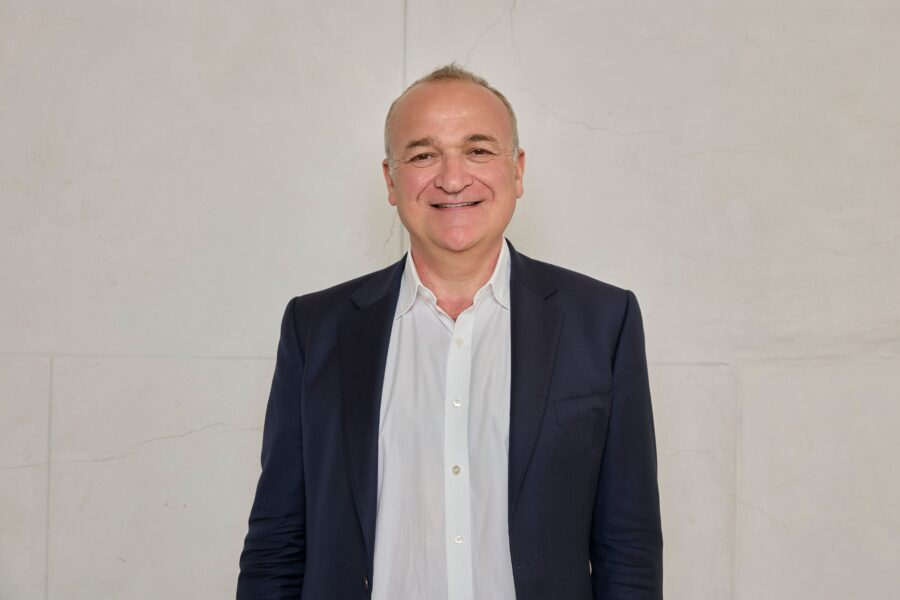
President and CEO at Genyro Inc