AI-generated summary
The Bankinter Innovation Foundation’s FusionForward report examines how fusion energy is moving from scientific promise to an industrial challenge with real potential as a clean, safe and virtually limitless power source. Carlos Alejaldre, a leading fusion expert, reviews global energy trends—rising population and per-capita consumption—and argues that meeting future demand while cutting emissions requires new baseload options alongside renewables. He stresses that fusion’s scientific viability is no longer hypothetical: recent milestones at JET and the National Ignition Facility demonstrated sustained reactions and, for the first time on target, energy gain. The core remaining hurdles are technological and engineering: producing and recycling tritium, managing intense neutron fluxes, developing radiation-resistant materials, achieving continuous operation, and converting fusion heat into electricity at industrial scale.
Large public projects like ITER and the proposed IFMIF-DONES materials test facility are central to proving the chain from physics to power, while growing private investment and industrial contracts are accelerating innovation. Alejaldre highlights Europe’s strong public role but warns it must mobilize more private capital to keep pace with the U.S. and China. Fusion is now a credible component of a future low-carbon energy mix, yet significant work remains to industrialize, commercialize and integrate it into global systems.
Is fusion a near reality? Carlos Alejaldre, an expert at the Future Trends Forum, analyses progress, challenges and their impact on the energy future.
The Bankinter Innovation Foundation, through its Future Trends Forum, constantly analyses those trends that are set to transform the economy, industry and society. Among them, fusion energy occupies a prominent place today due to the potential it holds as a clean, safe and practically inexhaustible energy source. The FusionForward report addresses precisely that turning point in which fusion has ceased to be a purely scientific promise and has begun to emerge as a technological and industrial challenge of the first order.
The Foundation has already addressed this issue in a previous article dedicated to the ignition milestone reached in 2022 at the National Ignition Facility, a breakthrough that put fusion back at the centre of the energy debate. This article picks up that conversation to go one step further: to understand where this technology is today, what barriers it still needs to overcome and what would need to happen for it to be integrated into the energy system of the future.
To this end, the Foundation has the vision of Carlos Alejaldre, one of the leading voices in this field in Spain, Europe and the world. His career is closely linked to some of the most relevant projects and institutions in the sector, from the National Fusion Laboratory of CIEMAT to ITER, of which he was deputy general director, in addition to his role in the implementation in Spain of IFMIF-DONES. He currently chairs the Governing Council of Fusion for Energy, the European agency responsible for Europe’s contribution to ITER.
If you want to see Carlos Alejaldre’s presentation, you can do so here:
Fusion Energy: Science or Fiction? with Carlos Alejaldre
Why fusion matters: more energy for a growing world
Before entering into the merger, Carlos Alejaldre focuses on a previous issue: energy. Not as a technical debate, but as one of the great geopolitical, economic and social issues of our time. In a world marked by supply tensions and crises that have a direct impact on daily life, the underlying question is increasingly urgent: where will the energy we will need in the coming decades come from?
From there he also proposes the title of his speech –Fusion energy: science or fiction? -, with a very clear intention: to dismantle the idea that fusion has been promising the same thing for decades without really making progress. His message is the opposite. We are not the same as we were 40 years ago. A lot of progress has been made, and to understand why investment in fusion continues, we must first look at the evolution of global energy consumption.
When Alejaldre began to use this data, in the 1990s, the average global consumption was around 2,000 kilowatt hours per person per year. The world population was then about 5,000 million inhabitants, which placed the total annual consumption at around 10.4 terawatt hours. But more important than the average was inequality: large countries such as India, China or Brazil were still at very low levels of consumption per person, approximately equivalent to that of a 100-watt light bulb.
This imbalance helps to understand what has happened next. If the world population goes from 5,000 to almost 10,000 million people by the middle of the century – today it already exceeds 8,000 million – and the average consumption per inhabitant also increases, global energy demand skyrockets. In fact, Alejaldre recalls that the world average has already exceeded 3,000 kWh per person per year. Translated: the planet is heading towards an energy need approximately three times greater than it was a few decades ago.
In his opinion, it is not an excess or a whim. It is about development. The relationship between energy consumption and human well-being is direct: the more access to energy, better living conditions, more education, more health, more productive capacity. International indicators show, he explains, that this improvement is very clear to reach around 4,000 kWh per person per year. Huge regions of the world are still below that threshold today, especially in Asia and Africa.
That is why, he insists, talking about energy is talking about progress. Since humanity learned to use fire, well-being has been linked to the ability to access abundant energy sources. The critical question is not whether we will need more energy. We will need it. The real question is how to produce it.
And therein lies the big problem: the basis of the global energy system remains largely the same. In the 1990s, around 85% of the world’s energy came from fossil fuels. Decades later, this dependence has barely budged: before the pandemic, Alejaldre recalled, the percentage was still around 86%. Renewables have advanced, the weight of some technologies has changed, but oil, gas and coal continue to occupy the centre of the system.
This has an obvious consequence. If demand grows and fossil fuels continue to sustain most of the energy mix, the environmental impact does not decrease: it increases. Hence the need to build a different combination, capable of responding to three requirements at the same time: availability, sustainability and security of supply.
Renewables are an indispensable part of this response. But Alejaldre also recalls its limits: intermittency, dependence on weather conditions and the need for more robust and better prepared grids to manage large-scale distributed generation. Nuclear fission, on the other hand, continues to be another option present in the energy debate.
It is in this context that fusion makes sense. Fusion is beginning to be understood as a strategic bet on a problem of enormous scale, beyond its futuristic image. Its potential, he explains, is extraordinary: with just 12 grams of deuterium and 50 grams of lithium – just 62 grams of fuel – all the energy that an average citizen of the European Union will consume throughout his or her life could be obtained. In addition, these are abundant resources: deuterium is extracted from water and lithium is present both in the earth’s crust and in the sea.
There is still no fusion plant in commercial operation. But the physical principle that underpins it has been operating for billions of years. There is the Sun, about 150 million kilometers from Earth. Every second it transforms about 650 million tons of hydrogen into helium, and in the process converts about 4.55 million tons of mass per second into energy. That, in the end, is the promise of fusion: to reproduce here, in a controlled way, a part of the energy that powers the stars.
From fiction to science
Fusion has been, for decades, a common territory of science fiction. Alejaldre remembers it with humor: it appears in films, series and futuristic stories as an almost miraculous source of energy, capable of moving spaceships, powering cities or solving humanity’s great energy dilemmas at once. From Back to the Future to Star Trek, fusion has long occupied a privileged place in the technological imagination.
But the relevant question no longer revolves around its narrative dimension; it revolves around its real scientific application. And that is where the real challenge begins. Because reproducing the energy of the stars on Earth does not consist of copying exactly what happens on the Sun. The solar reaction is extremely slow – and that is precisely why the Sun has been shining for about 5,000 million years and will continue to do so for many more years – but it does not serve as a direct model for generating energy here in a concentrated and usable way.
The most promising route on Earth involves another reaction: the fusion between deuterium and tritium, two isotopes of hydrogen. According to Alejaldre, it is the most viable option because it allows a sufficiently high probability of reaction to be achieved in conditions that, being extreme, are within the physically manageable. The difficulty is enormous, however: for this reaction to be efficient, it is necessary to work at temperatures in the order of 100 million degrees.
The figure is even more impressive if compared to the Sun itself. At its centre, the temperature is around 12 to 15 million degrees. In other words, to make deuterium-tritium fusion possible on Earth, temperatures much higher than those of the solar interior must be reached. This is precisely the threshold that separates theoretical fascination from technological challenge. The next step is to understand how it can be achieved.
From theory to proof
The big question, at this point, is whether it can become a reality on Earth. And Carlos Alejaldre’s answer is clear: yes, it is possible. In fact, an essential part of that demonstration has already been achieved. The question is not so much to prove physics as to turn it into a scalable industrial technology.
The most promising reaction today is deuterium-tritium. Deuterium does not pose major supply problems: it is present in water and is relatively easy to extract. Tritium, on the other hand, does introduce an additional difficulty. It is radioactive, has a half-life of 12.3 years and hardly exists naturally in usable quantities. That is why it cannot be extracted directly from nature on a large scale.
The solution is to produce it within the fusion system itself. Lithium is used for this: the neutrons generated in the reaction impact this material and allow new tritium to be obtained, which can then be reintroduced into the reactor. On paper, the cycle is solved. In practice, bringing it into continuous, safe and efficient operation remains one of the great technological challenges of the sector.
Therein lies precisely the difference between demonstrating that fusion works and converting it into a commercial energy source. Alejaldre stresses that we already know how to get deuterium and tritium to fuse. The most complex thing now is everything that surrounds this process: managing neutrons, protecting materials, closing the fuel cycle and designing systems capable of operating in a sustained way.
Today, this path is explored above all through two major technologies: magnetic confinement and inertial confinement.
In the first case, the objective is to contain the plasma – that fuel at about 100 million degrees – inside a kind of “magnetic bottle”, created by very intense magnetic fields. As the amount of fuel is very small, on the order of a few grams, this strategy allows it to be isolated from the walls of the reactor and maintain the necessary conditions for fusion to occur. Within this family, the two most relevant configurations are the tokamak and the stellarator.
In the field of magnetic confinement, the most emblematic experiment has been JET, in the United Kingdom, for years the great European reference. There, a decisive result was achieved in 2022 : producing 59 megajoules of fusion energy for five seconds in a controlled manner. It was a test of enormous value, because it showed that the reaction could be sustained and generate significant amounts of energy. The limit was elsewhere: to heat the fuel to these extreme conditions, more energy had to be provided than was then returned by fusion. In other words, the net balance was still less than one.
That was not, however, JET’s objective. Its mission was to demonstrate control, stability and production capacity, and in that sense the result marked a before and after. Fiction was beginning to be left behind.
2022 was also a key year for the other major focus, inertial confinement. In this case, the strategy consists of concentrating an enormous amount of energy – usually using lasers – on a tiny target, around one millimetre, to trigger the fusion reaction. At the National Ignition Facility (NIF) in the United States, a historic milestone was reached: by introducing 2 megajoules of laser energy into the target, 3.15 megajoules of fusion energy were obtained.
It was the first time that a net gain had been achieved on the target, that is, a Q greater than 1: the reaction returned more energy than it received directly. However, if you consider the whole system, the laser needed between 300 and 400 megajoules to work, so the overall gain was still far from an energy-useful plant.
Even so, the progress has continued. As Alejaldre explains, in 2025 the NIF raised that result to 8.6 megajoules, significantly multiplying the gain obtained on target. It is a sign that technology is also progressing rapidly in this direction.
The conclusion is resounding: fusion no longer belongs to the realm of speculation. It has already proven that it works, both in magnetic and inertial confinement. The challenge now is not to test the science, it is to master the technology and take it to the next level.
The Great Race: From ITER to Industry
If there is one way that today concentrates a large part of the expectations to demonstrate that fusion can produce electricity, it is that of magnetic confinement. It is also the technology on which most of the international scientific effort has been based for decades. The logic is known: introduce deuterium and tritium into a chamber, confine them with very intense magnetic fields, extract the helium generated as waste and take advantage of the energy released by high-energy neutrons.
This is precisely one of the great technological knots. These neutrons impact the chamber and the materials surrounding the plasma, subjecting them to extreme conditions. The challenge, beyond resisting very high temperatures and energy fluxes, is to do so with materials capable of minimising radioactive activation and making fusion compatible with reasonable waste management. In other words: the physics of fusion has been proven, but the engineering that must make it viable on an industrial scale continues to require decisive advances.
The operating conditions help to understand the magnitude of the challenge. In magnetic confinement, it is necessary to work with temperatures of hundreds of millions of degrees, more than ten times higher than those of the center of the Sun. At the same time, the plasma that is confined has an extremely low density, on the order of a million times lower than the atmospheric density, and must remain stable for several seconds so that the reaction has time to produce energy. The final gain depends, in essence, on the combination of these three factors: density, temperature and confinement time.
Turning this knowledge into a large international infrastructure took decades. Alejaldre recalls a symbolic milestone: the Reagan-Gorbachev summit in November 1985, at which the United States and the Soviet Union identified fusion as a possible field of cooperation. From there, a global project began to take shape that would eventually bring together countries representing around 80% of the world’s GDP. But even so, it was not until 2006 that the agreement to build ITER was formally signed.
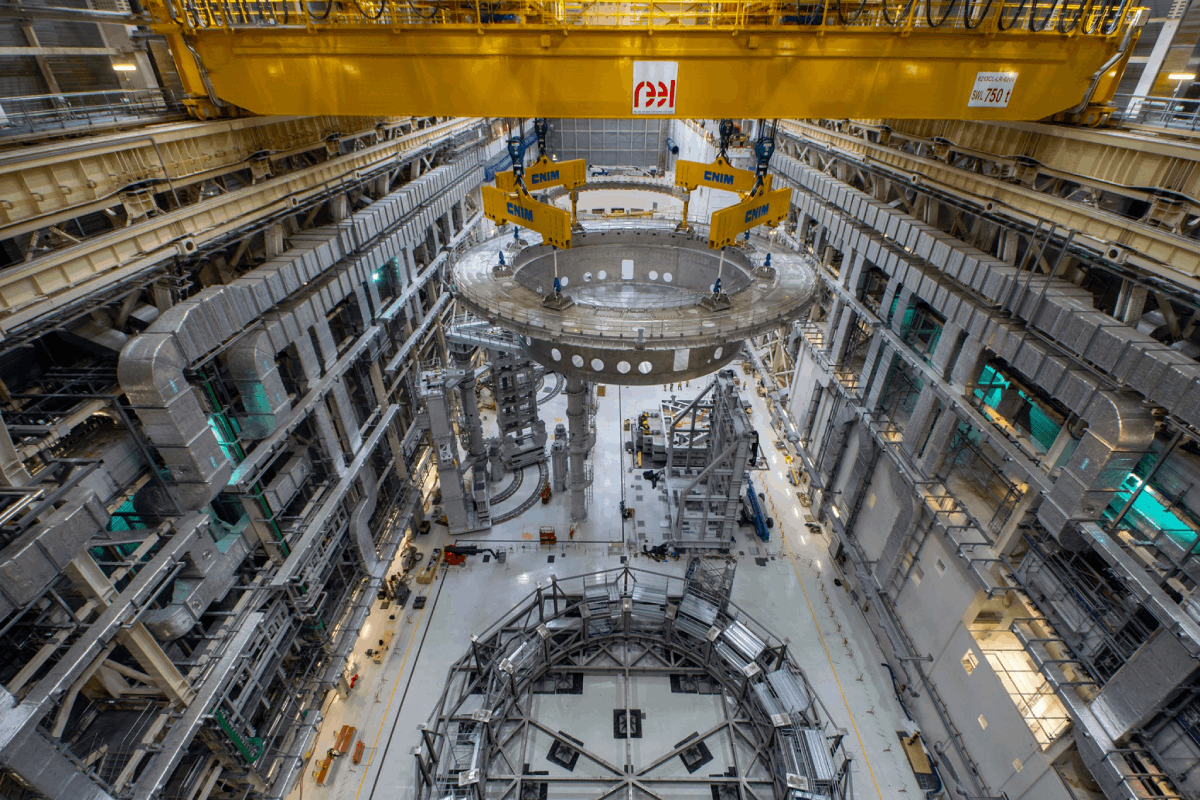
ITER is today the great emblem of this ambition. Located in the south of France, it is a machine of an unprecedented scale: around 10 million components, about 400,000 tons in weight and an estimated cost of between 20,000 and 30,000 million euros. Its size gives an idea of the complexity of the project: the machine weighs almost as much as the aircraft carrier Charles de Gaulle, the vacuum chamber is heavier than the Eiffel Tower and the cryostat – which must keep the superconducting coils at temperatures close to those of liquid helium, around 3 kelvin – is compared in dimensions with great monuments such as the Jefferson Memorial.
But there is an important nuance: ITER is not going to produce electricity. Its mission is not to inject energy into the grid. It is to demonstrate that fusion can work with significant power gains. The objective is to introduce about 50 megawatts of power and obtain 500 megawatts of thermal output. The next step will correspond to another generation of machines, the future demonstration plants, which will have to convert this thermal energy into electricity and operate for prolonged periods, on the order of hours, with powers close to 500 megawatts of electricity.
To get there, ITER is not enough. It is also necessary to advance in a less visible, but equally decisive, field: that of materials. And that’s where IFMIF-DONES, the large international facility that is being developed in Granada, comes in. Its function will be to generate a neutron source capable of reproducing the damage that materials will suffer in a future fusion reactor, something that today cannot be adequately simulated in any other facility in the world. Alejaldre presents it as an essential piece: without this validation of materials, fusion will not be able to make the industrial leap.
This effort is also supported by a particularly solid European architecture. Europe contributes around 45% of the contribution to ITER through Fusion for Energy, the European agency based in Barcelona, which has nearly 500 engineers and a budget of 5,600 million euros for the period 2021-2027. In this ecosystem, Spain has managed to consolidate a prominent position: hosting Fusion for Energy and the IFMIF-DONES project, in addition to the growing participation of its industry. According to Alejaldre, Spanish companies have already received around 1,800 million euros in competitive contracts linked to fusion, a figure that reflects the extent to which this race is already having an economic and industrial impact.
A new actor has also joined this public impulse: private investment. In just a few years, mergers have ceased to be almost exclusively state territory to attract capital from new companies that promise to accelerate deadlines with alternative approaches. Global private investment is already around 13,000 million euros, concentrated mainly in the United States, China and, to a lesser extent, Europe. For Alejaldre, this trend confirms that the merger is experiencing a particularly dynamic moment, although he also issues a warning: Europe continues to lead in public financing, but runs the risk of being left behind if it does not mobilise more private investment.
All this reinforces a fundamental idea: fusion no longer belongs to the realm of speculation. Its scientific viability has been proven. Major international programmes are underway. Industry is beginning to position itself. And the technological ecosystem is expanding. There remains, of course, a complex agenda of challenges to be solved – materials, costs, continuous operation, safety and industrial scaling – but the direction is clear.
Alejaldre sums it up with a clear conviction: there is no simple or single solution to the global energy problem, but fusion can become one of the great pieces of the energy system of the future. And, for the first time in a long time, that possibility is beginning to seem less like a distant promise and more like the beginning of a new era.
Q&A: What’s Changed and What Remains to Be Resolved
In the colloquium after the speech, Carlos Alejaldre responded to some of the questions that mark the debate on fusion today: what advances have accelerated the sector, how it could become useful electricity, what role Spain and Europe can play and why private investment has begun to look at this field with different eyes.
When asked what has changed in recent years, Alejaldre pointed to a combination of factors. On the one hand, technological advances such as high-temperature superconductors, new design capabilities and better simulation tools. On the other, a perhaps even more important change: the feeling that fusion is no longer a purely theoretical horizon. The results obtained in facilities such as JET and, especially, the milestone reached by NIF by exceeding a Q greater than 1 have acted as very powerful signals for the investment ecosystem. Although these experiments are not yet equivalent to a commercial plant, they have shown that fusion works and that we are no longer just talking about promises.
This renewed private interest also responds to another logic: even if some projects do not end up in commercial reactors, the race for fusion is generating developments with potential for application in many other sectors. Alejaldre compared it to the space race: control, precision, materials or superconductivity technologies that can have a much broader path than that of fusion itself. In this sense, the field also acts as an engine of innovation.
Another question raised was how to convert the energy released in the fusion reaction into electricity. And here the answer was deliberately direct: for now, by heating water. That is, through a scheme similar to that of other thermal technologies, from nuclear fission to combined cycles, in which heat ends up generating steam to drive turbines. It is not a particularly elegant solution, he acknowledged, but today it is still the most realistic route in the case of magnetic fusion. In the future, other possibilities could open up with advanced reactions, such as proton-boron, which do not generate neutrons intrinsically and would allow, in theory, a more direct conversion to electricity. But that scenario is still much further away.
The question also arose as to what fusion could bring to a country like Spain, which already has a relatively diversified energy mix. Alejaldre’s response was to broaden the focus: the question should not only be posed nationally, but globally. Fusion would provide an energy source with a very low environmental impact, with resources potentially available for enormous timescales. And, above all, it could contribute to solving a central challenge of the 21st century: how to ensure enough energy to raise the living standards of billions of people without further aggravating climate and geopolitical pressure.
At this point, another increasingly visible factor also appeared: the increase in electricity consumption linked to digitalisation and artificial intelligence. Large data centres are driving up demand and that helps explain why some large technology companies are investing in both fusion and fission. The electrification of the economy is advancing, and with it the need for abundant, stable and clean sources.
There was also space to talk about Spain’s role in this new map. Although a large private fusion startup with the visibility of some US initiatives has not yet emerged here, Alejaldre argued that Spain’s position is solid. The presence of Fusion for Energy in Barcelona, the development of IFMIF-DONES in Granada and the participation of Spanish industry in large international contracts have placed the country in a relevant place within the European ecosystem. Rather than thinking only of an isolated national startup, his approach aims to reinforce a logic of European scale, capable of competing with the speed of the United States and, above all, with the push of China.
One of the last reflections fell on Europe. Why is it more difficult to attract private capital? For Alejaldre, the problem is not only Spanish, but European. Europe has a very strong scientific base, but it is more difficult for it to translate this advantage into agile, ambitious investment willing to take on risk. In an area such as mergers, where returns can be indirect and the terms long, this difference weighs heavily. His conclusion was clear: Europe needs to improve its capacity to transform science into innovation and industry.
The exchange thus left a basic idea: the merger has already entered a new stage, but there are still open questions about deadlines, technological models, industrial scaling and financing. To delve deeper into these issues and better understand the paradigm shift that the sector has undergone in recent years, it is worth going to the FusionForward report of the Future Trends Forum of the Bankinter Innovation Foundation, which develops in more detail the current state of the merger and its future prospects.
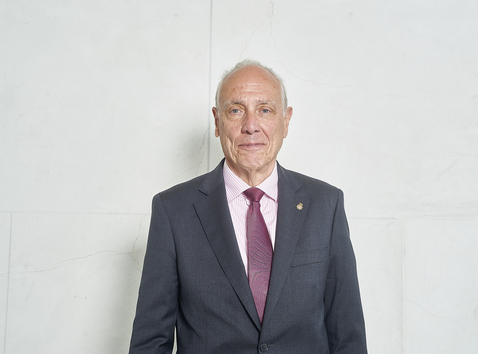
Presidente del Consejo de Administración de Fusion for Energy. Científico emérito del CIEMAT