

AI-generated summary
The Bankinter Innovation Foundation hosted a webinar focusing on the critical and threatened resource of water, featuring Pedro Simón, Technical Director of Murcia’s Regional Entity for Sanitation and Wastewater Treatment (ESAMUR). The event unveiled the report “Water, our vital resource in check,” which compiles insights from over 40 international experts on global water management challenges and innovative solutions. The report emphasizes shifting towards a circular economy approach prioritizing water reuse and efficiency, tailored technologies for local contexts, and sustainable practices in high-demand sectors like agriculture and textiles. It also stresses public education, transparency, and robust governance frameworks.
Murcia exemplifies advanced water reuse, treating and reclaiming over 90% of wastewater mainly for agriculture, supported by sophisticated biological, physicochemical, and disinfection treatments including ultraviolet light, oxidation, ozone, and membrane filtration. Spain’s leadership in water reuse is reinforced by stringent European and national regulations ensuring safety and environmental protection. ESAMUR employs continuous monitoring systems and epidemiological surveillance through wastewater analysis to enhance public health responses. Pedro Simón advocates for political support, social acceptance, and ongoing technological innovation to address challenges such as emerging contaminants and water salinity. The webinar underscores the importance of maximizing water efficiency, fostering trust, and implementing cost-effective reuse strategies to secure sustainable water management amid climate change and population growth.
As part of the series of online events organised by the Bankinter Innovation Foundation, a webinar was held dedicated to one of the most vital and at the same time most threatened resources: water. Rut Bosque, moderator of the event, took the opportunity to announce the launch of the report Water, our vital resource in […]
As part of the series of online events organised by the Bankinter Innovation Foundation, a webinar was held dedicated to one of the most vital and at the same time most threatened resources: water. Rut Bosque, moderator of the event, took the opportunity to announce the launch of the report Water, our vital resource in check, an exhaustive analysis that includes the conclusions of the Future Trends Forum, in which more than 40 international experts participated. This report addresses global challenges in water management and proposes innovative solutions to ensure water sustainability on a planet increasingly impacted by climate change and population growth.
The report sets out a series of essential recommendations to advance water sustainability. Among them, the need to change the current paradigm towards management that prioritises the reuse and efficiency of water within a circular economy model stands out. In addition, it underlines the importance of guaranteeing appropriate technologies for each local context, promoting sustainable solutions in sectors with high water demand such as agriculture and the textile industry, and promoting the reuse and desalination of water, integrating renewable energies. It also highlights the need to educate and raise awareness in society about responsible water consumption and to establish robust and transparent regulatory frameworks that improve governance in this area.
To delve into these issues, the Bankinter Innovation Foundation has invited Pedro Simón, Technical Director of the Regional Entity for Sanitation and Wastewater Treatment of Murcia (ESAMUR). With more than 35 years of experience in the sector, Simón is one of the leading experts in wastewater management in Spain. For more than two decades, he has led the technical management of ESAMUR, supervising the operation of more than 90 water treatment plants in the Region of Murcia, an area where water scarcity has made it essential to reuse water for agricultural irrigation.
Pedro Simón is a strong advocate of innovation in the water sector and a benchmark in the promotion of the circular economy. Under his direction, ESAMUR has implemented advanced strategies that maximize the reuse of resources and minimize environmental impact, contributing significantly to the region’s water sustainability. In the webinar, Simón shares his vision on water management and exposes the state-of-the-art technologies and management models that have made the Region of Murcia a European benchmark in water reuse.
If you want to watch the webinar, you can do so here:
Innovation in Water Reuse and Sustainability with Pedro Simón
Below, we summarize the ideas discussed in the webinar:
Murcia’s water situation: a paradigmatic case
Murcia is facing climatic conditions that require advanced water management. With an average rainfall of 350 mm per year and an agricultural production of more than 2.5 million tons, the region must optimize the use of each cubic meter of water to the maximum. Spain is the leader in Europe in water reuse, with an average reuse of around 11%. However, this figure varies widely between regions, with the Community of Murcia being the most prominent, with more than 90% of the treated water destined for reuse, mainly for agriculture. Other communities, such as the Balearic Islands, the Valencian Community and the Canary Islands, also reach significant levels, although in most Spanish regions the percentages remain below those considered acceptable.
In Murcia, approximately 120 million cubic meters are treated each year, with 100 treatment plants in operation.
Key technologies in water reuse
Water reuse is a complex process that requires a combination of biological, physical, and chemical treatments. In the Region of Murcia, where water is a scarce resource and demand is very high, a number of key technologies have been adopted to transform wastewater into a safe and suitable resource for agriculture. These technologies include advanced disinfection treatments and high-precision filtration systems. Pedro Simón highlights three main approaches in water regeneration to ensure its quality: biological treatment, physicochemical preparation and final disinfection.
Biological treatment: The reuse process begins with biological treatment, designed to remove biodegradable organic matter from wastewater. In the Region of Murcia, this treatment manages to eliminate more than 99% of the biological oxygen demand (BOD5), an indicator of organic matter. This initial step is crucial, as the water that reaches the following processes must be of high quality to avoid problems in the disinfection stages.
Physicochemical preparation: once the biological treatment is completed, the next step is the physicochemical preparation of the water. This process focuses on improving the clarity and transparency of water by removing suspended solids. The presence of these solids can hinder the effectiveness of disinfection treatments, as they can act as “shields” that protect microorganisms. To guarantee a good quality of disinfection, the following techniques are used: chemical reagents are used to help bind the remaining solids, facilitating their decantation and subsequent disposal. This treatment is similar to that used in water treatment plants and allows a considerable reduction of particles in the water. After decanting, the water undergoes a filtration process, which removes the remaining fine solids and improves the transparency of the water. The Region of Murcia has a variety of filtration technologies, adapted to the specific characteristics of the water treated in each plant.
Once the water has been prepared and is free of solids, the final disinfection is carried out. This step is critical to eliminate pathogens such as bacteria, viruses, and protozoa, and to ensure that the reclaimed water is safe for use in agriculture. The disinfection methods used in Murcia include the following systems:
Ultraviolet (UV): this is the most widely used disinfection technology in the region. It consists of exposing water to ultraviolet light lamps, which alter the DNA of microorganisms and prevent their reproduction. This system is effective for the elimination of pathogens and does not generate chemical by-products, which contributes to the environmental sustainability of the process.
Oxidation Systems: these systems use oxidizing agents that attack the cell membranes of microorganisms, making them inert and thus eliminating their ability to infect. Oxidation systems are effective for a wide range of pathogens and are employed when additional disinfection is required.
Ozone: Pedro Simón mentions that ozone is increasingly used in combination with other systems, such as ultraviolet light. Ozone is a powerful oxidizing agent that not only inactivates microorganisms, but can also remove some emerging pollutants. The application of ozone in water disinfection offers significant advantages, since, in addition to disinfecting, it helps to improve the transparency of the water and does not leave harmful chemical residues. In some medium-sized regeneration plants, ozone is used to increase the “transmittance” or clarity of the water prior to membrane filtration, thus maximizing the efficiency of the entire treatment system.
Membrane filtration: this system is used in the most advanced plants in the region and consists of passing water through membranes with ultrafine pores. The pores of these membranes are so small that they block the passage of pathogens such as bacteria, protozoa, and even viruses. The ultrafiltration membranes used in Murcia have pores of up to 20 nanometers, capable of eliminating viruses that are much smaller than bacteria. This process makes it possible to obtain water with an almost potable quality and without disinfection by-products.
The importance of treatment customization: each of these technologies is selected based on the type of water required for the end use. For example, water intended for irrigation of fresh-leaved crops, such as lettuce, must meet stricter quality requirements than water for irrigation of fruit trees. The Region of Murcia has developed a system of customization in water treatment based on salinity and other parameters, which allows the process to be adapted to the specific needs of each agricultural sector and comply with current regulations.
Standards and Regulations on Water Reuse
Water reuse in Europe is subject to strict regulations that seek to ensure that this practice is carried out safely and sustainably. European regulations have evolved in recent years to address the growing needs of countries with water scarcity problems, such as Spain, and to promote reuse as a key practice within the framework of the circular economy.
In 2020, the European Union approved the European Regulation on the Reuse of Water for Agriculture (EU Regulation 2020/741), which entered into force in June 2023. This regulation introduces a significant change in water management in Europe, establishing for the first time unified criteria for all member states in the use of reclaimed water for agricultural irrigation. Among the main provisions of the regulation are:
- Explanation requirement for member states: One of the most innovative aspects of this regulation is that it establishes that countries that decide not to adopt water reuse practices must justify their decision. This approach aims to promote reuse as a widespread practice, prompting member states to consider this option before ruling out its implementation.
- Water quality levels: the regulation establishes different categories of reclaimed water depending on the type of crop and the irrigation system. Crops that consume raw produce, such as lettuce and other leafy vegetables, require water with stricter quality standards, known as “Type A.” This level requires a maximum of 10 colony-forming units (CFUs) of E. coli per 100 mL of water, which is comparable to drinking water standards. By comparison, Spain’s previous regulation in 2007 set a limit of 100 CFU/100ml for agriculture, a level that was considered safe and had not caused problems, but which the new European regulation has decided to strengthen to increase safety and consumer confidence.
For its part, Spain has new national regulations that complement the European regulation. This decree, published in October 2023, replaces the 2007 legislation and establishes stricter rules for water reuse in different sectors. Some of the most relevant aspects of this regulation include:
- Standards for reuse in agriculture and industry: the regulations differentiate between sectors and specifically regulate the use of reclaimed water for agricultural irrigation and for industry. In the agri-food sector, water quality requirements are the highest, while in industry the use of reclaimed water is allowed in certain non-critical processes. Pedro Simón explains that, although Spanish regulations are more demanding, compliance is possible with the advanced treatment systems that have been developed in recent years.
- Control of emerging contaminants: the new regulations require a risk analysis that includes the possible presence of emerging contaminants, such as pharmaceuticals, pesticides and heavy metals. This risk assessment makes it possible to determine the safety of water reuse not only from a public health point of view, but also from an environmental perspective, thus protecting soil and ecosystems from possible accumulations of pollutants.
One of the pillars of European regulations is the validation of water disinfection and regeneration treatments, especially when it comes to ensuring the elimination of pathogens. The regulations establish that plants must demonstrate their ability to eliminate not only bacteria, but also viruses and protozoa, which requires very powerful and high-precision treatment systems.
In addition, plants must develop Risk Management Plans that cover the entire reclaimed water cycle, from its treatment at the facilities to its final use. These plans include constant monitoring of water quality, analysis of possible contaminants and control of physical and chemical parameters. This ensures that any deviations from security levels are detected in time and allow immediate corrective action to be taken.
Pedro Simón highlights that one of the main innovations in water quality control in Murcia is the use of continuous measurement systems that allow changes in water quality to be detected in real time. This system facilitates regulatory compliance by providing early warning of any anomalies, such as increased bacteria or the presence of suspended solids. This technology allows treatment plants to take immediate corrective action and ensure that reclaimed water always meets the required safety levels.
For water reuse to be a practice that is accepted and valued by society, it is essential that there is full transparency in the process and that public trust is fostered. In this sense, ESAMUR has carried out large-scale irrigation studies and tests, in collaboration with the CSIC, to demonstrate the safety of reclaimed water and its compatibility with agricultural products intended for human consumption. The current regulations also provide for the dissemination of information and the implementation of awareness campaigns to promote confidence in reclaimed water, thus ensuring social acceptance of this practice.
Current regulations also encourage companies and management entities to continue developing more sustainable and effective technologies. Pedro Simón highlights that the adoption of such strict standards and their implementation in treatment plants such as those in Murcia demonstrate that it is possible to meet high levels of safety without compromising the economic viability of the process.
Technology optimization: from research to implementation
Murcia has made progress in the implementation of cutting-edge technologies to meet these demands:
- Computational Fluid Dynamics (CFD): allows modelling the flow of water within the facilities, optimising the design and effectiveness of treatments.
- Pilot plants and membrane technology: Simón explains how the region has experimented with various technologies to achieve the required levels of safety. In medium-sized plants, the use of ultrafiltration membranes, with pores of 20 nanometers, has been key to eliminating pathogens.
Epidemiological surveillance systems in wastewater
Thanks to the technologies mentioned above, Pedro Simón highlights the capacity of wastewater treatment plants to act as early warning systems for disease outbreaks. During the COVID-19 pandemic, the Region of Murcia was a pioneer in Spain and one of the first in the world to detect the presence of SARS-CoV-2 in wastewater. This surveillance system allowed the authorities to anticipate possible outbreaks and adopt preventive measures, even before cases were detected in the population.
Recently, with the declaration of a health emergency due to the monkeypox virus, ESAMUR implemented a similar monitoring system. Since August 2023, Murcia’s treatment plants have been analysing wastewater for this pathogen, allowing a rapid response to possible cases and thus reinforcing their role as key tools for public health.
Management and Organizational Model for Reuse
In addition to technology, the management model is fundamental. The Region of Murcia has implemented a model where ESAMUR acts as a link between reclaimed water producers and end users. This intermediate body facilitates communication, transparency and trust between the parties involved. Simón stresses that one of the biggest challenges for water reuse in other regions is the lack of trust and political support.
Emerging pollutants: an additional challenge
One of the most discussed aspects in the webinar was the presence of emerging contaminants in wastewater, which include chemicals such as pharmaceuticals and pesticides. Pedro Simón stresses that the elimination of these compounds is achieved through technologies such as activated carbon and ozone. In addition, innovative technologies such as nanofiltration and advanced oxidation systems with LEDs, which require less energy and are more sustainable, are being explored.
Future challenges and perspectives in water management
Among the future challenges, Simón points out the need to reduce the salinity of wastewater, controlling discharges into sewerage networks. In addition, it indicates the importance of establishing adequate financing mechanisms to meet the costs associated with water reuse.
Questions Answers
During the webinar, Pedro Simón answers various questions from the audience, addressing the main challenges, advances and opportunities in the field of water reuse. Below are some of the most relevant questions and answers offered by Simón:
Question: The Region of Murcia leads the way in water reuse in Spain, reaching 98% reuse of treated water. What advice would you give to other regions with similar water scarcity problems to develop successful treatment and reuse projects?
Answer: The first thing is to generate confidence in the quality of the reclaimed water and to have political support. In Murcia, reuse projects have been possible thanks to the collaboration of irrigation communities, who have proven that reclaimed water can be of excellent quality. In addition, political decisions have been key. For example, in 2000 it was decided that all new treatment plants should include regeneration systems, which has made it possible to deal with drought much more effectively. It is important that regions interested in water reuse ensure reliable quality and promote social acceptance of this practice.
Question: Do you think that society is receptive to adopting responsible consumption practices in water? How could we encourage greater public awareness of this?
Answer: Social awareness is crucial and varies depending on the context. In regions such as Murcia, where water scarcity is a constant reality, people are well aware of the importance of taking care of this resource. However, in other places with fewer problems of water availability, the perception changes. A recent example is that of Catalonia, where, due to a severe drought, water has had to be reused to be poured into the Llobregat River and then made drinkable. These types of measures help to change mindsets and educate the population about the value of water and the importance of reuse.
Question: What is the cost difference between reclaimed water and desalinated water by reverse osmosis?
Answer: Reverse osmosis desalination requires approximately 3 kW of energy for every cubic meter of water. This generates an operating cost of between 0.60 and 0.70 euros per cubic meter of desalinated water. With the amortization of the infrastructure, the final price can exceed one euro per cubic meter. In contrast, reclaimed water, even with high-quality treatments, has a significantly lower cost, between 15 and 20 euro cents per cubic meter. This difference makes reclaimed water an economically viable alternative to desalination.
Question: With regard to the new buildings in Barcelona, which will have to recycle shower water for toilet cisterns, what technical and economic challenges do developers face in implementing these recycling systems?
Answer: These systems have advantages, but they require great awareness and constant maintenance. In Spain, in some cases, similar initiatives have been implemented in the past, such as solar energy installations for hot water, which have not always been properly maintained. The challenge is to ensure continuous and rigorous monitoring of these facilities, as if they are not well monitored, they are likely to deteriorate and become ineffective. Despite these challenges, these systems help to harness water more efficiently and have great potential if implemented and maintained correctly.
Question: How do health regulations affect the reuse of reclaimed water for industrial use?
Answer: The new regulations set different requirements depending on the type of industry. In the case of the agri-food industry, quality standards are the strictest and the use of reclaimed water in certain critical processes is even prohibited. However, it is perfectly feasible to supply reclaimed water to specific industrial sectors, such as the paper industry or some industrial estates. In these cases, it is possible to treat the water to achieve the specific quality levels required, which may include desalination or removal of certain compounds. Reuse in the industrial sector is possible as long as the water quality is adapted to the particular needs of each process.
Question: Is water debacterization by filtration or the use of nanosilver viable?
Answer: At ESAMUR we have not tested the use of nanosilver. Although it is true that these types of products have disinfectant properties, they can also generate a certain toxicity. Today, we have highly effective disinfection technologies that ensure the safety of reclaimed water, such as ultraviolet systems and membrane systems. Research into new technologies is important, but current methods are safe and effective.
Question: What is your vision for the future of water management in the coming years?
Answer: In the Region of Murcia, supply is assured through desalination for human consumption, although this resource has a high cost. However, in the case of agriculture, which requires much larger volumes of water, it is vital to make the most of what we already have. This involves encouraging reuse, modernising irrigation systems and, in general, improving water efficiency.
“Water is an absolutely necessary resource, and we need to prevent future problems by taking care of every drop and minimizing pollution from its source in sewer networks.”
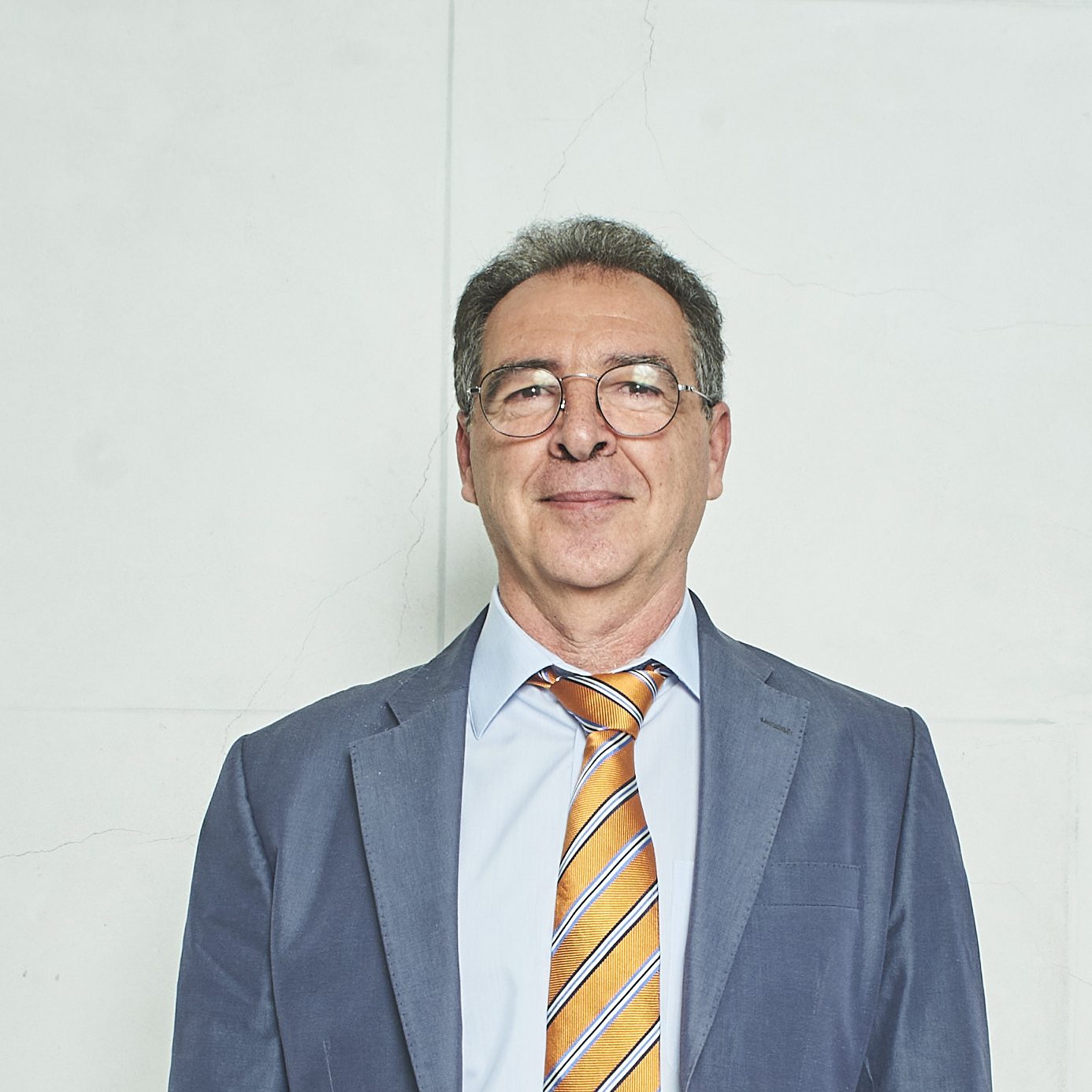
Director Técnico de ESAMUR (Entidad de Saneamiento y Depuración de Aguas Residuales de la Región de Murcia)