AI-generated summary
Agriculture and technology, once seen as opposing fields, are now converging to address the global challenge of feeding a growing population with limited resources. Innovations such as artificial intelligence, Big Data, and robotics are transforming agriculture by enhancing efficiency and sustainability. The sector, which contributes 6.4% to the global economy, is witnessing significant investments in robotics to automate critical tasks like planting, weeding, and harvesting. Countries like Japan lead in agro-robotics development, supported by government subsidies and training initiatives, while North America focuses on autonomous vehicles and drones, exemplified by robots like Carry and Abundant Robotics’ apple picker. Europe is advancing flexible robotic systems and decision support tools to help farmers adopt digital technologies and assess their impact.
Robotics also plays a vital role in indoor agriculture and labor-intensive tasks, with companies like Harvest Automation and Israeli startup MetoMotion developing robots for handling and harvesting crops in greenhouses. European startups such as Agrobot and Naïo Technologies offer specialized robots for fruit picking and sustainable farming. Additionally, companies like Bosch are deploying advanced robots to detect and eliminate weeds rapidly. Drones further support precision agriculture through mapping and monitoring. The key challenge remains to extend these technological benefits beyond advanced economies to developing countries, where agriculture is crucial but access to foodtech is limited.
Robotics is commonly applied in food production, but this technology also reaches the open field or greenhouses to contribute to the agricultural field.
Agriculture and technology are two concepts that may seem antithetical, but only if you have a partial vision anchored in an ancestral world. Today, artificial intelligence, Big Data and robotics are progressively emerging as enablers of a revolution that aims to respond to the needs of an ever-growing population with fewer resources available.
Agriculture accounts for 6.4% of all global economic production and, in the context of sustainable development, new technologies are a key factor in the transformation of the sector, as highlighted in the Future Trends Forum dedicated to the food challenge, organised by the Bankinter Innovation Foundation.
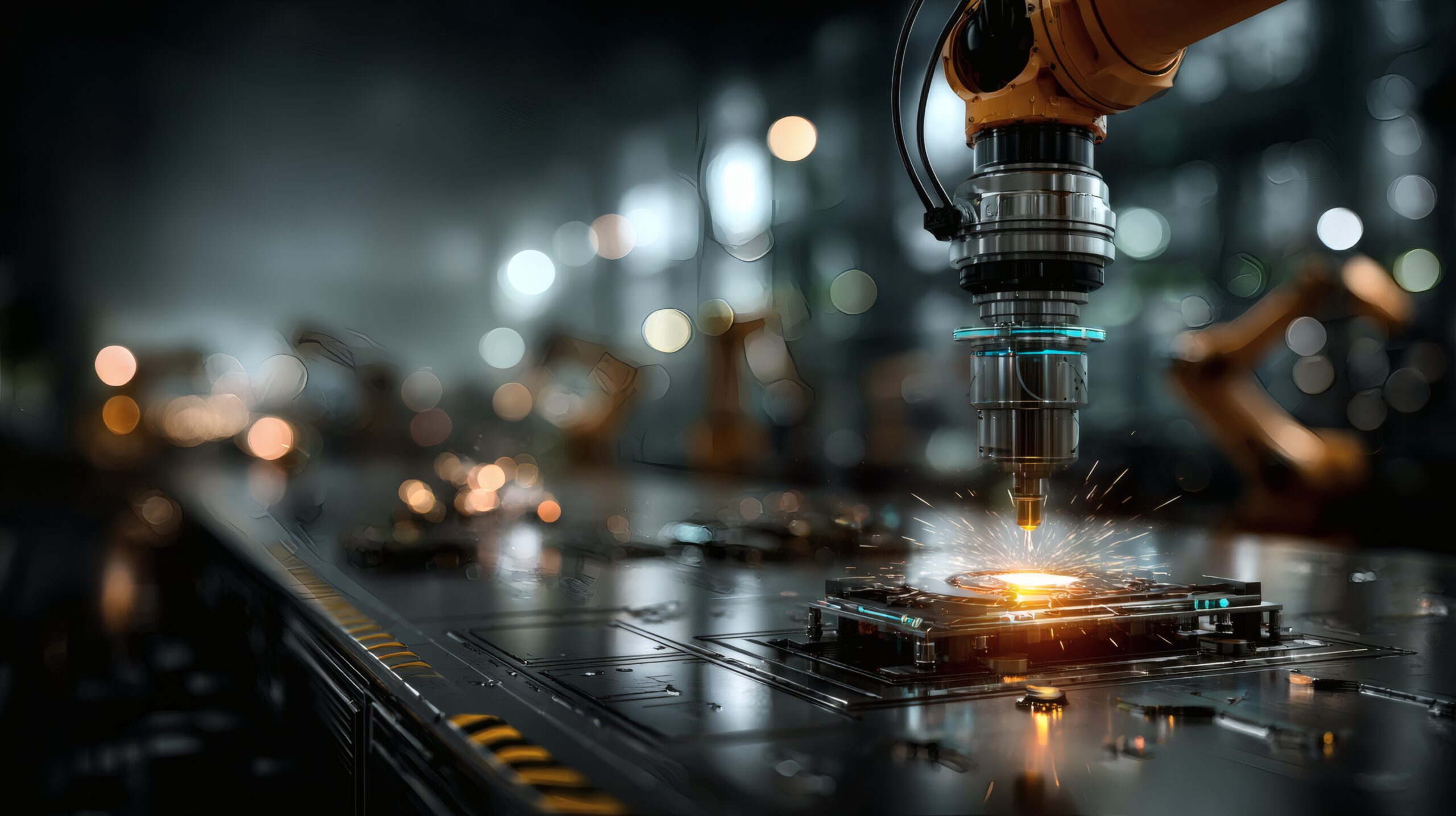
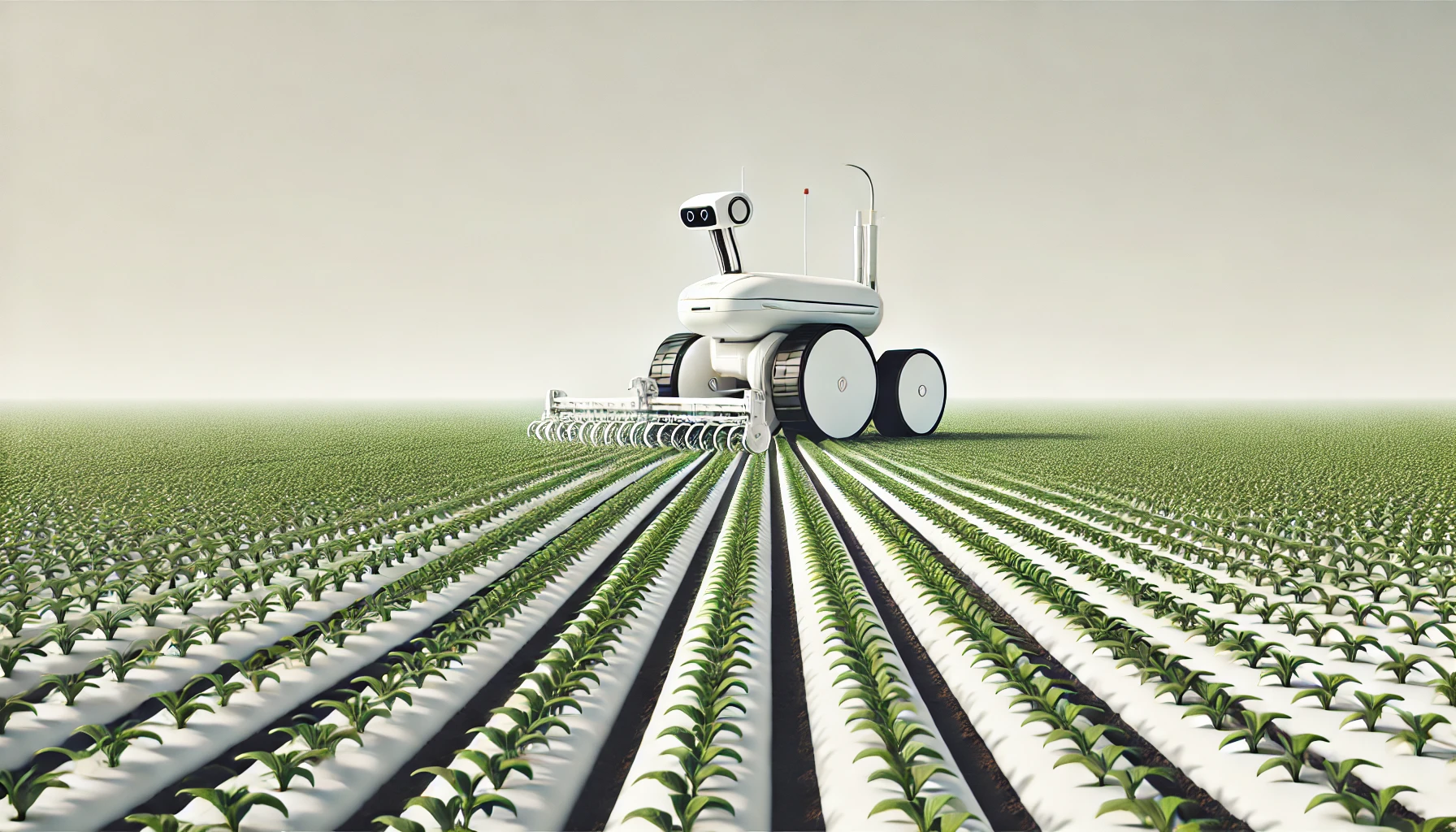
Many investments are being concentrated in robotics, which can play a role in all fundamental phases: from planting, weeding, to harvesting. The growing demand for agricultural robotics is driven by a number of factors, including declining labor availability, soil erosion, the growth of indoor agriculture, and the automation of the sector.
Nowadays, robotics is already present in many activities, in the fields and in greenhouses. Japan is currently the world leader in research and development of agricultural robots and the government grants financial support for the adoption of agro robots in critical, mountainous and highly depopulated areas. In addition, it encourages projects related to the technological training of human capital through digital platforms of ‘knowledge and experience’.
North America is seeing strong investment from private and government, particularly for autonomous vehicles, drones, and systems related to harvest phases. Carry, for example, is a robot that uses artificial intelligence, automation and electrical energy to transport up to 230 kilograms of crops by autonomously following workers and avoiding obstacles.
In the United States we find Abundant Robotics, a company that has developed an apple picking robot capable of completing the job 24 hours a day. The solution adopted is a robotic arm in the form of a ‘vacuum cleaner’, i.e. the fruit is sucked up by the device and only comes into contact with the air, thus avoiding damaging its surface with a mechanical tool.
In Europe, the Fraunhofer EZRT research center is developing flexible robotic systems for customized solutions that can be implemented on a large scale. On the other hand, CODECS is a Horizon Europe project that analyzes agricultural enterprises, through a decision support system (DSS), to assess the impact of digital technologies. In essence, it wants to improve the capacity of European farmers to adopt digitalisation as an enabler while also documenting the benefits and costs to create a vademecum.
Among the companies involved there are also cattle ranchers. In fact, a considerable increase in the demand for milking robots is expected, to make up for labor shortages and save time. Among the active European projects is Rob4Crops, a robotic system through which existing agricultural machines are updated to work in tandem with robots. The system is based on planning and scheduling software that uses twin digital technology.
Very interesting applications are also found in indoor agriculture. More than two billion potted plants are sold each year in the United States and almost all of them require repeated handling, hard work that forces people to spend a lot of time in a hunched position: robotics can be a solution. Hence Harvey’s mission from Harvest Automation, the company that produces a small mobile robot designed for use in nurseries and greenhouses. It can autonomously locate, transport, and organize potted plants both inside buildings and in outdoor fields.
Israeli startup MetoMotion has developed robots capable of performing labor-intensive tasks in greenhouses. The company’s first application was picking tomatoes with a robot that combines advanced three-dimensional vision systems and machine vision algorithms to identify and locate ripe fruits and then coordinate multiple robotic arms. The machine is also equipped with a terminal actuator for non-destructive collection and an on-board packing system.
In Europe, the Spanish startup Agrobot has created a fully automatic strawberry picking robot, equipped with 24 arms. The machine uses machine learning to measure the ripeness of the fruit. In Bordeaux and the south of France, the robots are already in the vineyards and further north, in Cognac, they roam the floor of the Grand Champagne and Petite Champagne crus . A robot, called Ted, has been developed by Naïo Technologies in Toulouse to provide answers to the problems of contemporary agriculture, in particular those concerning sustainable agriculture and labour-intensive activities.
Finally, Bosch has produced with the startup Deepfield Robotics a huge agricultural robot capable of autonomously detecting and physically eliminating weeds in a tenth of a second, through an advanced artificial vision recognition system. Drones are also used for infrastructure inspection and security, the creation of 3D models and extremely relevant maps for precision agriculture and large-scale agricultural applications. For example, weed detection and mapping can be done in a field by a group of small UAVs.
The solutions offered by technology are many, the challenge now will be to bring them not only to advanced economies but also, and above all, to those countries whose population continues to grow and where agriculture is the engine of the economy but do not have access to the wonders of foodtech.