AI-generated summary
Agriculture, one of humanity’s greatest innovations, is undergoing significant transformation amid global challenges such as reduced labor availability, urbanization, a growing population nearing 10 billion, and climate change-induced resource scarcity. Smart agriculture, particularly through smart greenhouses and vertical farming, offers promising solutions by leveraging advanced technologies to enhance yields, reduce waste, and minimize environmental impact. These innovations focus on scalable, sustainable production models that optimize resource use—especially water and electricity—while ensuring food safety and lowering costs.
Central to smart greenhouse technology is the integration of big data and artificial intelligence (AI), which enable real-time monitoring and precise control of critical growth parameters like light, irrigation, soil quality, and disease detection via sensors. The global smart greenhouse market, valued at $1.9 billion in 2023, is projected to grow to $3.6 billion by 2030, with Europe, particularly countries like Italy, Spain, and the Netherlands, leading in development and adoption. Innovations include Novagric’s water-efficient greenhouses and Eindhoven’s smart windows with adjustable light filtering, enhancing crop growth and energy savings. Studies show AI-managed lighting can reduce electricity consumption by over 33%, significantly cutting operational costs. This fusion of ancient agricultural practices with cutting-edge technology is essential for sustainable food production and humanity’s future.
Technology is changing the world of agriculture and so-called foodtech can be an answer to the challenges linked to climate change and population growth.
Agriculture, one of the greatest human innovations, has changed a lot over time and continues to evolve. We are living in an era of global change, a context that we discussed in the latest Future Trends Forum of the Bankinter Innovation Foundation and which is deepened in the report “Smart Agriculture: the challenge of sustainable food“.
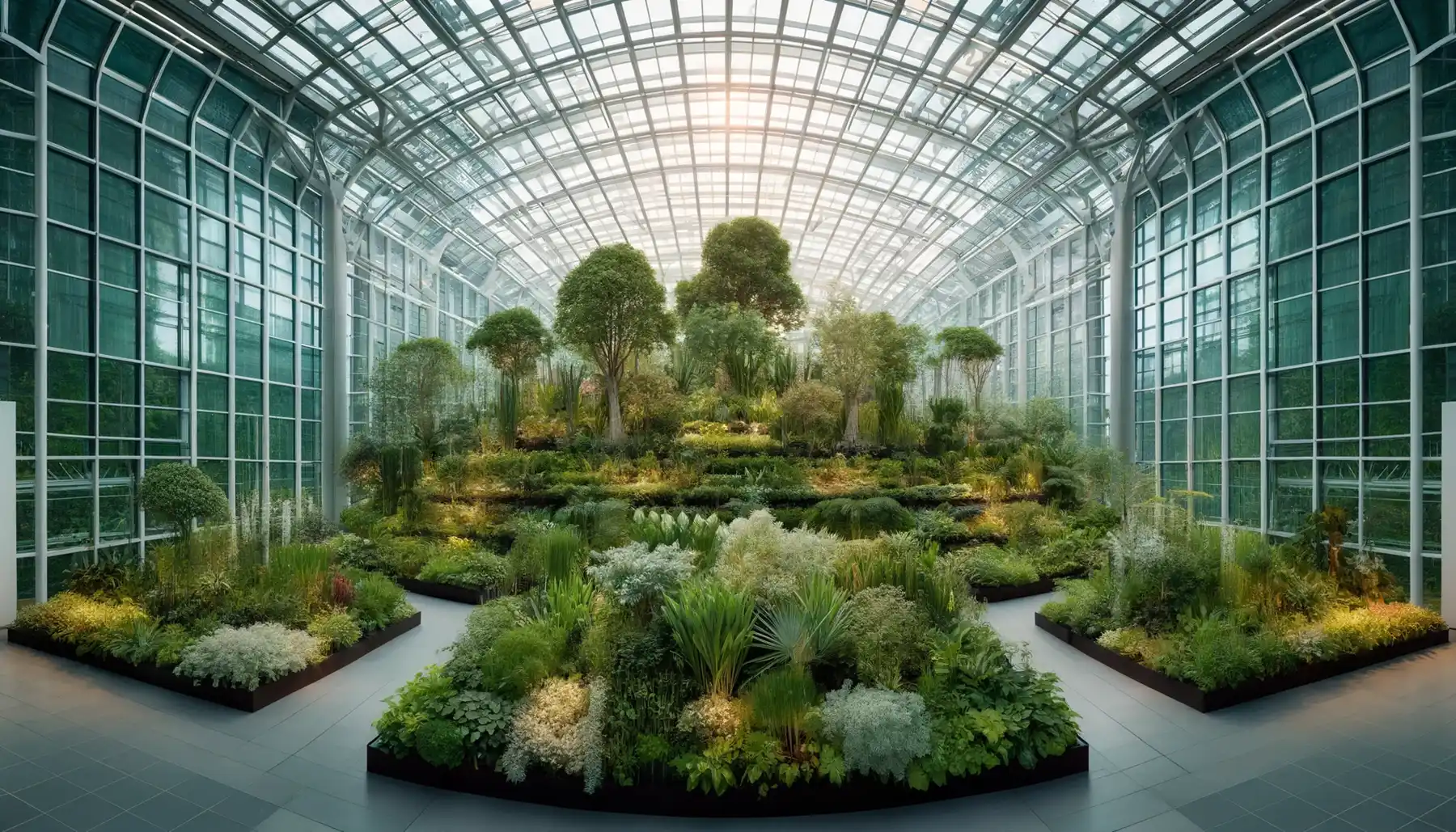
In fact, the challenges are different, from the reduced availability of labor, to increasingly urbanized land, and the increased food requirement for a world population that is approaching 10 billion. Climate change is also making natural resources increasingly scarce and valuable. An answer could come from technology, with tools such as the so-called smart greenhouses capable of improving yields, reducing waste and also ensuring a significant reduction in greenhouse gases associated with agri-food production.
In Europe, an increasingly similar climate to tropical regions and an increase in the demand for eco-sustainable food will incentivise production towards protected crops. The challenge is to establish scalable and sustainable production models thanks to the integration of the most modern technologies to optimize resources such as water and electricity and obtain maximum performance in conditions of absolute food safety with minimum environmental impact and lower costs. This is, in essence, the concept behind smart greenhouses, one of the most promising implementations, along with vertical farming, of agriculture 4.0.
The key is big data and the ability to collect a lot of information through sensors scattered within the greenhouse and then analyze it using artificial intelligence (AI) algorithms. In this way, those who manage a smart greenhouse will be able to see all the necessary parameters for crop optimization transferred in real time and through a convenient computer interface: from the level of luminosity, to irrigation, including the quality of the land, the need for fertilizers and the early diagnosis of possible diseases.
The encouraging results offered by the many active projects around the world have fuelled a fast-growing business. In fact, the The global smart greenhouse market was worth $1.9 billion in 2023 and is expected to reach $3.6 billion by 2030. Unlike many other technological areas, Europe plays a leading role, in particular, some of the most promising solutions have been developed by countries such as Italy, Spain and the Netherlands, where greenhouse horticulture is practised on a large scale.
Novagric, a company from Almeria that is committed to technological innovation in the agricultural field, has proven to be able to considerably increase yields while saving water resources. The company builds high-tech smart greenhouses capable of reducing water consumption by up to 40% compared to traditional methods. Its models can be adapted to different climatic conditions and have technologies that are responsible for monitoring parameters such as temperature, humidity and luminosity, as well as irrigation and hydroponic irrigation systems. All data can be viewed in real-time on screens and other devices. The results obtained with different crops, from a particular variety of peppers to cherry tomatoes, speak of a 30% increase in productivity.
On the other hand, a researcher at the Technical University of Eindhoven in the Netherlands, Gilles Timmermans, He has developed a crystal capable of regulating the intensity and spectral content of light. It is designed specifically for greenhouses, most of which, especially in the Netherlands, maximize the light that reaches the crops. However, in summer, the internal temperatures become too high and hinder the growth of the plants. Currently, the problem is addressed by increasing ventilation or physically decreasing the amount of light entering the greenhouse with curtains or screens.
However, increased ventilation makes it more difficult to control the environment, allowing parasites to enter the structure. Taking advantage of the latest applications designed for buildings, these smart windows have fluorescent dyes embedded in liquid crystals whose arrangement can be controlled like an LCD screen. Therefore, the transparency can be modulated, allowing only a few wavelengths of light to reach the plants. The others can be diverted to small photovoltaic cells that accumulate energy that can be used for other purposes.
Technological systems for cultivation such as these are being studied in several countries. Specifically when it comes to lighting, the solutions are diverse. Some smart greenhouses are managed with artificial intelligence programs that, thanks to specific sensors, detect lighting conditions and, based on the data, provide crops with the right amount of light with a precision unattainable for traditional systems. The combination of AI and LED lamps, in turn, saves more than a third of the electricity consumed, thus maintaining stable lighting conditions and ensuring consistent harvests.
In this sense, a study by the University of Georgia published by Plants and carried out in experimental greenhouses on lettuce plants, confirms that electrical energy savings of more than 33% can be achieved in spring. The savings decrease in the colder season, but are still measurable and significant (with minimum values of around 4%). This is a relevant fact: in the United States, electricity bills for greenhouses account for between 10 and 30% of management costs, with an expense that can reach 600 million dollars per year. Today the most ancestral human activity must be allied with the most modern technology to be sustainable and guarantee the future of humanity, as it has always done.