AI-generated summary
The year 2025 marks a pivotal moment in the evolution of robotics, a field already transforming industries like manufacturing, logistics, and agriculture. With 3.5 million operational robots worldwide as of 2022 and a market value of $15.7 billion, robotics continues to expand, driven by investments from sectors such as automotive and electronics. Notably, reshoring efforts in Europe and the U.S. use high-precision robots to enhance supply chain resilience. Both large corporations and small to medium enterprises (SMEs) are adopting robotics, propelled by trends emphasizing sustainability, AI integration, and democratization. Collaborative “co-worker” robots, designed to work alongside humans, are gaining prominence. These robots handle repetitive or precision tasks while humans focus on strategic roles, exemplified by wearable robots and exoskeletons that boost operator performance and safety. User-friendly software, including low-code and no-code platforms, further democratizes robot usage across manufacturing, logistics, and healthcare.
Robotics is increasingly integrated with AI, 5G, Big Data, and Cloud Computing, creating connected digital ecosystems where robots learn, adapt, and optimize in real time. Smart factories leverage AI for predictive maintenance and process flexibility, while 5G enables precise, wireless communication critical for complex tasks such as semiconductor manufacturing. Advances also enhance robotic-assisted surgery, improving medical outcomes. Sustainability efforts include refurbishing robots to extend their lifespan, reducing waste and costs, and enabling broader access to automation in emerging markets and SMEs. However, challenges remain, including the risk of widening economic disparities and the need for regulations addressing ethics and human-robot coexistence. By 2025, robotics promises a more accessible, collaborative, and connected future, reshaping industries and society alike.
We explore the most promising trends that will redefine the global technology landscape in the coming years
On the horizon of innovation, 2025 is presented as a crucial year for the evolution of robotics. A field that has already profoundly transformed manufacturing, logistics, manufacturing, agriculture and other industries. Development continues to move towards new frontiers.
The impact of the robotics revolution is supported by figures that reflect steady growth. According to the International Federation of Robotics (IFR), the number of operational robots in the world reached 3.5 million in 2022, with an estimated value in facilities of 15.7 billion dollars.
Key sectors such as automotive and electronics are investing in robotic technologies to sustain critical processes. On the other hand, the local production of batteries and semiconductors in Europe and the United States is an example of “reshoring“, a trend that seeks to strengthen supply chains through geographical proximity, using high-precision robots in strategic production lines.
However, this diffusion is not only driven by large corporations, but also by SMEs that find in robotics an accessible and efficient solution. In this sense, among the most relevant trends that will guide the new facilities are, without a doubt, sustainability, integration with other technologies such as AI and the democratization of robotics.
Co-worker robots: human-machine collaboration
One of the most prominent trends is the rise of collaborative robots, known as “co-workers”. Unlike the Traditional industrial robots, designed for controlled environments, these robots are designed to interact directly with humans, complementing their skills and improving efficiency in complex tasks.
Co-worker robots do not seek to replace workers, but to work alongside them. For example, on assembly lines, they can handle repetitive or high-precision tasks, while humans focus on strategic activities. An emblematic case is the wearable robots or the xenobots, harnesses or robotic exoskeletons that increase the strength and precision of operators, reducing physical wear and occupational risks.
This market continues to grow thanks to the addition of easy-to-use software and increasingly powerful machine learning capabilities. In fact, “low-code” and “no-code” solutions allow workers with no programming experience to configure and operate robots, democratizing their adoption in sectors such as manufacturing, logistics and medical services, thus opening up new opportunities for automation.
Artificial Intelligence and Digital Automation: Towards Connected Ecosystems
Robotics is increasingly being integrated with technologies such as artificial intelligence (AI), 5G, Big Data analytics, and Cloud Computing. According to the IFR, these technologies are giving rise to digital ecosystems where robots not only execute tasks, but also learn, adapt, and optimize processes in real time. This is the line of development with the most options to revolutionize the world of robotics and all the sectors where it will be applied.
For example, in smart factories, AI allows robots to handle greater variability in production processes. With machine learning, they can predict problems, perform predictive maintenance, and adapt to changing environments. This capability is especially useful in areas such as logistics, where mobile robots manage dynamic inventories and optimize the flow of goods.
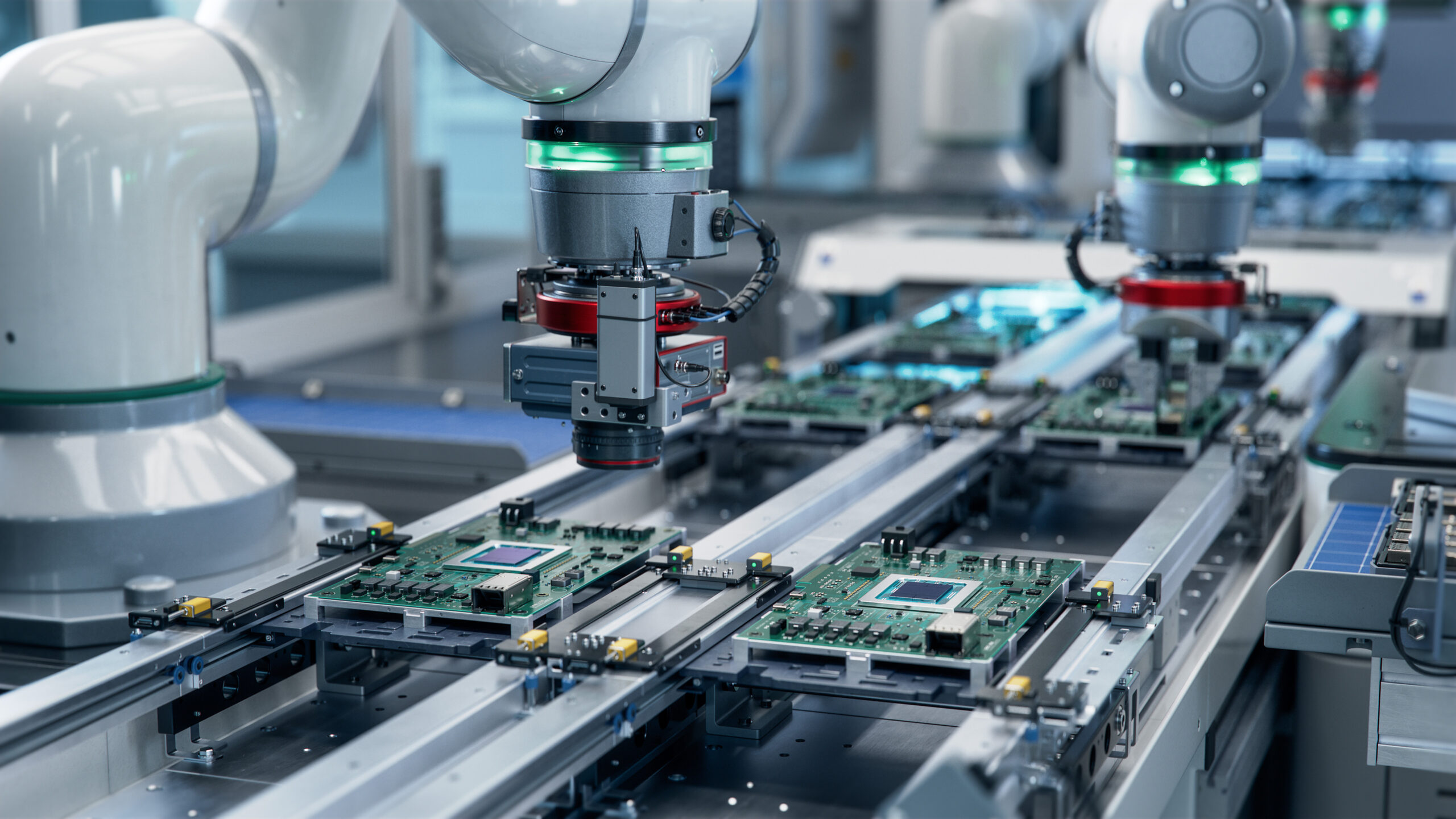
5G, on the other hand, eliminates the need for physical connections, allowing real-time communication between robots and control systems, which is essential for highly complex environments, such as semiconductor production lines, where robots perform millimeter-accurate tasks, from handling silicon wafers to testing integrated circuits.
The expansion of these technologies is also impacting areas such as robotic-assisted surgery, where advances in computer vision and robotic precision are taking medical procedures to levels never seen before, both in terms of efficacy and accessibility.
Circular economy: a second life for robots
With a lifespan of up to 30 years, industrial robots are at the heart of initiatives that promote sustainability and the circular economy. Leading companies in the production of industrial robots such as ABB, Yaskawa, KUKA or Fanuc have established repair and reconditioning centers where they update used robots with more current technologies, extending their useful life and reducing the need to manufacture new units.
This approach is not only environmentally and socially responsible, but also produces a significant economic impact. In fact, companies that choose to retrofit robots save on operating costs while contributing to the goals of Corporate sustainability. For example, robots upgraded with smart energy sensors can convert kinetic energy into electricity, significantly reducing energy consumption.
The second life of robots also encourages inclusion in emerging markets, where acquiring new machines can be cost-prohibitive. In the same way, small and medium-sized companies can also access advanced automation, accelerating their competitiveness in the global market.
While the outlook is promising, significant challenges remain. Increasing automation, in fact, may widen the gap between countries and sectors that are able to rapidly adopt these technologies and those that are left behind. According to experts such as Dario Floreano, director of the Intelligent Systems Laboratory in Switzerland and one of the voices of the report “The Machine Revolution” by the Bankinter Innovation Foundation, unequal access to robotics and AI could increase economic and social disparities, especially in less developed regions.
On the other hand, regulation will be crucial to address issues such as privacy, ethics and coexistence between humans and machines in work and social environments. By 2025, robotic technologies will be at the heart of the transformation, defining a future where humans and robots work together in harmony. The new Megatrends 2025 report by the Bankinter Innovation Foundation will shed some light on those who wish to delve into these dynamics and prepare for a world where robotics will be more accessible, connected and collaborative than ever.