
AI-generated summary
In a world deeply interconnected and disrupted by the COVID-19 pandemic, humanity faces unprecedented uncertainty. Thierry Malleret, an expert at the Future Trends Forum and co-author of the Monthly Barometer, distills insights from extensive dialogues with global leaders and academics into practical guidance for enhancing resilience at governmental, business, academic, and personal levels. His analysis aligns with the World Economic Forum’s “The Great Reset” initiative, advocating for a sustainable economic rebuilding that embraces economic, social, and environmental sustainability. Malleret highlights that countries prioritizing social equity and green policies—especially in Europe—are best positioned to thrive post-pandemic. For Spain, he recommends leveraging innovation to diversify beyond its tourism-dependent economy.
At the corporate level, Malleret emphasizes digital transformation, including automation and hybrid work models that blend virtual and physical environments, promoting employee well-being and new collaborative methods. Academically, he foresees hybrid learning models, greater emphasis on practical experience, and modular credentials becoming standard. On a personal note, the pandemic has intensified mental health challenges, making well-being and work-life balance critical. Malleret advises connecting with nature and nurturing social relationships to foster resilience. Overall, his insights offer a roadmap for navigating the post-pandemic world through innovation, sustainability, and holistic well-being.
We interviewed our expert Thierry Malleret, co-author of COVID-19: The Great Reset, co-authored with Klaus Schwab, founder and president of the World Economic Forum.
The interdependent, fast and complex global context, hit by the pandemic, has humanity immersed in maximum uncertainty. Thierry Malleret, an expert at the Future Trends Forum of the Bankinter Innovation Foundation and co-founder and main author of the Monthly Barometer, gives us some keys to increase resilience, both at the country, business and personal level. After countless interviews with presidents of government, CEOs of the world’s leading companies, and representatives of the academic world and the world of health, Thierry captures the conclusions in the aforementioned book, which summarizes the World Economic Forum’s (WEF) “The Great Reset” proposal to rebuild the economy sustainably after the COVID-19 pandemic.
As Klaus Schwab said: “The pandemic represents an opportunity to reflect, reimagine and restart our world and forge a healthier, more equitable and more prosperous future.”
Below, you can watch the interview with Thierry Malleret:
Thierry summarises powerful conclusions in a very simple way:
- At the governmental level, those countries that are committed to ending economic and social inequalities and to a Green Deal, such as the one proposed by the European Commission, will be successful.
Triple sustainability – economic, social and environmental – must be on the roadmap of those countries that want to emerge stronger from the crisis caused by the pandemic. For Thierry, Europe is the region of the world that is doing best.
In the case of Spain, the crisis is deeper due to the collapse of tourism. Thierry advises relying on the country’s innovative capacity to diversify and bet on technological innovation. - – At the business level, the focus must be on digitalisation: innovating in business models and processes using the full power of digitalisation.
From the production of goods and services with robotics and artificial intelligence, to the delivery of them using drones and other autonomous vehicles. It also opens up a huge field of innovation by reimagining hybrid workspaces, where the real and the virtual intermingle.
For Thierry, it is clear that the future of work will be hybrid, and companies must strive for the holistic well-being of their professionals. Regarding the new ways of working, he points out that new ways of collaboration will appear, with mixed multidisciplinary teams supported by technology. - At the academic level: It is clear that new ways of being educated are emerging: Hybrid face-to-face education, the greater weight of practical experimentation and the creation of a curriculum through micro diplomas are some of the trends that the expert points out.
If you want to know more about the future of education, don’t miss the #FutureTalks we had with Ángel Cabrera, President of the Georgia Institute of Technology. - On an individual level: There will be an increased desire to achieve the greatest physical and mental well-being and to rebalance work-life balance. The pandemic has increased the population with psychological and psychiatric problems. The two tips from our expert: Surround yourself with nature whenever you can and expand/strengthen the social circles in which we move.
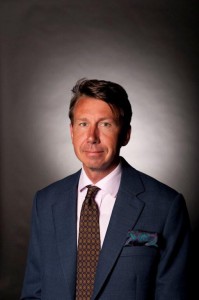
Co-fundador y autor en Monthly Barometer