AI-generated summary
Efficient water management is a critical challenge of the 21st century due to rising demand, climate change, and urbanization. Water reuse has emerged as a vital strategy to optimize the use of limited water resources. Advanced technologies like reverse osmosis, ozonation, and membrane biological reactors now enable the conversion of wastewater into safe, high-quality water. Experts at the Future Trends Forum emphasize that these innovations not only address water scarcity but also offer economic and environmental benefits. The global adoption of such technologies, integrated within a circular economy model, promises sustainable and resilient water management, though social and legal barriers remain.
Historically, water reuse dates back centuries but was limited to non-potable uses. Modern breakthroughs since the 1970s, such as Water Factory 21 in California, have led to sophisticated treatment systems producing water of equal or better quality than conventional sources. Notable successes include Israel’s Shafdan plant and Barcelona’s large-scale reuse programs. Emerging purification technologies—membrane bioreactors, advanced oxidation, activated carbon filtration, anaerobic reactors, and others—improve efficiency, energy use, and contaminant removal. However, widespread adoption depends not only on technology but also on overcoming social acceptance and regulatory challenges. Experts highlight the need for collaboration, community engagement, and legal reform to enable water reuse as a mainstream, sustainable solution for future water security.
International experts discuss advanced technologies to reuse water and ensure a more resilient water future
Efficient water management is one of the most critical challenges of the 21st century. Increasing demands on water resources, coupled with the impact of climate change and mass urbanization, are forcing governments and industries to seek sustainable solutions. In this context, water reuse has emerged as one of the most promising strategies to optimize the use of this finite resource.
Water reuse is much more than a technical solution, it is a crucial strategy to ensure the planet’s water future. With advanced technologies such as reverse osmosis, ozonation, and membrane biological reactors, we have achieved the ability to convert wastewater into safe, high-quality resources. During the Future Trends Forum
If you want to see the presentations of these experts, you can do so in these videos:
Water reuse: an ancient practice with new technologies
Although it may seem like a recent innovation, water reuse has deep roots in history. Glen Daigger points out that this practice has been used for centuries, with examples such as sewage farms in Europe in the 16th century, where rudimentarily treated water was used for agricultural irrigation. However, back then, reuse was mostly limited to non-potable uses due to the lack of advanced technologies to purify water to levels safe for human consumption.
A turning point in drinking water reuse came in the 1970s with projects like Water Factory 21 in California, which for the first time attempted to turn wastewater into drinking water. Although these early efforts faced numerous technical and publicly accepted challenges, they laid the groundwork for the development of more sophisticated systems that are now a reality in several cities around the world.
Currently, water reuse has evolved thanks to a series of technological advances that allow water to be treated much more effectively and safely. Systems such as reverse osmosis filtration, ozonation and activated carbon have been key in this progress, allowing the removal of a wide range of contaminants. These methods are not only applied in reuse plants, but also in drinking water treatment plants around the world, underlining the technological convergence in both areas.
A major shift in the perception of water reuse occurred during the “millennium drought” in Australia. Previously, potable reuse was seen as a solution of last resort, something that was only resorted to when there were no other viable options. However, this crisis showed that reuse is, in many cases, the safest and most available source of water during emergencies. Since then, reuse has become an integral part of water management strategies in many cities as an essential component to ensure a resilient water supply.
Despite the progress, one of the biggest challenges remains the perceived cost of water reuse. Daigger emphasizes that although advanced treatment systems may seem expensive, it’s important to consider the broader economic benefits. In addition to creating a new source of water, a wastewater management problem is being solved, representing significant savings in terms of infrastructure and environmental protection. This more holistic approach has allowed water reuse to gain traction as an economically viable and sustainable solution.
The use of advanced technologies in water reuse has made it possible to overcome barriers that previously seemed insurmountable. Today, well-managed reuse systems can produce higher quality water than conventional drinking water, offering a more controlled and safer solution. One of the key elements for the success of these systems is rigorous quality control throughout the entire process, from source to delivery to the consumer.
“Water produced in a state-of-the-art and well-managed reuse plant is of better quality than drinking water from natural sources.” – Glen Daigger
Technological advances and the role of the circular economy
One of the most important advances in water reuse is the integration of technologies that allow not only the recovery of water, but also of nutrients and energy. Jürg Keller highlights how urban systems can take advantage of nutrients present in wastewater, such as nitrogen and phosphorus, which are valuable components for agriculture. In countries such as the Netherlands, systems are implemented that separate black and gray water streams, allowing methane and nutrients to be captured for reuse.
In Australia, the Aquarevo project is an example of how integrated technology can reduce drinking water consumption by up to 70%. This project, which has more than 400 homes equipped with rainwater tanks, ultraviolet disinfection systems and heat pumps, demonstrates how water reuse can be an effective solution in urban environments. In addition, collaboration between utilities and developers has been key to the success of this project, underscoring the importance of integration and collaboration in the implementation of innovative solutions.
“Purpose-driven innovation and comprehensive collaboration are essential to creating sustainable solutions in water management.” – Jürg Keller
Legal and social challenges in water reuse
Although technologies for water reuse have reached high levels of technical maturity, Juan Lema stresses that the main obstacle to their widespread adoption in Europe is not technological, but legal and social. In many European countries, the use of recovered nutrients, such as phosphorus and nitrogen, is banned or strictly regulated, limiting their implementation. In addition, social acceptance of potable water reuse remains a challenge, even though current technologies can produce higher quality water than conventional drinking water.
Lema also highlights that, while in countries such as Singapore or Israel water reuse is an integral part of the water strategy, in Europe progress is needed in social and legal readiness so that these technologies can be implemented more widely.
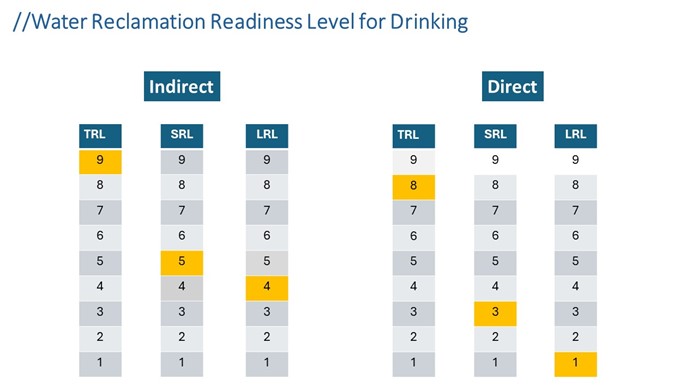
Source: Presentation by Juan Lema at the FTF
Emerging technologies for water purification
Water purification is an essential component to ensure a safe and high-quality supply, especially in a context of increasing scarcity and pollution of water resources. Emerging technologies in this field are revolutionizing the way we treat and reuse water, offering more effective and sustainable solutions. The most promising, according to Juan Lema, are:
- Membrane biological reactors (MBR): One of the most prominent technologies is the use of membrane biological reactors (MBRs). These systems combine biological processes with membrane filtration to remove solids and organic contaminants from wastewater. According to Juan Lema, professor of Chemical Engineering at the University of Santiago de Compostela, MBRs allow for more efficient removal of pollutants compared to traditional methods, facilitating the reuse of treated water for various non-potable purposes, such as agricultural irrigation and industrial uses.
- Advanced Oxidation Processes (AOPs): Another crucial technology is Advanced Oxidation Processes (AOPs), which use powerful oxidizers such as ozone and hydrogen peroxide to break down complex organic compounds and emerging pollutants. Lema points out that these processes are highly effective in the elimination of difficult-to-treat contaminants, contributing significantly to the improvement of water quality.
- Activated carbon filtration: Activated carbon filtration is also an important emerging technology, used to remove organic contaminants and chemicals by adsorption. This method is particularly useful for treating industrial wastewater, ensuring that the treated water meets the quality standards needed for reuse.
- Anaerobic Membrane Reactors + DAMO: Anaerobic membrane reactors, in combination with anaerobic dissolved methane oxidation (DAMO), are an advanced technology that enables the treatment of wastewater with high energy efficiency. These systems, in addition to removing pollutants, produce biogas as a by-product, which can be used as a source of renewable energy.
- Anammox reactors: Anammox (ANaerobic AMMonium OXidation) reactors represent a significant innovation in wastewater treatment, allowing nitrogen removal more efficiently and with lower energy consumption. This biological process converts ammonium and nitrite directly into nitrogen gas, reducing the need for chemical treatments and operating costs.
- Aerobic granular sludge reactors: Aerobic granular sludge reactors use granular microorganisms that enable high efficiency in wastewater treatment. These systems improve sedimentation and contaminant removal, taking up less space and requiring less energy than conventional activated sludge systems.
- Ozonation: uses ozone as an oxidant to break down complex organic compounds and emerging pollutants. It is highly effective in eliminating pathogens and improves the quality of treated water.
- Ultrafiltration: A membrane technology that removes particles, bacteria, and viruses from water, providing advanced treatment that ensures water quality for various uses.
- Reverse osmosis: Uses a semi-permeable membrane to remove ions, molecules, and larger particles from the water. It is especially effective in desalination and in the removal of a wide range of pollutants.
- UV disinfection: usesultraviolet light to inactivate pathogenic microorganisms in water. It is an efficient and safe technology to ensure the potability of treated water.
Examples of success in water reuse
Some of the most notable examples of successful water reuse come from Israel, where advanced infrastructure has been developed that integrates multiple water sources, including desalination, groundwater, and reclaimed water. The Shafdan wastewater treatment plant, for example, produces biogas to meet 90% of its energy needs and reuses 90% of its treated water for agricultural irrigation. This approach has allowed Israel, despite its arid climate, to maintain a water surplus and export agricultural products globally.
Another success story is that of Barcelona, where 60% of the water used is reclaimed. This project has become a benchmark in Europe in terms of water reuse for human and agricultural consumption, demonstrating that available technologies can be applied on a large scale if the right infrastructure and policies are in place.
Professor Lema presents the case of Santiago de Compostela, where advanced wastewater treatment systems have been implemented that allow the reuse of water for agricultural irrigation, significantly reducing the demand for drinking water in the region. Likewise, the water treatment plant in Tarragona, in collaboration with the chemical and petrochemical sector, uses MBR and ultrafiltration to treat and reuse industrial wastewater, reducing the need for fresh water and reducing the discharge of effluents into the environment
The future of water reuse in a changing world
Experts agree that the future of water management lies in the adoption of reuse technologies and a paradigm shift towards a circular economy. However, the implementation of these solutions requires both technological advances and a change in social perception and the regulatory framework.
Technological innovation will be a fundamental pillar in the future of water reuse. Treatment technologies will continue to improve in terms of energy efficiency and effectiveness in removing pollutants. Juan Lema stresses that advanced technologies, such as membrane bioreactors and membrane filtration, already exist that can produce high-quality water with lower energy consumption. As these technologies become more accessible and affordable, their adoption will become increasingly feasible for a greater number of cities and industrial sectors.
As for social acceptance, Glen Daigger mentions that the challenge is not technical, but emotional. “Acceptance is not about knowledge, but about emotions. The key is to build legitimacy and credibility in the long term, starting with local communities.” The public, often influenced by negative perceptions or misconceptions, may resist the idea of drinking recycled water, even though it may be of higher quality than conventional drinking water.
“Collaboration between all sectors is essential to achieve water sustainability and promote water reuse.” – Juan Lema
More articles from the series on The quest for clean waters forum:
- Strategies to solve the global water crisis, by David Sedlak.
- The water-energy nexus: sustainable solutions for the future.
- Sustainable solutions: The role of the oceans according to Carlos Duarte.
- Water governance: key to sustainability.
- Water management and climate change.