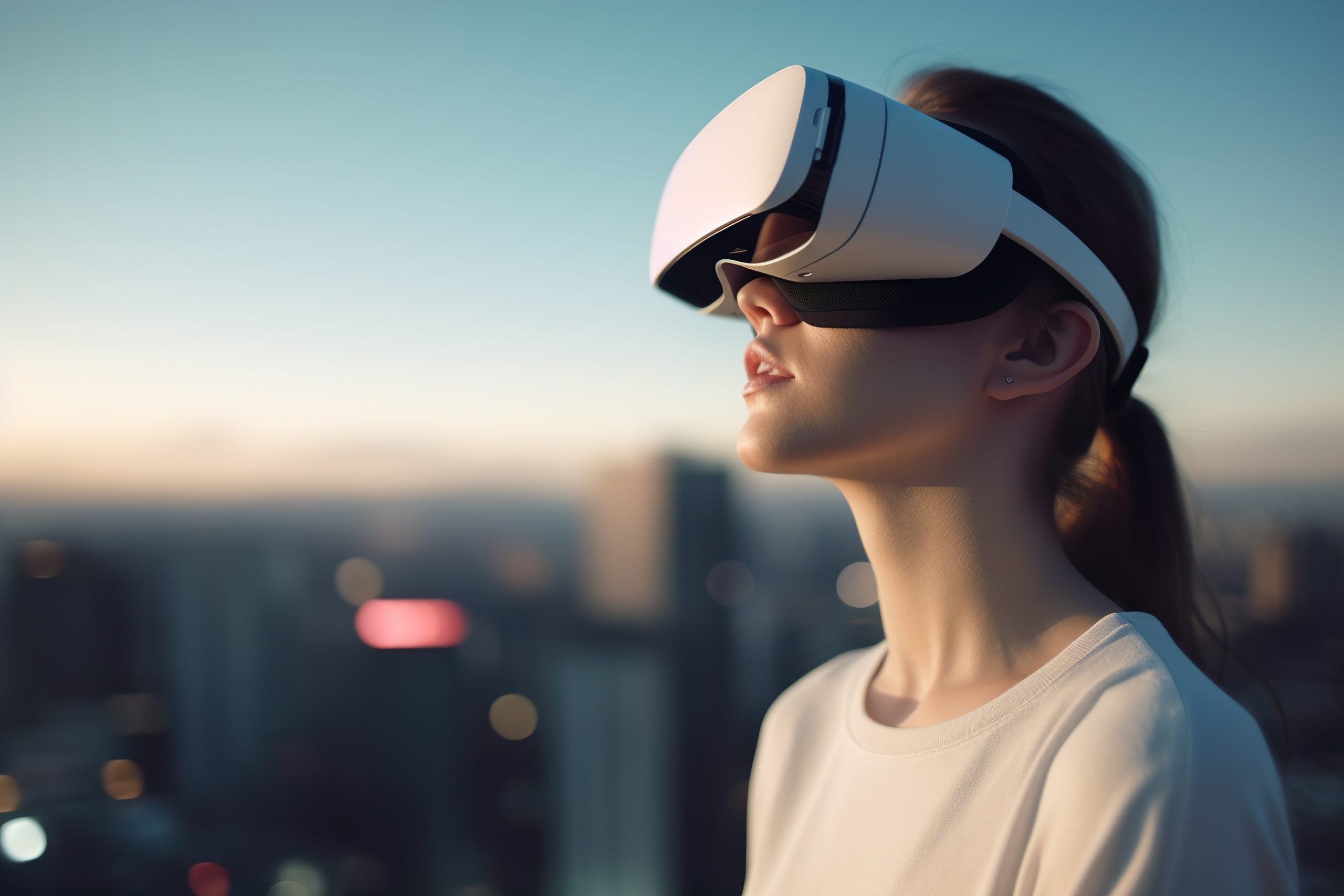

Discover the points on which teachers will have to work in order to become the vanguard of education and reclaim the prominence and importance it has.
Teachers in the future: paraphrasing and accommodating an old revolutionary mantra: Teachers will be digital or they won’t be. The revolution underway, which is not pending, is the complete digitalization of our world, an inexorable and irreversible process that is ending little by little and at a much faster speed than expected and that has already put an end to many analogue processes.
Schools could not remain aloof from this revolution. In fact, as we have been telling, education has entered into a revolution of its own with new and innovative methodologies, learning systems and the gradual elimination of textbooks and old thematic units by educational routes.
But teachers do not live on digitalization alone. It is important that they are properly trained in new technologies because they will have to “compete”, in the case of the most veteran teachers, with students who are already digital natives and who, therefore, have less artificial contact with the digital environment. The teacher of the future, or the teacher of today, has to know how to conveniently incorporate the use of mobile phones and tablets into their daily lives and advise on how to use the home computer and where to find complementary knowledge to the subjects taught in class.
It will be important for teachers to be multitaskers. Although now, and always, a good teacher is an educator, a counselor and an inspiring figure for students (or so he aspires), now he will also have to add to these virtues that of being, if not a specialist, at least informed in the best way to take advantage of the digital tools that are at his disposal and put them at the hands of the students.
One of the ideas that has been repeated for more than three decades is to demand from teachers more closeness and sensitivity to the problems of their students, to better understand the people they are trying to train and thus be able to get the best out of each of them. Although the claim is fair, the truth is that teachers often find themselves with parents who are not so cooperative or students who, from home, are not invited to have a better disposition. It is the task of the latter, parents and students, to recognize the educational authority that emanates from the teaching staff and, of course, to collaborate as much as possible in the day-to-day educational by attending tutorials and maintaining, as far as working hours allow, a close relationship with the teachers. It is the indispensable task of these, the teachers, to “seduce” students and parents so that they become the necessary collaborators to achieve the objectives they have set.
The new labour market will demand greater humanistic training from students: to be more sensitive, closer, more willing to work in a team, to know how to take advantage of their social skills or to really know how to use everything they learn in an objective. Many of the most advanced schools in our country are very interested in encouraging their students to highlight their most human facets, to be more open, more perceptive, more receptive to what the world has to offer them.
Today’s world demands that we get involved in sustainability, that we be more respectful, more tolerant, that we respect others more, that we do not see cultures outside our own as a threat, that we be flexible.
The teacher will have a main role in explaining these concepts that, many times, are very diffuse, very complex and deserve a greater personal effort, since they speak of banishing selfishness, for example. The society of the future will be freer, more aware and more respectful of the environment, wildlife or the rights of others if its teachers are involved in this transcendental battle.
Teachers will have to put as much interest in this as in designing complementary activities and work that are perhaps far from the academic day-to-day and that, however, can be used by the student as life experiences that make them better people, who make better use of leisure. Another very popular old educational mantra that busy minds keep away from bad habits is no longer enough. We are not only talking about preventing health problems, we are talking about knowing how to use your head better.
We have to generate interest in students in learning. That they don’t take it as something boring or that it won’t bring them anything. The teacher of the future has to open doors and break down walls, get the student to understand that learning is an endless process but, at the same time, nothing invasive: we can spend our whole lives learning interesting things that will contribute to our lives without having to feel subjugated by it.
Although it may seem like it, the student is always willing to accept challenges and learn more, to have a positive attitude. To do this, you just have to know how to encourage it. Much more so now when knowledge is at hand. Now is when, with more force, the teacher has to claim his protagonism and explain his role and the vital importance he has in the learning process of a human being. Yes, almost Everyone has access to the Internet and a whole torrent of inexhaustible information to feed on, but in reality, we always need someone to hold our hand and guide us.
So, what will the teacher of the future be like? It will have to have at least these 10 fundamental characteristics:
- Digital
- Inspiring
- Nearby
- Human
- Dialoguing
- Multitasking
- Involved
- Playful
- Provocateur of experiences
- A guide