

AI-generated summary
The evolution of companies can be understood through three stages: Yesterday’s companies focused on maximizing efficiency and productivity to sell products at the highest price with the lowest cost. Today’s companies aim to humanize operations and digitize processes to simplify customer experiences. Tomorrow’s companies strive to disrupt markets by finding new opportunities amidst complexity, creating universal services, and delivering societal value. Next-generation companies adopt an integrated approach that transcends their own business, recognizing exponential potential where others see linear growth. For example, Github uses its vast repository of code to offer AI-driven recommendations and corrections, transforming its business model by leveraging previously unused raw materials.
FTF experts emphasize that groundbreaking innovation occurs at the intersection of business viability, technological feasibility, and human-centered attractiveness and usability. Moreover, next-generation companies prioritize stakeholder capitalism, focusing on sustainable and inclusive development that benefits all stakeholders—workers, customers, communities, and the environment. The B Corp community exemplifies this by promoting social, environmental, and economic value creation. Experts stress the importance of shared societal purpose, ecological products, and ethical practices as essential to redefining culture and strategy for a better future. To guide this transformation, the 5×10 Data-Driven Maturity model assesses an organization’s digital maturity across ten dimensions, helping companies evolve into innovative, data-driven entities ready for the future.
The future of work will bring with it new generation companies with purpose, whose main objective will be to add value to society.
Yesterday: Yesterday’s companies want efficiency and productivity; to create products and solutions that lead to selling at the highest possible price with the lowest cost.
Today: Today’s companies, want to humanize the organization and its operations, to digitize in order to make things easier for their customers.
Tomorrow: Tomorrow’s companies want to disrupt markets, find new opportunities amidst complexity, create new and more universal services and to be of value to society.
On a different note, next-generation companies have an integrated approach to challenges and opportunities, so they are able to think beyond their own business. They see exponential increases where others only see linear increases. FTF expert, Rafael Rebolleda, Product Design and Global Product Experience Director at New Relic, and Professor at IE University in the Customer Experience & Innovation MA degree, illustrates this concept with the example of Github, the well-known software development platform with more than 65 million developers. This platform leverages the billions of lines of code it hosts, to offer a new service of recommendations and code corrections to its users by applying AI: business model change, by using a new raw material (lines of code) that was not used before.
Delving into this integrated approach, Rebolleda proposes to look for the most groundbreaking innovations at the intersection between business, technology and people, by breaking down barriers:
- Business -> Viability
- Technology -> Feasibility
- People -> Attractiveness, usability
The vector that we mentioned at the beginning of this section must be added on top of this: next generation companies that want to be of value to society. This is what FTF expert, Thierry Malleret, in his book COVID-19: The Great Reset, co-written with Klaus Schwab, calls “stakeholder capitalism”, which must focus on sustainable and inclusive development.
An example of this is the B Corp community, promoted by the B Lab foundation. The companies that are part of this community are building a more inclusive and sustainable economy, oriented towards the creation of social, environmental and economic values for all their stakeholders: workers, suppliers, customers, shareholders, the communities they serve and the environment.
FTF expert, B Corp Ambassador at B Lab Europe, General Manager at ebbf—ethical business building the future—and Partner at NOW.Partners, Daniel Truran, stresses the need to have a shared purpose with society, one that benefits people and protects the planet.
At the risk of seeming to be all about good intentions and catchy headlines void of content, we are talking about ecological, sustainable products and ethical sales practices, respectful of society and the environment. Daniel is convinced this is the only way forward for next-generation companies: act in that direction, redefine culture, values and strategy to co-create a better future for all.
Finally, and to help chart the way forward, a useful tool is proposed: If you want to know your company’s degree of digital maturity and which is the path to turn it into a next generation company, expert Reinier van den Biggelaar, managing partner at BastaGroup, provides us with the model 5✗10 Data-Driven Maturity, to evolve from an organization riddled with analytical problems to an innovative, data-driven organization. Digital maturity is defined based on 10 dimensions—all together cover all aspects of digitalization: both technical and organizational capabilities.
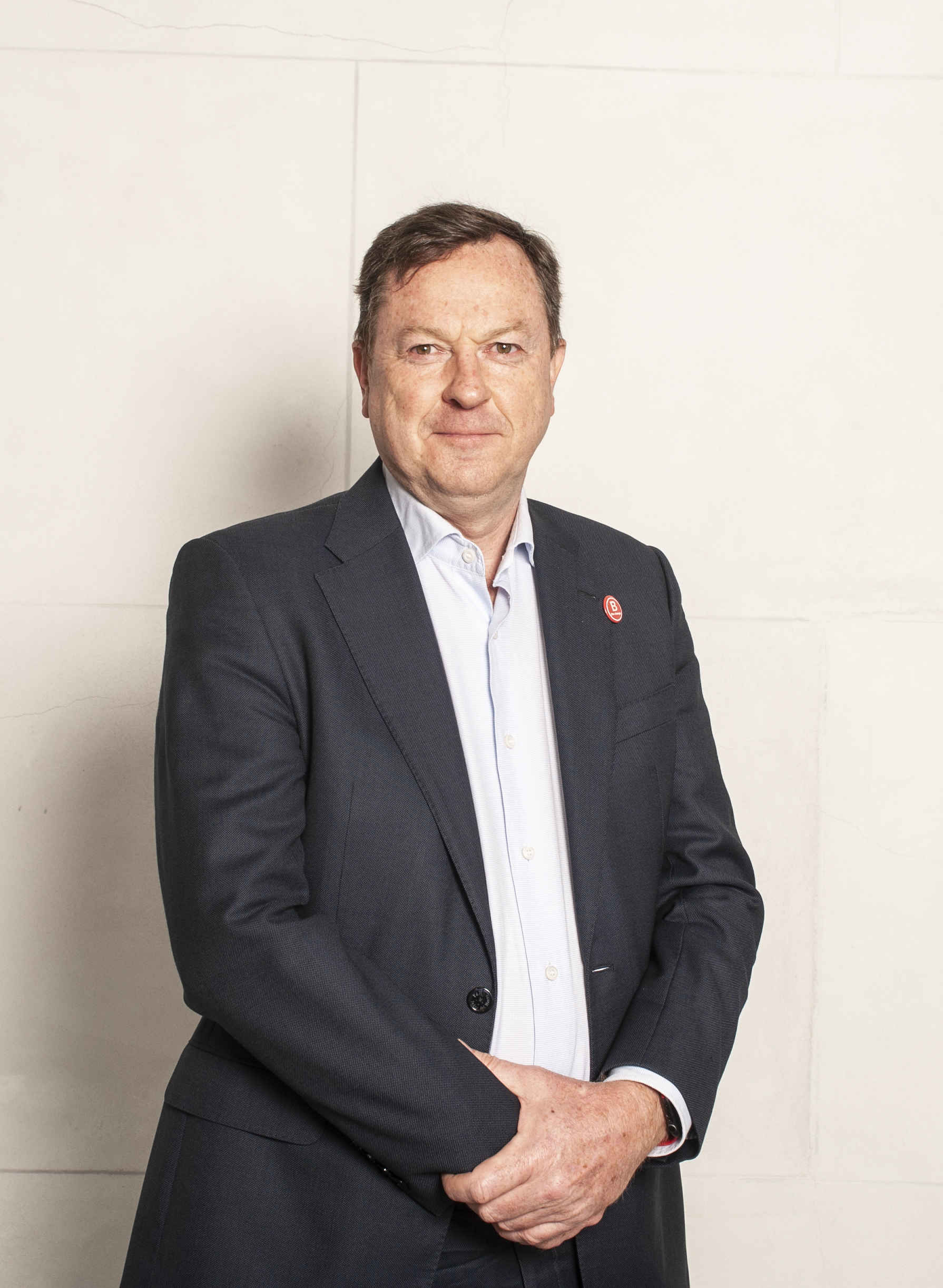
General Director at ebbf - ethical business building the future, B Corp Ambassador at B Lab Europe