AI-generated summary
Ignacio Cirac, Director of the Max Planck Institute for Quantum Optics and a leading expert in quantum computing, explains the principles, current state, and future prospects of quantum computing. Unlike classical computers that use bits as 0 or 1, quantum computers use qubits which can exist in superpositions of states, enabling exponentially greater information storage and processing capabilities. This quantum behavior allows certain complex problems—such as molecular simulations and cryptography—to be solved much more efficiently than by classical computers, although quantum computing is not universally faster but fundamentally different. Presently, quantum computers are divided into NISQ (Noisy Intermediate-Scale Quantum) devices, which are noisy and limited but useful for specific tasks, and future scalable quantum computers that will require sophisticated error correction and are expected to become practical in 10-15 years.
Cirac outlines four main application areas: cryptography, simulation of materials and processes, optimization problems, and machine learning data analysis. While the first two areas show exponential advantages, the latter two may offer improved speed and accuracy. Various hardware technologies—such as trapped ions, superconductors, and photonics—are competing, with no clear winner yet. Quantum computing software is evolving, with accessible programming languages like Python enabling broader participation without deep quantum physics knowledge. Cirac emphasizes that many important quantum applications remain to be discovered and urges countries like Spain to invest in quantum technology research to remain competitive in the coming quantum revolution.
Primer #FutureTalks de 2023, con Ignacio Cirac, uno de los mayores expertos mundiales en computación cuántica, que nos explica la importancia de esta tecnología para el futuro de la computación.
What are the principles of quantum computing? What is the present and future of these technologies, and what can they add to machine learning? Ignacio Cirac brings us to the future of computing, anticipating the developments and challenges that could come in the next few years.
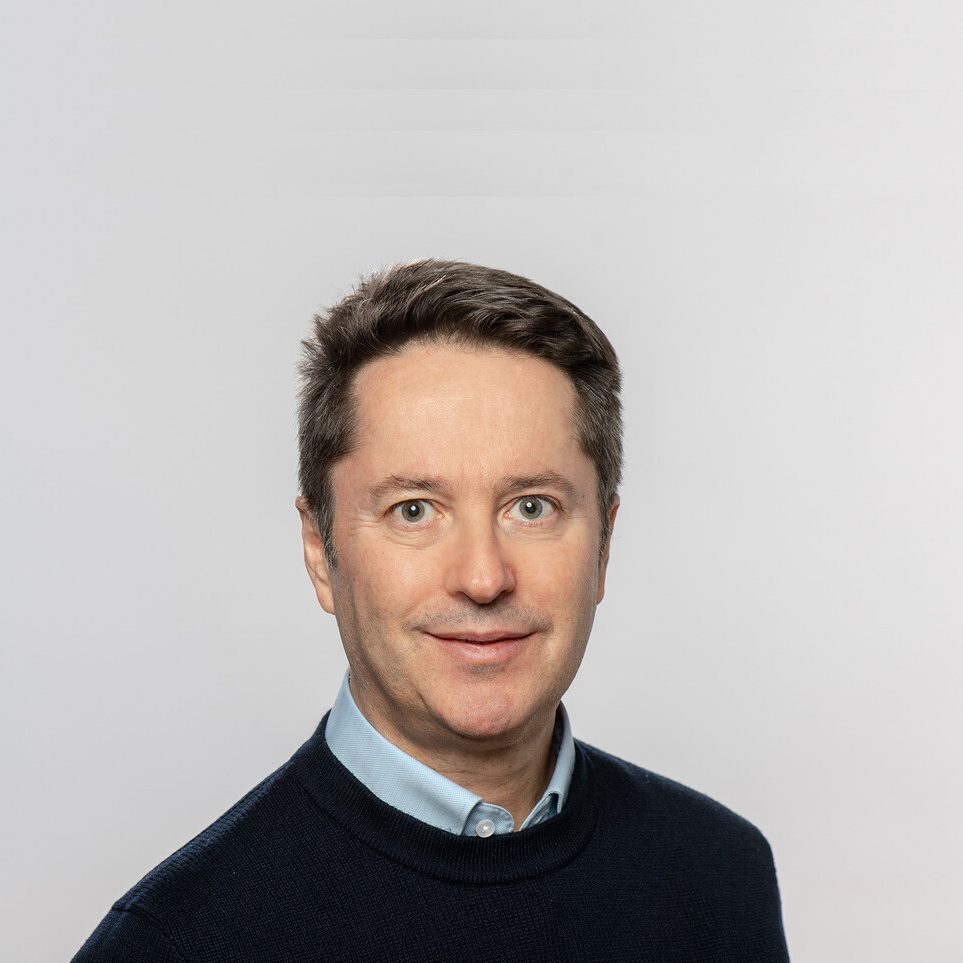
Ignacio Cirac is the Director of the Max Planck Institute for Quantum Optics, and one of the world’s leading researchers in quantum computing, Prince of Asturias Award for Technical and Scientific Research. He participated in our latest Future Trends Forum Quantum and artificial intelligence: the silent revolution, along with thirty other world experts.
On this occasion, Dr. Cirac, in this #FutureTalks led by our Managing Director, Juan Moreno, gives us a master class on quantum computing for all audiences: fundamentals, state of the art and future of a technology that, according to this world expert, will revolutionize the way we understand ICTs (information and communication technologies):
What is quantum computing?
The term quantum computing became trendy with a news clip that appeared in media outlets around the world, where Sundar Pichai, CEO of Google, claimed that they had achieved quantum supremacy: the milestone of building a quantum computer that was able to solve a certain problem much faster than any other computer, even the most advanced supercomputers that existed.
But what is a quantum computer?: it is a computer that operates according to the laws of quantum physics. Quantum physics is a theory that we have known for more than 100 years and that describes the microscopic world, such as atoms, molecules, electrons, or photons.
Because the laws of quantum physics that govern how quantum computers work are very different from the laws of classical physics, quantum computers behave very differently from ordinary computers. Dr. Cirac illustrates one of the laws of quantum physics—quantum superposition—with the Schrödinger’s cat paradox. Quantum superposition explains that a physical system exists in all its possible states simultaneously, and it is at the moment it is measured that it gives a result that corresponds to only one of those possible states.
The important thing is that this law gives us the possibility of storing information in a new way. Instead of traditional bits, which can have only two values (zero or one), we are talking about qubits, which can take any value between 0 and 1 in a continuum of quantum states. Thus, the possibilities of storing information are exponentially greater than in a classical system. Dr. Cirac illustrates this with a fact: if we had a quantum computer with 300 qubits, we would have more information states than there are atoms in the universe.
In short, quantum computers exploit the new laws of physics to perform calculations in a different and, in some cases, much faster way. Not all the problems we want to solve with computers can be solved with quantum computers; only those in which the laws of quantum physics give us a certain advantage over classical computers can be solved.
“A quantum computer is NOT faster, it is DIFFERENT.”
What is quantum computing for?
Dr. Cirac summarizes the fields of application of quantum computers in four main areas:
- Specific problems such as, for example, those related to cryptography.
- Simulation of materials and physical processes.
- Process optimization problems.
- Data analysis for machine learning applications.
In the first two areas, quantum computers show an exponential gain over existing computers. For example, the most powerful classical computers are not able to recreate simulations of molecules with more than 20 electrons, and quantum computers would be able to do so.
In the last two (optimization and data analysis), there is no exponential advantage, although they could provide greater speed and precision in certain cases.
Dr. Cirac points out the parallel between the first electronic computers of the 1940s and today’s quantum computers: the phenomenon starts with very few useful applications, the most important of which have yet to be discovered.
Quantum computing hardware
There are different technologies for building quantum computers: for example, using atoms, where information is stored in qubits, which are ions. Also, through superconductors–which is the technology used by IBM and Google–or through Rydberg atoms, where the qubits are the orbitals of the electrons. Other foundational quantum technologies are based on defects in diamonds and on photons.
All these technologies are hugely different from each other and today we do not know which one will prevail, warns Dr. Cirac.
The fundamental problem in all foundational technologies is that errors occur. To solve this problem, there are two approaches: to correct the errors or to leverage quantum computers despite the errors. Thus, the two categories of quantum computers currently being discussed emerge: scalable quantum computers—the future—and NISQ (Noisy intermediate-scale quantum) quantum computers—the present.
Scalable, error-correcting quantum computers will not be a reality for another 10 to 15 years, because for every qubit in a scalable computer, about 1000 qubits are needed to correct errors.
So today we are working with NISQ computers, where we are trying to see their usefulness in spite of the noise. In fact, NISQs are proving to be better than classical computers at simulations and materials problems, although maybe not at solving optimization problems, or machine learning. However, interesting advances are being made to improve the sampling processes in machine learning applications.
Quantum computing software
Cloud applications, tools and programming languages for quantum computing are already accessible. Dr. Cirac’s advice for professionals who want to enter the world of quantum computing application development is to learn high-level languages, such as Python.
It is not necessary to know quantum physics to design quantum applications and algorithms, but one needs to know the commands and learn to think differently, following a quantum logic, says Dr. Cirac, along the same lines as another Future Trends Forum expert, Brian Lenahan, who advocates approaching problem solving with a quantum-inspired attitude, or just “quantum inspired“.
To enter the world of quantum computing, Dr. Cirac recommends specific training (such as that provided by Qureca, for example).
“The most important quantum computing applications are yet to be discovered.”
Spain and quantum computing
In Spain there are many scientists and entrepreneurs in quantum computing. From the scientific and academic point of view, Europe is leading research in quantum computing with many Spaniards in positions of responsibility.
In terms of hardware and the development of foundational technologies, Europe, and in particular Spain, lags far behind the USA and China.
Dr. Cirac is clear: quantum technologies will be present in our lives in 10 to 15 years. So, Spain should strive to play a relevant role by then.
If you want to learn more about quantum computing, feel free to visit our website and read the summary of the Future Trends Forum Quantum and artificial intelligence: the silent revolution.