Singapore has become one of the most important emerging economies on the planet and promotes the most successful educational method on the planet, which has been improving for 50 years.
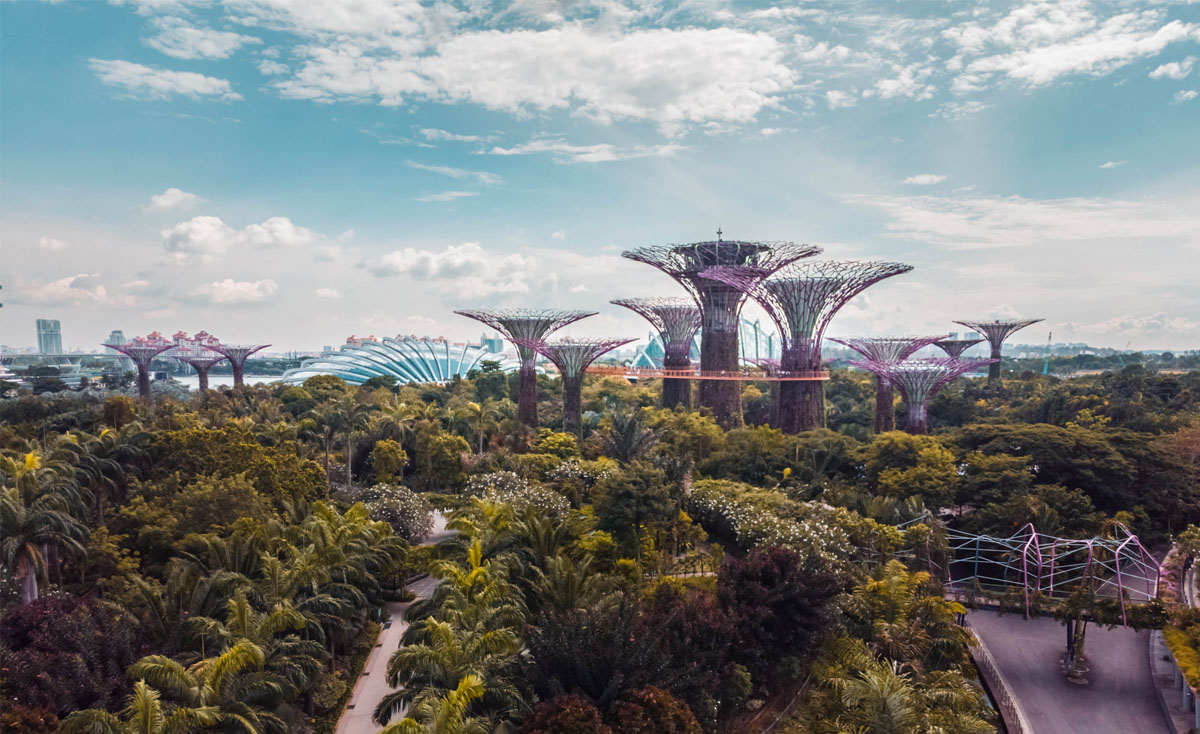
An archipelago of small islands surrounded by water and more powerful economies has managed to enter the Top 5 richest countries in the world. A mixture of state interventionism, good management of resources and an aggressive policy of attracting companies of all kinds that are attracted by the flexible fiscal policy of the so-called “pearl of Asia” have been definitive for the success of this former British colony that broke away from Malaysia. Behind all this, and to conquer the 21st century, Singapore’s leaders have become obsessed with making their companies the most effective in the world and believe they can achieve this by implementing a new and revolutionary educational system that is already being talked about all over the planet.
The “Singapore Method” has been used for more than 50 years and is, according to the results of the latest PISA reports, subscribed to by 72 countries, as the most successful in the world. In 2016, Singapore’s system was the one that obtained the best results globally. The system educates students when they turn 4 years old and have to go through three levels (preschool, primary and secondary). At the end of the primary cycle, after six years and at the age of 12, students face a Primary School leaving Examination (PSLE) whose result determines which studies the student will follow in the secondary cycle.
The education system seems to be driven by the obsession with finding excellence and offering an education based on offering knowledge that serves to develop the student in the workplace. Reflection and exercises with a practical application are prioritized over activities based only on memorization or the mechanization of concepts. Flexibility seems to be another of the things that Singaporean education plans aim to encourage.
In secondary school, students are divided into different programs that aim to give an education that is as personalized as possible to each student and that fits their aptitudes. At that time, the educational plans divide students into those who have a real chance of successfully completing the university cycle, those who can access a more technical education and those who have real aptitudes in very specific fields such as sports or the arts.
After finishing high school, the student enters the university cycle where he can receive education at universities, polytechnics (almost always aimed at training technicians from a very practical point of view), the technical training institute and two schools of Fine Arts (LASALLE-SIA College of the Arts and the Nanyang Academy of Fine Arts). Students can choose between receiving training in private or public schools – public is very important in Singapore – and depending on the length of time in the institution they choose, they will have to meet the requirements of each school, but preference is given to those who have completed the most complex secondary programmes and those who have received bilingual education (offered in Malay, Mandarin and English almost always).
In recent years, the Singaporean government has started a scholarship program that tries to attract foreign talent and attract the best students from all over the world to its institutions so that, in the future, they can swell the workforces of their companies.
But the success of the Singapore method is not only due to the obsessive search for the characteristics of each student and to enhance them. It is also due to other factors , among which the following stand out:
- It is enormously competitive and meritocratic.
- It encourages learning over memorization.
- Encourage teachers.
- He has a powerful professional background.
- Education as an essential pillar in the country’s development.
- It is flexible and diverse.
Faced with the large number of educational plans that we accumulate in Europe, we find ourselves in a country that, for half a century, has been successfully applying a successful, innovative, flexible system that seeks by all methods to train students in disciplines in which they feel comfortable, without providing knowledge that will be of no use to them in the future – or which they can approach later if they want for pleasure. Education will be one of humanity’s great challenges for the 21st century, and it seems that a small Asian country has an advantage over the entire planet.