
AI-generated summary
In Huelva’s Vocational Training classroom, augmented reality (AR) is revolutionizing welding education through tools like Soldamatic, developed by Andalusian startup Seabery. This technology allows students to practice welding virtually—eliminating risks of sparks or burns while providing instant feedback on errors and progress. Such immersive training exemplifies a broader trend where extended reality (XR), simulators, and digital twins transform technical education across sectors like wind turbine maintenance, heavy machinery operation, and medical equipment handling. Companies like Endesa and Iberdrola use these simulators to enhance safety training, reduce risks, and accelerate learning.
Studies reinforce the educational benefits of XR: a 2025 experiment in El Salvador showed a 35.2% increase in content retention using virtual reality compared to traditional methods, while STEM courses using AR and VR saw comprehension and engagement improve significantly. Startups such as Danish Labster extend these advantages by offering virtual science labs that lower costs and expand access. Personalized learning is another key benefit, as XR tracks individual progress, allowing tailored training paths that optimize resources and meet diverse learner needs. While challenges remain—such as cost, cultural resistance, technical issues, and content development—the momentum toward hybrid education models combining virtual and face-to-face learning is strong. Immersive campuses promise faster, safer, and more efficient technical training, better preparing students for real-world demands.
Educational environments are beginning to integrate technologies to train in high-demand technical professions.
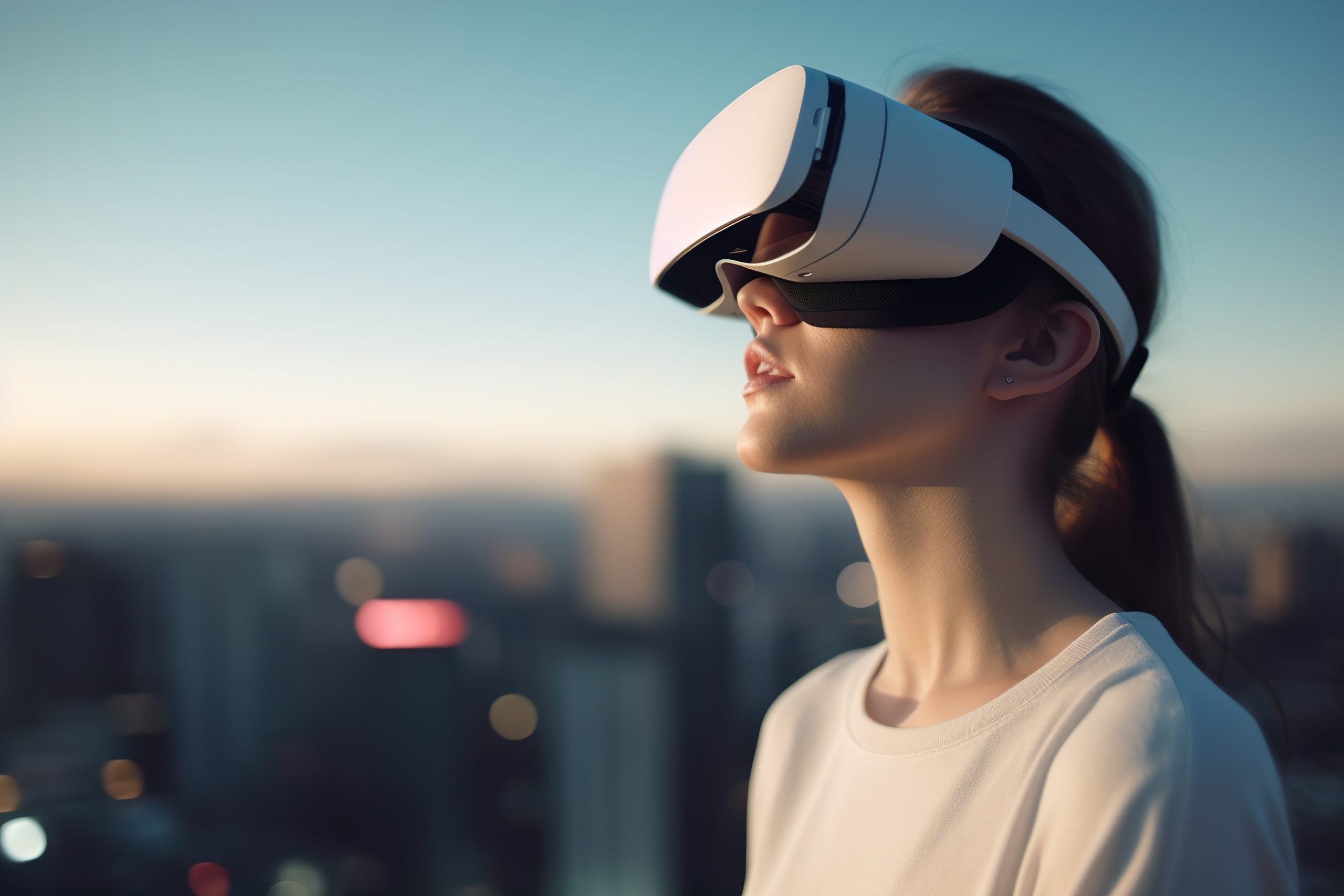
In a Vocational Training classroom in Huelva, a student adjusts an augmented reality headset before approaching a virtual torch. You can practice welding without fear of sparks or burns, repeat the movement until you reach the necessary precision and instantly receive a report on your errors and progress. What until a few years ago seemed like a futuristic video game is today a tool recognized on a global scale: Soldamatic, developed by the Andalusian startup Seabery, an international benchmark in the training of welders. Innovation, in this case, is not about inventing a new trade, but about reinventing the way we learn it.
This is just one example of a broader movement. Immersive campuses, which combine extended reality (XR), simulators and digital twins, are changing the way professionals in technical and high-demand sectors are trained. The maintenance of wind turbines, the operation of heavy machinery or even the preparation of complex medical equipment can now be tested in virtual environments. This
In April 2025, an experiment in El Salvador with 317 high school students showed that the use of virtual reality through the ClassVR platform increased content retention by 35.2% compared to 2.6% obtained with traditional methods. A broader analysis of STEM courses revealed that the combination of AR and VR improved comprehension and retention by 30% and raised student engagement by up to 85%. Even in university settings, the University of Maryland found that the feeling of immersive “presence” in VR increased recall capacity by at least 10% compared to teaching on conventional screens. It is not, therefore, a mere technological enthusiasm, but a measurable pedagogical change.
Democratizing access
In this field, startups such as the Danish Labster stand out, which has designed virtual science laboratories in which students can experiment with chemical reactions or biological simulations without the need for expensive equipment or physical risks. Instead of just looking at graphs in a book, students manipulate variables, formulate hypotheses, and get results in real time. For universities and VET centres, the advantage is clear: reducing infrastructure costs, opening up access to laboratories to students who did not have it before and better preparing young people for work environments where precision and speed are decisive.
The appeal of these immersive campuses also lies in the possibility of personalising teaching. The technology records every interaction, measures response times, error rate, and individual progress. With this data, itineraries can be designed adapted to each profile, something difficult to achieve in overcrowded classrooms. An apprentice who needs to repeat a gesture a hundred times can do so without exhausting resources or taking up space in a physical workshop. And another who advances faster can face more complex challenges without waiting for the rest of the group. The result is a more flexible training that is adjusted to the real needs of students and the companies that will hire them.
Of course, the adoption of these technologies still faces several obstacles. The first is cost: although VR and AR headsets have dropped in price, they still represent a significant investment for schools and small businesses. The second is cultural: not all teachers willingly accept that part of the training is transferred to virtual environments. There are also technical limitations, from the so-called cybersickness, to the visual fatigue that can be caused by prolonged use of these devices. And, above all, the content: each module or simulation must be tailor-made, with solid pedagogical criteria, which raises development costs and can generate inequalities between those who have access to quality materials and those who do not.
Towards a hybrid world
Despite these barriers, the trend seems unstoppable. The European Commission is already funding digital campus projects and virtual twins in dual vocational training, and countries such as Germany, Denmark and Spain have integrated them into their educational innovation plans. In our country, pilots in vocational training centres that use XR for the maintenance of wind farms or to train in the use of precision medical equipment stand out.
At the same time, universities and companies collaborate on digital twin projects applied to the energy industry, which opens a direct bridge between academic training and market needs. In this sense, programmes such as InspiraTech of the Bankinter Innovation Foundation play an important role in connecting universities, research centres and companies in an ecosystem where educational innovation is aligned with the demands of the industry.
The key is how these immersive campuses integrate into broader training strategies. It is not just a matter of replacing a blackboard with a helmet, but of designing hybrid educational ecosystems in which the virtual complements the face-to-face, and where experiential learning reinforces theoretical knowledge. Beyond VR headsets, there is a need for integrated environments where learning paths are planned with progress metrics (time to competition, acceptable error rate, number of repetitions) that are measurable and immediately useful for the work environment.
The future, therefore, is not a completely virtual classroom or a 100% digital campus, but a model in which technical training is supported by extended reality to gain speed, safety and efficiency when facing the real world. A welder who reduces errors from day one, a technician who knows the machinery in detail before touching it or a doctor who rehearses a complex operation without risk to the patient: that is the true promise of immersive campuses.