AI-generated summary
The Bankinter Innovation Foundation fosters an innovation ecosystem supported by patrons, startups, experts, and innovative mid-sized Spanish companies, including those in the Cre100do Foundation. As part of this initiative, they interviewed Mireia García Roca, Director of Corporate Innovation at Hinojosa Packaging Group, a family-owned Spanish leader in sustainable packaging with 24 plants across Europe and a strong commitment to the circular economy. Hinojosa has grown through strategic acquisitions in France, Portugal, and Italy and focuses on innovation, specialization, and customer proximity, offering customized packaging solutions. Mireia emphasizes digital transformation, sustainability, and open innovation as key drivers for future growth.
Hinojosa’s innovation strategy is evolving from plant-level agility to a broader vision that anticipates future customer needs and environmental challenges, investing in smart packaging technologies like QR codes and AI integration. Sustainability is central, with renewable energy use, decarbonization plans, and scouting startups for energy-efficient solutions. To embed innovation culturally, Hinojosa promotes employee engagement through initiatives like intrapreneurship programs and innovation facilitators. International expansion is being systematized for cohesive growth. Collaborative alliances with clusters, startups, and technology centers strengthen their innovation ecosystem. Participation in Cre100do enriches their innovation approach by facilitating knowledge exchange and partnerships. Looking ahead, Hinojosa aims to lead in cellulose-based alternatives to plastics, leveraging its family business agility to drive sustainable packaging innovation and long-term success.
Creating the path to more sustainable and efficient packaging solutions through collaboration and innovation
At the Bankinter Innovation Foundation we have an ecosystem of innovation and knowledge that is nourished by multiple valuable sources: from our patrons to the startups in which we invest, including world-renowned experts, alumni of our Akademia program and the most innovative companies in the Spanish middle-market , which are part of the Cre100do Foundation.
We continue with a series of interviews with Cre100do companies to raise awareness of the importance of innovation in the most dynamic Spanish middle-market and its enormous capacity to generate wealth, employment and social progress. On this occasion, we interviewed Mireia García Roca, Director of Corporate Innovation at Hinojosa Packaging Group.
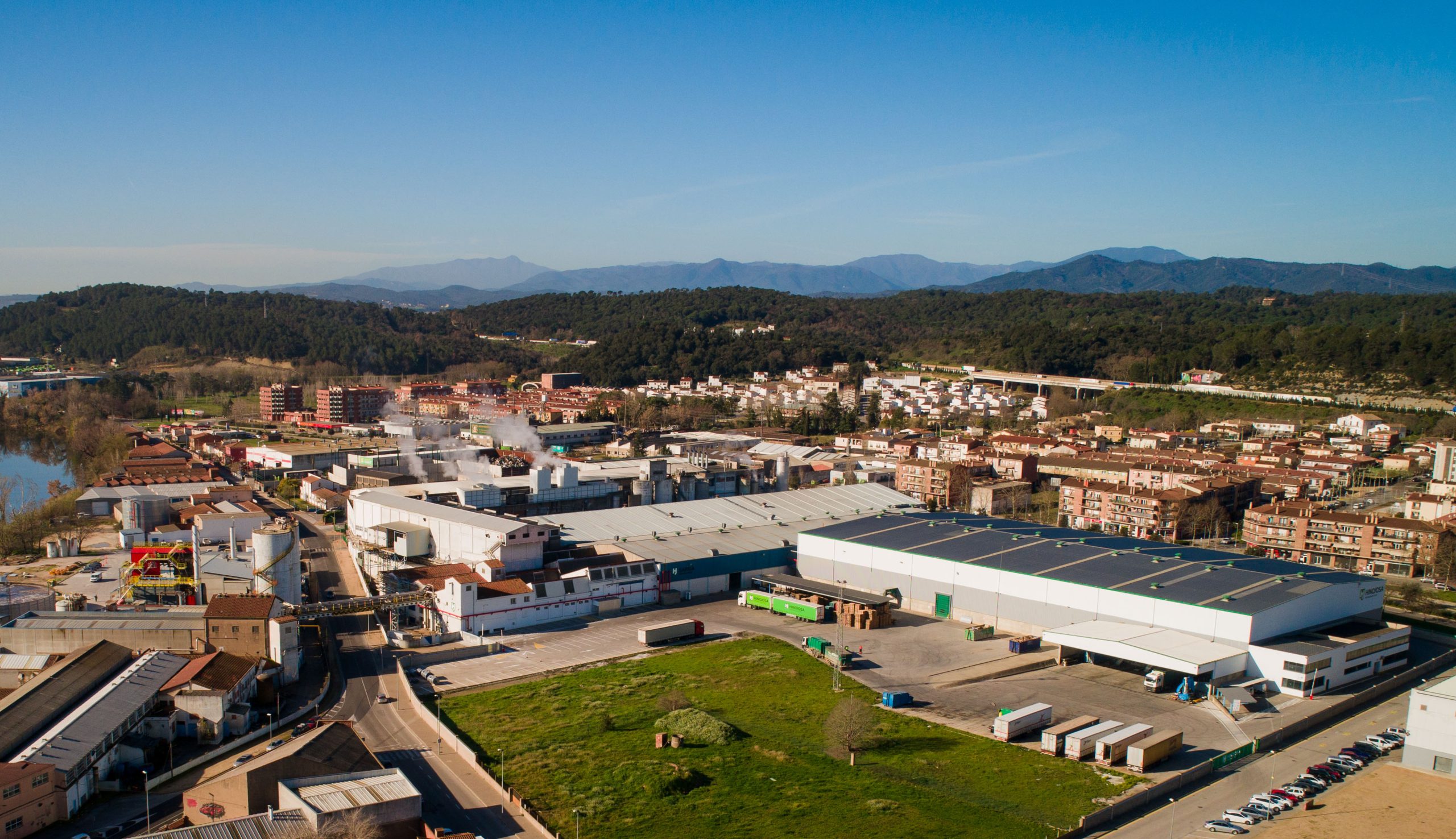
Hinojosa Packaging Group is a Spanish family business with more than 75 years of experience in the design and manufacture of sustainable packaging solutions. With a turnover of 739 million euros in 2023 and a workforce of 2,900 employees, it is positioned as a leader in the sector in Spain and one of the main European players.
The Group has 24 production plants distributed in Spain, Portugal and France, which allows it to offer wide coverage to its customers. In addition, it has a commercial network present in more than 40 countries that serves more than 9,000 customers. Hinojosa is characterized by its strong commitment to sustainability. The company is committed to the circular economy, using recycled materials and developing innovative solutions that minimise environmental impact.
In terms of its positioning, Hinojosa is distinguished by its focus on innovation, specialization and proximity to the customer. The company offers customized solutions for each sector, adapting to the specific needs of each client.
Mireia García Roca is passionate about Digital Transformation as the new revolution that designs a new way of doing business. He believes that this transformation starts with the customer experience, continues with employee training, cultural change, the digitization process, and even the construction of new business models. Mireia has been leading transformation and open innovation projects for more than 25 years , always focused on the global improvement of companies to achieve excellent and sustainable results.
Below, we share the interview we had with Mireia García Roca:
To get you started, we’d love for you to share with us an overview of Hinojosa. Could you tell us about Hinojosa’s history, mission and main lines of business, and how you have positioned yourself as a benchmark in the packaging sector?
Hinojosa, with a history of 77 years, stands out in the packaging sector as a family business of Valencian origin, founded in Xàtiva. Currently, our business group has 24 factories, of which 4 are paper mills that function as internal suppliers for our cardboard factories. The rest is dedicated to the production of cardboard packaging, covering both cardboard and corrugated cardboard. Our expansion has crossed borders, establishing ourselves in four countries: Spain, Italy, France and Portugal. In an effort to grow in the French market, we acquired Allard Emballages four years ago and, in 2020, we incorporated the Portuguese Graphicsleader. Recently, we have expanded our presence in France with the acquisition of 50% of ASV Packaging, a leading French group in the design and production of sustainable packaging solutions, specialized in cases for the food and beverage industry, and just a week ago, they have announced the acquisition of the Italian group MS Packaging, consisting of a paper mill and a packaging plant. We have the short-term goal of acquiring 100% of this company, projecting to complete this operation possibly by 2025, which underlines the strategic importance of France in our expansion. This stage of Hinojosa’s growth has been characterized by a remarkable strategy of inorganic growth, through the acquisition of companies, which has allowed us a considerable expansion in the last decade, especially in the field of cellulose-based packaging.
What are the main innovation strategies that Hinojosa is implementing to stay at the forefront of the packaging sector, and how do you foresee these strategies impacting the future of packaging?
I would tell you that, until now, our innovation strategy has been characterised by the autonomy of each plant. Each one has a technical office capable of responding quickly to customer requirements. For many years, Hinojosa has been recognized as an innovative company, focusing on meeting the immediate needs of customers in an agile way, with many incremental innovations. Since my arrival at the company a year and a half ago, I have sought to drive innovation towards broader horizons. An essential part of our innovation strategy is to support the development of products that not only meet current customer demands, but also unspoken or future demands. In addition, we are exploring long-term opportunities and challenges in the field of sustainable packaging. Our goal is to improve our environment through sustainable packaging solutions, which has led us to expand the scope of our innovation area. This is not limited to creating more innovative boxes; It ranges from researching new materials beyond cellulose to adapting and taking advantage of new regulations, such as the transition from plastic to other materials. Cardboard plays a crucial role in this process, although it does not have all the functionalities of plastic, which motivates us to research and develop new solutions.
It is also essential to understand the changes in consumer habits and how new technologies will impact the future of packaging. We are working to ensure that Hinojosa continues to be a relevant company in this sector by 2035, adapting to what packaging will be like in 10 years’ time.
Technology plays a crucial role in the evolution of the packaging sector. What emerging technologies do you think will have the greatest impact on the packaging industry in the coming years and how is Hinojosa preparing to integrate these innovations?
In the field of manufacturing technologies, our company has always been at the forefront, pioneering the adoption of digital printing and keeping our factories constantly updated with state-of-the-art technology, even exceeding industry standards. Currently, our focus is on how technology can revolutionise packaging, giving way to the concept of Smart Packaging. This innovation ranges from less disruptive solutions, such as QR codes or RFID tags, to the use of conductive inks, seeking to give packaging additional functionalities beyond the simple protection of the product.
In addition, we see artificial intelligence (AI) as a transformative force with extraordinary impact across all levels and sectors. We have started our foray into this field by offering ChatGPT training to our staff, with the aim of optimizing our processes through the use of AI. Currently, we are developing the “Mapping AI” project, which consists of a diagnosis to explore how generative AI can benefit various areas of our company. We anticipate that this year we will undertake more ambitious projects, not limited to generative AI, but expanding into artificial intelligence as a whole. We are convinced that AI will be the exponential technology that will have the greatest impact in the coming years, not only in our sector but in all aspects of our lives.
How is Hinojosa addressing sustainability challenges in its production processes and what initiatives are you carrying out to minimize the environmental impact of your products?
Hinojosa has integrated sustainability into its core business for years, reflecting this commitment in the use of renewable energies in its operations. For some time now, our facilities have incorporated technologies such as biomass boilers, demonstrating our effort to adopt technological solutions that promote a more sustainable approach. We are currently immersed in an ambitious decarbonization plan that reflects our ongoing commitment to protecting the environment.
Within our focus on innovation, we are dedicating significant resources to exploring new technologies and startups that are leading the way in energy efficiency and decarbonization. This technological scouting represents one of our main innovation strategies, with sustainability acting as a central axis of our vision for the future. It is clear that sustainability is a part of our innovation strategy and is one of the most important levers that drive our evolution and commitment towards responsible business development and awareness of environmental impact.
How does Hinojosa promote a culture that encourages innovation and creativity among its employees, and what impact has this had on your company?
Transforming the company culture is undoubtedly one of the most complex challenges, especially in an industrial company like ours, where the efficiency of processes has historically been the cornerstone. This culture of efficiency, while valuable, is often contrasted with a more creative and innovative approach. Recognizing this reality, this year we have intensified our efforts to foster a cultural shift towards innovation. We are aware that this change does not happen overnight; It is a gradual process, comparable to the persistence of Malayan gout.
To illustrate our efforts, we have implemented several initiatives. One of them is the “Café con”, a monthly meeting where we invite a leading professional in innovation from another company or consultancy to share their experiences. This initiative, while modest, has proven effective in opening up our perspectives, motivating employees to actively participate and look beyond our internal operations.
Another more ambitious initiative has been our intrapreneurship program, where six volunteer teams have been dedicated to solving challenges proposed by the company, using the design thinking methodology. Of these, three finalist teams have extended their work for an additional six months, presenting promising results in January. This program, while directly involving a small group of employees, contributes significantly to cultural change by disseminating it through our internal networks.
In addition, we will soon launch an internal innovation platform, designed to be highly participatory and include gamification elements, thus reinforcing our commitment to open and collaborative innovation. This platform seeks to promote communication about our innovation activities and encourage the active participation of all employees.
Finally, we have established key figures in each plant, the “innovation facilitators”, who will soon receive specialized training in innovation methodologies. These and other actions are designed to gradually transform our corporate culture, involving our more than 2,900 employees in the innovation process. From the innovation department, we understand that the task of innovating cannot fall solely on us; It is essential to get as many people as possible actively involved in this process.
What is your strategy for internationalization and how do you plan to adapt your operations and products to different markets and international regulations?
Internationalization represents one of the great challenges for us. To date, we have made significant progress, such as the acquisition of plants in France, Portugal and recently Italy, where we have put considerable effort into transmitting our corporate culture and achieving a complete integration of the teams, both in France and Portugal. However, we recognize that in order to sustain and accelerate our growth in the future, it is imperative to adopt a more systematized approach.
Currently, we are focused on developing and standardizing an organizational model that facilitates our international expansion. This model will seek to ensure that our corporate culture is effectively transmitted, ensuring that we operate as a unified group. Although we have been successful so far, we are aware of the need to structure our internationalization processes in a more robust way to achieve faster and more efficient growth, a project we are resolutely working on at present.
Can you share examples of how strategic alliances have helped Hinojosa advance its innovation and sustainability goals?
This year we have embarked on a new path towards open innovation, a concept that, until now, had not been explored deeply in Hinojosa. We have begun to establish collaborations with clusters that go beyond our traditional focus on packaging, covering sectors where our customers are also located. Although we were already part of the packaging clusters in Catalonia and Valencia, the expansion into new clusters reflects our openness to explore new territories and strengthen our industrial connections.
In addition, we are initiating collaborations with startups and technology centers, even without formalizing strategic alliances or investments. This approach allows us to work together on projects, mutually benefiting from our respective strengths. I firmly believe in the power of collaboration to overcome today’s innovation challenges. Collaborative projects, where multiple companies share and work together on a common challenge, often with the support of tech hubs or the incorporation of emerging technologies by startups, are crucial to our innovative approach. We are, therefore, building our open innovation ecosystem, participating in collaborative projects with companies, startups, technology centres and universities. This multidisciplinary approach allows us to integrate novel knowledge and technologies, strengthening our innovation capacity and establishing Hinojosa as a key player in the open innovation landscape.
Hinojosa is part of the Cre100do Foundation. What does being part of this initiative bring you and how has it influenced your approach to innovation and business growth?
Participation in Cre100do has been and is, from my perspective, especially enriching in terms of innovation. This program brings together companies that share a similar concern for innovation and growth, which positions us in a highly stimulating environment. At an event held in Madrid in May, I had the opportunity to present our approach towards an open innovation ecosystem, which triggered significant interest among participating companies. Many later approached us with the interest of learning more about our methodology, which has led to mutually beneficial collaborations.
Beyond the network of contacts, the content offered by Cre100do, including webinars on both innovation and other relevant topics, has been of great inspiration. Recently, I attended one on Schneider’s business model, which provided me with insights applicable to some of the challenges we face, not just from an innovation perspective.
In short, Cre100do acts as a catalyst for the exchange of knowledge and experiences between companies that, despite their diversity, share similar values and challenges. This symbiosis fosters an environment conducive to the establishment of valuable collaborations, which I consider a fundamental aspect for the development and strengthening of our approach to innovation.
Looking to the future, what do you consider to be the biggest challenges and opportunities for Hinojosa in the context of innovation, technology, internationalization and sustainability in the packaging sector?
We have a crucial opportunity before us: to position paperboard and cellulose-based materials as viable alternatives to fossil plastic. This path represents great potential in terms of innovation and sustainability, a field in which our company already stands out from others in the sector. This approach to sustainability opens up new possibilities for our development and reinforces our environmental commitment.
In a market where giants such as Mondi and DS Smith coexist, the uniqueness of Hinojosa lies in its essence as a large-scale family business. This particularity gives us remarkable agility in decision-making and allows us to harbor a vision of the future focused on lasting and prospering for at least another 75 years. This dynamic is particularly advantageous in the field of innovation, where the ability to act quickly, the availability of resources for investment and a vision genuinely committed to sustainable packaging translate into a prominent competitive position.
Therefore, our great opportunity lies in cementing our position in a future where sustainability will be the pillar of the packaging sector. This scenario motivates us to lead the change towards more environmentally friendly practices and opens up a range of lines of work and countless opportunities to innovate and establish a legacy of environmental and corporate responsibility.
Thank you very much, Mireia! And may the successes continue!
If you want to know more about the Cre100do Foundation, the companies that are part of the program and their activities, we invite you to visit their website.
You can read the interviews with other companies of the Cre100do Foundation that we have carried out from the Bankinter Innovation Foundation:
- The (R)evolution of GIRBAU: from electromechanical workshop to world leader in sustainable laundry
- TROPS, a model of innovation and sustainability in the agricultural sector
- Carinsa: Spanish innovation, internationalisation and commitment to the customer
- Logifruit: leading innovation in Circular Economy and Sustainability