
AI-generated summary
The Bankinter Innovation Foundation’s Horizons of Innovation webinar series spotlights leading experts shaping science and technology’s future. After an opening with energy analyst Vaclav Smil, the series focused on fusion energy with Tammy Ma, director of the Livermore Institute for Fusion Technology (LIFT). Ma—who participated in the December 2022 National Ignition Facility (NIF) experiment that first achieved fusion ignition—explained how inertial confinement fusion works, the significance of repeated ignition experiments (including a 2025 run with a gain of 4.1), and the remaining technical and engineering hurdles to commercial plants. She emphasized that while ignition proves the physics, achieving the higher energy gains, rapid repetition rates, tritium supply, neutron-resistant materials, and scalable manufacturing are essential next steps. The session also covered the role of AI in accelerating research, the growing private startup ecosystem, and the need for international collaboration, regulation, and talent development.
The webinar placed fusion in a broader energy and geopolitical context: fusion could become a large-scale, CO2-free baseload power source complementing renewables and advancing energy access globally, but it must overcome engineering, regulatory, and social-acceptance challenges. Europe’s efforts—alongside ITER and emerging industrial clusters—illustrate moves to build an industrial ecosystem, while startups and public–private partnerships push innovation faster. Ma argued for diverse technical approaches, transparent communication, and tailored regulatory frameworks to ensure safety without stifling progress. The Foundation will continue the series with further expert discussions on fusion and other transformative technologies.
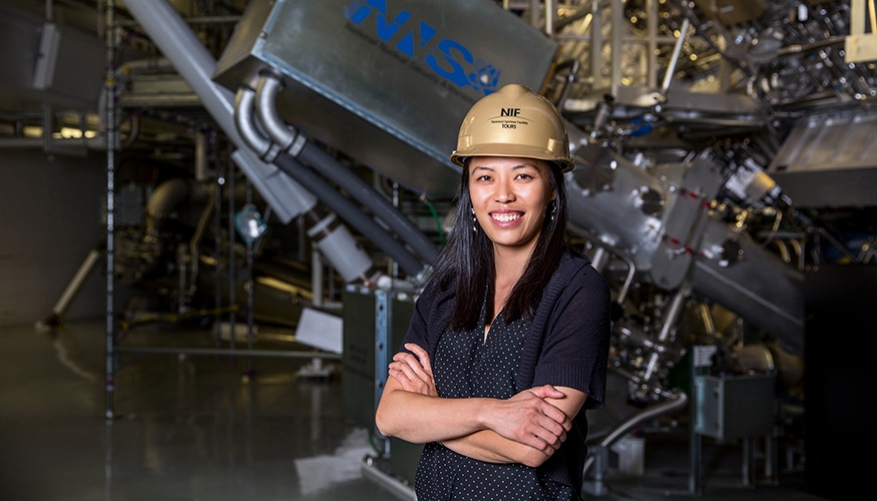
Tammy Ma, director of the Livermore Institute for Fusion Technology, explains in the Bankinter Innovation Foundation webinar why nuclear fusion is experiencing a decisive moment after the ignition milestone achieved in 2022.
The Bankinter Innovation Foundation continues to explore the major technological frontiers with its new series of webinars Horizons of Innovation, a space dedicated to talking with some of the experts who are defining the future of science, technology and innovation.
After the opening session with Vaclav Smil, one of the world’s most influential analysts on energy systems and energy transition, the series now moves on to one of the great scientific challenges of our time: fusion energy.
In this new session we have Tammy Ma, director of the Livermore Institute for Fusion Technology (LIFT) and one of the key figures in the development of this technology. The conversation was led by Frances Sellers, senior editor of The Washington Post and moderator of our Future Trends Forum, in a dialogue that explores the decisive moment that nuclear fusion is experiencing and the implications it can have for the global energy system.
The series will continue in the coming months with equally relevant guests. Among them, Francis Collins, former director of the National Institutes of Health of the United States and one of the leaders of the Human Genome Project, and Michael López-Alegría, astronaut and commander of private space missions, who will provide his vision on the future of space exploration.
In this context, the meeting with Tammy Ma focuses on a key question for the planet’s energy future: are we really close to harnessing the energy that powers the stars?
The issue is especially relevant after the milestone reached on December 5, 2022 at the National Ignition Facility (NIF), where an experiment achieved for the first time the so-called fusion ignition: a reaction in which the fuel releases more energy than the process itself consumes. This result, achieved by the team at Lawrence Livermore National Laboratory, was a historic scientific demonstration of the viability of fusion as an energy source.
Tammy Ma was directly involved in that experiment and today leads initiatives aimed at translating these advances from the lab to the real energy system. During the webinar, she gives a clear vision of what this achievement really means, how inertial confinement fusion works, what are the steps needed to reach the first commercial plants, and why international collaboration will be key to accelerating its development.
The conversation also addresses an increasingly complex geopolitical and energy context. Energy security, the need to reduce carbon emissions and the search for abundant and clean sources place fusion at the centre of the debate on the future of energy.
Because if this technology scales up industrially, its promise is enormous: a practically unlimited energy source, with no CO₂ emissions and with much more manageable waste than nuclear fission.
If you want to watch the webinar, here it is:
The Moment That Changed Fusion Energy: Ignition at the National Ignition Facility
The renewed global interest in fusion energy responds to a combination of scientific advances, technological investment and new geopolitical priorities. As Tammy Ma explains, all these factors have coincided at a key moment for the future of the energy system.
The turning point came in December 2022, when Lawrence Livermore National Laboratory’s National Ignition Facility (NIF) first achieved fusion ignition. In that experiment, the reaction generated more energy than had been necessary to initiate it, demonstrating the scientific feasibility of fusion as an energy source.
The experiment took place during the early hours of December 5 to 6. At the NIF – the most powerful laser facility in the world – the researchers were testing a new inertial fusion configuration using a fuel capsule composed of deuterium and tritium, two isotopes of hydrogen. Powerful laser pulses compressed the capsule to extreme conditions of temperature and pressure.
After the laser was fired, some diagnostic systems began to record unusual signals. One of the most striking indications was that several halogen bulbs in the laboratory burned out due to the intense neutron flux generated by the reaction.
Although the team sensed that something extraordinary had happened, it was necessary to carefully analyze the data before confirming it. Only after reviewing the measurements from multiple detectors did the result become clear: the reaction had reached ignition, a goal that science had been trying to achieve for more than half a century.
From repeatable experiment to industrial fusion energy challenge
After the milestone of ignition in 2022, one of the most important advances has been to demonstrate that the result was not an isolated event. Since then, the team at the National Ignition Facility (NIF) has managed to repeat the ignition ten times, confirming the robustness of the physics behind the process.
The most successful experiment so far occurred in April 2025, when the reaction generated 8.6 megajoules of energy, reaching a gain factor of 4.1. In simple terms, it means that the reaction released more than four times the energy that was introduced by the lasers.
This result marks a significant advance, but it is still not enough to turn fusion into a commercial source of electricity. For a fusion plant to be economically viable, scientists estimate that energy gains of the order of 50 to 100 would need to be achieved: that is, to produce between fifty and a hundred times more energy than is used to initiate the reaction.
In addition to increasing efficiency, several engineering challenges also need to be solved. A fusion plant based on this approach would need to repeat the implosion process around ten times per second, continuously produce the fuel capsules, and develop materials capable of withstanding the extreme conditions inside the reactor.
However, the researchers believe that current advances allow us to be reasonably optimistic. For a first self-sufficient demonstrator plant – capable of generating the energy necessary for its own operation – it would be enough to achieve a profit of close to 15, a goal that could be achieved in the coming years in experimental facilities such as the NIF.
Although significant technological challenges remain, the pace of progress is changing the global perception of fusion. Fusion is no longer just a scientific challenge but a global technological race, in which international collaboration will be key to solving the engineering problems that still lie ahead.
The role of startups and new innovation ecosystems
Fusion energy is no longer just a project of large national laboratories. In recent years, a global startup ecosystem has emerged that is accelerating the development of new technologies and reactor models.
There are now more than 55 fusion companies around the world, with more than $11 billion in cumulative private investment , Tammy says. This entrepreneurial drive is introducing a new dynamic to the industry: faster development cycles, increased technological experimentation, and increasingly close collaboration between the public and private sectors.
One of the most prominent examples is Commonwealth Fusion Systems, in the United States, which works with a design based on tokamaks, reactors that use powerful magnetic fields to confine plasma. The company has developed high-temperature superconducting magnets, capable of generating very intense magnetic fields in more compact devices. This innovation makes it possible to reduce the size of experimental reactors and speed up the process of designing and testing new configurations.
The progress of these companies is also beginning to move outside the laboratory. Some of them are already defining locations for future fusion plants and even signing preliminary electricity purchase agreements with energy companies. This means that, along with technological development, other key elements are beginning to be activated: regulation, energy planning and infrastructure.
Europe: building an industrial fusion ecosystem
In Europe, there is also a growing political and technological momentum around fusion. Initiatives such as ITER, in the south of France, represent one of the largest international scientific projects dedicated to this technology. But alongside these large public programs, new innovation clusters and specialized companies are emerging.
Governments such as those of Germany, the United Kingdom and France are drawing up national roadmaps to integrate fusion into their future energy systems. These strategies are not limited to scientific research: they seek to develop the entire industrial ecosystem necessary for the technology to reach the market.
This means mobilising a wide range of capabilities. Germany, for example, is exploring how to apply its strength in industrial engineering and advanced manufacturing to produce key components. France brings decades of experience in simulation and large scientific infrastructures. And in the UK, the Culham campus is establishing itself as an innovative model where fundamental research, start-ups and large companies coexist in the same technological environment.
The result is a sector rapidly evolving towards an open innovation model, in which laboratories, companies, investors and governments collaborate to build a new energy industry from the ground up.
Safety and Regulation: How to Address Fusion Energy Risks
One of the recurring debates around fusion energy has to do with its safety and social acceptance, especially because of its relationship to the nuclear field. Although fusion is often described as a safe technology, the public conversation often associates it with traditional nuclear energy or even with the development of weapons.
In the case of the National Ignition Facility, the research is part of the mandate of the National Nuclear Security Administration of the United States, whose objective is to guarantee the safety and reliability of the country’s nuclear arsenal. The experiments make it possible to recreate, on a microscopic scale, extreme conditions of temperature, pressure and density similar to those that occur in nuclear processes. These data are used to improve simulation models and verify the safety of existing systems, not to design new weapons.
As for fusion as an energy source, its safety profile is very different from that of nuclear fission. The fusion reaction requires extremely precise conditions to stay active: if the energy input is stopped – for example, by turning off lasers or magnetic fields – the reaction simply stops. This eliminates the risk of uncontrolled chain reactions.
There are, however, some aspects that need to be carefully managed. Fusion produces large numbers of neutrons, which can activate certain materials and generate moderate levels of radiation. In addition, many reactor designs use tritium, a radioactive isotope of hydrogen that must be handled under strict safety protocols. These are known risks in the nuclear field and for which technical and regulatory standards already exist.
In this context, Tammy believes that, during the early stages of development, fusion could be regulated in a similar way to other nuclear applications for civilian use, such as nuclear medicine or research laboratories. This approach would allow high levels of safety to be maintained without slowing down innovation with regulatory frameworks designed for different technologies.
In the long term, when the first commercial plants start operating, it will be necessary to develop specific regulations for this type of facility. The challenge will be to find a balance: to ensure safety and transparency without introducing regulatory complexity that hinders the development of a technology with enormous energy potential.
How fusion energy will fit into the energy system
When imagining the future of fusion energy, it’s easy to think of entirely new or even decentralized solutions, similar to home solar generation. However, the most widespread view among researchers points to a model closer to that of today’s large power plants.
The fusion plants being designed today would have a capacity of hundreds of megawatts or even gigawatts, a scale comparable to that of many nuclear fission plants or conventional thermal plants. In terms of infrastructure, they would also be of similar size, so they could integrate relatively well into the existing energy system.
In fact, some projects are considering installing future fusion plants in sites where coal or nuclear power plants previously operated, taking advantage of electricity infrastructures already connected to the grid.
One of the main advantages of fusion is that it can function as baseload. That is, it can produce electricity consistently and reliably, complementing renewables when the sun is not shining or the wind stops blowing. In this sense, fusion plants are expected to act as large central generation nodes, connected to national power grids.
On an urban scale, a single large plant could supply cities the size of San Francisco or New York. In addition, fusion systems could offer some operational flexibility, adjusting their level of production based on energy demand.
In any case, one of the next challenges for the sector will be to better understand how to integrate fusion into current energy systems. This involves analysing how it will coexist with renewables, energy storage and different patterns of electricity consumption in each region.
Rather than completely replacing other sources, fusion could become a key part of a hybrid energy system, where different technologies work in a complementary way to guarantee a clean, stable and secure supply.
Fusion energy, climate and global energy access
Fusion has the potential to play an important role in the face of climate change. The basic reaction – the fusion of deuterium and tritium to form helium – generates no carbon emissions, making it a completely CO₂-free energy source in its operation. This could help significantly reduce the carbon footprint of the global energy system as demand for electricity increases.
Beyond climate, fusion also poses an opportunity in terms of energy equity. Unlike other sources, it does not depend on specific geographical conditions such as the sun, wind, or fossil resources. In principle, a fusion plant could be installed almost anywhere in the world, opening up the possibility of expanding access to abundant and stable energy in developing regions.
If deployed on a large scale, fusion could not only bolster countries’ energy security, but also enable energy-intensive technologies – such as desalination, carbon capture or artificial intelligence – that will be key to sustainable development in the coming decades.
AI and fusion: a two-way relationship
Artificial intelligence is becoming a key ally in accelerating the development of fusion. Its capabilities make it possible to analyze huge volumes of experimental data, optimize plasma simulations, and explore new physical parameters more quickly. It can also contribute to the discovery of materials capable of withstanding extreme conditions inside reactors and to the automation of complex scientific facilities.
But the relationship between the two technologies is bidirectional. While AI is helping to advance fusion research, the very growth of artificial intelligence is skyrocketing global demand for energy, driven by increasingly intensive data centers and computing systems.
In that context, fusion could become part of the long-term solution. While it will still take time to reach the power grid, its ability to generate large amounts of clean energy could help supply the energy needs of an increasingly digital and data-driven economy.
Scientific vocation and the importance of talent
Tammy Ma’s path to plasma physics began with an early curiosity about science and the process of discovery. During her youth, she even considered careers as different as journalism or space exploration, but eventually found in scientific research a direct way to participate in the construction of the future through technology.
In her career, mentoring has played a fundamental role. Ma highlights how professors and colleagues offered her opportunities and support in the early stages of her career, something she now considers a responsibility to pass on to new generations.
This aspect is especially relevant in a field such as fusion, which will need a new generation of professionals in the coming years. Not only plasma physicists, but also engineers, technicians and specialists in multiple disciplines who will make the development and operation of future power plants possible.
To build this talent, institutions such as the Lawrence Livermore National Laboratory collaborate with universities, international organizations and educational programs, organizing courses, summer schools and incorporating hundreds of young students and researchers every year. The objective is clear: to create the human capital necessary for an energy industry that is still being born.
Questions from the audience
During the session, the audience raised several questions about the technical, industrial and societal challenges of fusion energy.
What is the biggest bottleneck for marketing?
While there are several challenges – such as tritium supply, neutron-resistant materials, or system efficiency – Tammy Ma stresses that the biggest challenge is scaling up the solutions already working in the lab. Many of the key processes have been demonstrated on a small scale, but all subsystems still need to be integrated into a real, operational energy facility.
How is fusion energy converted into electricity?
In many reactor designs, the energy released by the reaction is mainly transported in the form of neutrons. When these neutrons are slowed down by passing through specially designed materials, their kinetic energy is transformed into heat. That heat can be used to produce steam and drive turbines, following a similar principle to that of today’s thermal power plants.
Which technology will come first: inertial or magnetic fusion?
According to Ma, it is still too early to say. Inertial fusion is currently the only one that has achieved ignition and energy gain, while magnetic fusion has advanced more in the design of complete reactor systems. Each approach presents distinct advantages and challenges in areas such as materials, engineering, or system integration.
What role does the supply chain play?
Beyond the reactor itself, industrial viability will also depend on developing a supply chain capable of manufacturing the components on a large scale. The challenge is not just to build a prototype, but to mass-produce the systems needed for a new energy infrastructure.
Why is it important to communicate science better?
The increasing complexity of science means that even researchers themselves are increasingly reliant on large equipment, simulations and advanced systems. For this reason, Ma stresses the importance of clearly explaining scientific advances to society and policymakers, avoiding exaggerations or misunderstandings that could affect public trust.
Which technological approach has the best future?
While each researcher may have their own preferences, Ma advocates keeping diverse lines of research open. At an early stage like the current one, exploring different designs and technologies allows you to identify which combinations of physics, materials, economics, and supply chain will be most viable in the long term.
What is the biggest myth about fusion?
One of the most widespread myths is that fusion will hit the power grid in a matter of a few years. While recent progress is very significant, significant engineering, regulatory, and infrastructure challenges remain. Generating unrealistic expectations could hurt the industry if promised deadlines are not met.
Upcoming fusion energy meetings
Fusion energy is at a turning point. Scientific advances, the entry of new startups and growing institutional interest are accelerating a technology that for decades seemed always distant.
At the Bankinter Innovation Foundation we continue to explore this technological frontier through different meetings and debates with international experts. If you are interested in delving into this topic, we invite you to participate in the next events dedicated to fusion:
- The future of fusion energy A meeting with Carlos Alejaldre to analyse the current state of this technology, its scientific challenges and its potential to transform the global energy system.
- Fusion energy: science or fiction? A conversation with Milena Roveda to understand the extent to which fusion is moving from being a scientific promise to a possible industrial reality in the coming decades.
The transition to new energy sources will be one of the great challenges of the 21st century. Closely following advances such as fusion allows us to better understand how science, technology and innovation can redefine the planet’s energy future.