
AI-generated summary
Heike Riel of IBM Research argues that the next phase of computing will be defined less by transistor scaling and more by architectural innovation that minimizes data movement and exploits physics to compute. Current von Neumann systems waste vast energy moving bits between memory and logic—deep learning workloads spend most power on matrix multiplies and data transfer—so Europe and the industry must pursue alternative architectures: neuromorphic designs that merge memory and computation, and quantum systems that tackle problems unreachable by classical machines. Riel outlines three neuromorphic pathways—CMOS-based spiking and parallel platforms (e.g., Loihi, SpiNNaker), specialized ultra-low-power neurosynaptic chips (TrueNorth/NorthPole), and radical in-memory analog computing using nonvolatile crossbar arrays—each requiring co-design of hardware, algorithms, and tooling.
Riel emphasizes a heterogeneous, hybrid future: classical HPC for precise simulation, neuromorphic accelerators for energy-efficient inference, and quantum processors for optimization and chemistry, tightly integrated into systems. Realizing this vision demands investment in fabs, cryogenics, materials, talent, and resilient supply chains, making neuromorphic and quantum technologies strategic for European technological sovereignty. The coming decade, she suggests, will prioritize architectural intelligence over mere miniaturization, producing more specialized, efficient, and strategically important computing.
Quantum and neuromorphic computing redefines energy efficiency and chip architecture in the age of AI and technological sovereignty.
The Future Trends Forum Semiconductor series moves towards one of the deepest and most strategic frontiers of computing: those architectures that try to go beyond the classical Von Neumann paradigm. After analyzing geopolitics, value chain and advanced packaging, the conversation moved to the territory where the energy and functional future of computing is being decided: neuromorphic computing and quantum computing.
Heike Riel, IBM Fellow and Head of Science in Quantum & Information Technology at IBM Research, articulates a vision that connects physics, chip architecture and European industrial strategy.
What the expert put on the table was a strategic vision on the energy limits of silicon and the role that Europe can play in the next generation of computing infrastructures.
The energy limit of the current model
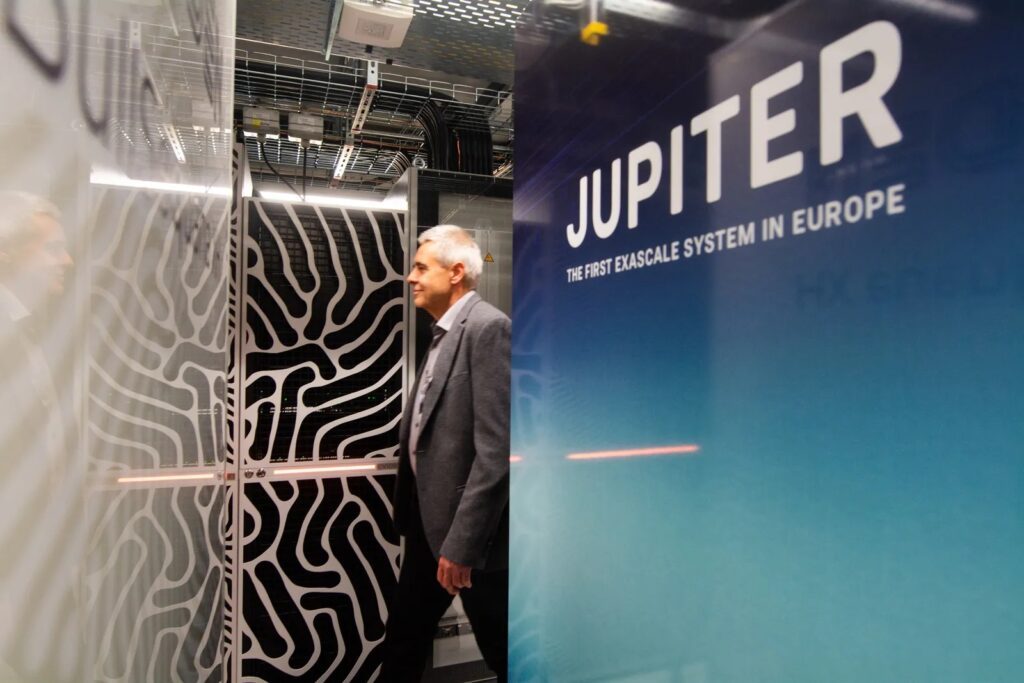
Riel started with a very powerful contrast: the European exascale supercomputer Jupiter – which consumes in the range of 15–20 megawatts – versus the approximately 20 watts consumed by the human brain.
Source: WIRED
The comparison is not rhetorical. It is structural.
In today’s systems, between 70% and 90% of the energy in deep learning loads is consumed in multiplication and matrix addition. But even more critical is the movement of data between CPU and memory, a direct consequence of Von Neumann’s architecture. The bottleneck is no longer the transistor. It is the physical distance that the bit travels.
This diagnosis connects with one of the sector’s consensuses: the energy cost of data in motion has become a strategic variable, as already pointed out in the analysis on advanced integration presented at the FTF.
Neuromorphic: When Physics Calculates
Source: Xakata
Neuromorphic computing tries to break this separation between memory and logic, drawing inspiration from the human brain.
Riel structured the neuromorphic landscape in three major technological approaches that reflect different levels of maturity, architectural ambition and rupture with the classical paradigm.
1. CMOS implementations of neural networks
The first pathway maintains the technological substrate of conventional CMOS silicon, but reconfigures the architecture to approximate biological neural functioning.
In this category is Loihi, developed by Intel, based on spiking neural networks. Instead of operating with continuous activations as in traditional deep learning, Loihi processes discrete events over time, replicating the asynchronous behavior of neurons. This approach makes it possible to reduce energy consumption in inference tasks and explore new forms of local learning.
Also noteworthy is SpiNNaker, a European infrastructure linked to the Human Brain Project, which is committed to a massively parallel architecture based on interconnected ARM cores. Its main objective is the large-scale simulation of biological neural networks. Here the emphasis falls on modelling and understanding the brain as a complex system, with both scientific and technological implications.
In both cases, the change lies more in the architecture and the computing model than in the fundamental physical device. This is a significant evolution, although within the CMOS framework.
2. Specialized ultra-low-power architectures
The second approach moves toward closer integration between memory and computing, with a focus on specific applications and extreme efficiency.
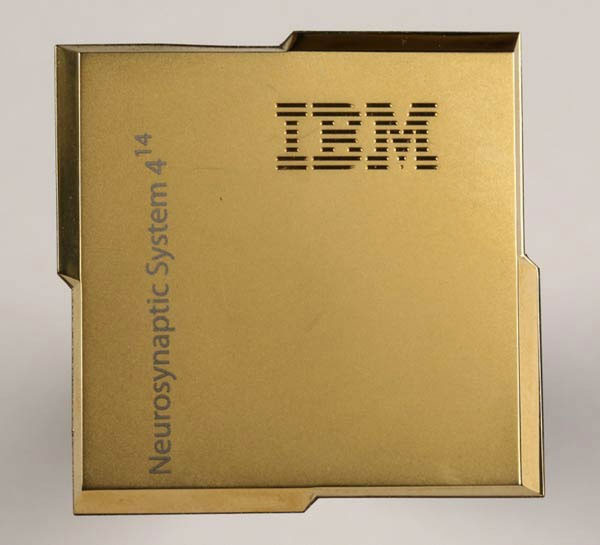
IBM has developed TrueNorth as a neurosynaptic digital architecture that reorganizes silicon into blocks that mimic neurons and synapses. Its evolution, NorthPole, deepens that integration, physically bringing memory and logic closer together to minimize data movement.
The result is an inference capacity with consumption in the order of tens of milliwatts, which opens up applications in edge computing, autonomous systems and environments where energy is the main constraint. Here the key is not to replicate the brain, but to capture its operational efficiency in specific tasks.
This line introduces a structural principle: architectural specialization as a way to recover energy efficiency in the age of AI.
3. In-memory computing based on analog physics
The third approach represents the most radical leap. Instead of moving data between memory and processor to perform matrix operations, the memory itself executes the calculation.
By means of non-volatile memories – such as phase-change memory or ReRAM – organized in crossbar architectures, the fundamental physical laws (Ohm and Kirchhoff) allow multiplication and accumulation to be carried out in parallel and analog ways. The resulting current in each node corresponds directly to the result of the matrix operation.
In this model, the physics of the device executes the mathematical operation. The energy invested in the movement of data is drastically reduced and matrix multiplication – responsible for most of the consumption in deep learning – becomes a distributed physical phenomenon.
This approach requires, however, redesigning algorithms, programming tools, and analog-to-digital conversion systems. Architecture is no longer an intermediate layer: it becomes an intrinsic part of the computational model.
Together, the three approaches draw a transition map: from architectural optimization within CMOS to the direct use of physics as a calculation engine. Neuromorphics is not a single technology, but a field of convergence between advanced microelectronics, materials science, and algorithmic redesign.
And therein lies its strategic dimension.
Here the key is not only biological inspiration, but the direct use of physics as a calculation mechanism. The hardware stops simulating the neural network: it implements it.
But Riel underlined a critical point: these architectures require hardware-algorithm co-design. It is not enough to manufacture the chip; the entire stack must be redesigned.
Quantum computing: beyond classical silicon
If neuromorphic computing seeks energy efficiency by mimicking the brain, quantum computing pursues another frontier: solving intractable problems for classical computing.
From his position at IBM Research, Riel emphasized that the challenge is not only the qubit, but the entire system: cryogenic control, interconnection, error correction, integration with classical HPC.
Europe has identified this area as strategic. The Draghi report explicitly proposes a European quantum chip plan and a reinforcement of continental technological leadership. The convergence between advanced semiconductors, cryogenics and new materials opens up a field where technological sovereignty will be decisive.
In parallel, the global context is competitive. 86% of executives in the sector foresee great growth driven by AI, while talent and geopolitical tensions remain priority risks. Quantum computing does not escape this dynamic: it requires intensive capital, highly specialized talent and resilient supply chains.
Specialization vs. universality
A central message from Riel was that the future will not be monolithic.
The human brain is extremely efficient, but it is not suitable for high-precision numerical simulations. Exascale supercomputers solve complex differential equations, but at an enormous energy cost.
The emerging scenario is hybrid:
- Classical HPC for deterministic computation.
- Neuromorphic accelerators for efficient inference.
- Quantum processors for optimization, computational chemistry, and cryptography.
- Tight integration between architectures.
This architectural specialization approach is aligned with the structural transformation that the industry is experiencing: modularity, heterogeneity and co-optimization of the entire system.
Energy, talent and European strategy
The technical debate inevitably leads to industrial geopolitics.
The sector identifies supply chain flexibility and the development of specialized talent as strategic priorities. The effective implementation of policies such as the CHIPS Act requires not only investment in fabs, but also in innovation ecosystems, clusters and technology transfer.
In this context, neuromorphic and quantum computing represent more than just a scientific frontier: they are vectors of industrial positioning.
Europe competes in productive capacity, in chip architecture and design, in cutting-edge scientific research and in the integration of complex systems that will sustain the continent’s technological sovereignty.
Conclusion: When architecture redefines the industry
Riel’s presentation at the Future Trends Forum left a clear idea: the future of semiconductors is not only played out in nanometers. It is played out in how we design architecture to minimize the movement of data. In how we use physics to calculate. In how we combine classical, neuromorphic and quantum technologies in hybrid systems.
And in how we align investment, talent and continental strategy.
If the last decade was marked by the tyranny of miniaturization, the next will be marked by architectural intelligence.
The computing of the future will not simply be faster. It will be more specialized, more integrated and, above all, more strategic.
See the presentation
To delve into the debate on neuromorphic computing, in-memory architectures, energy efficiency and the future of quantum computing, you can watch Heike Riel’s intervention at the Future Trends Forum for Semiconductors:
In the next articles in the series, we will continue to look at the key trends that will define the competitiveness of the industry: from interconnect architecture to the transition from lab to factory, strategic investment, and skilled talent development.
The future of semiconductors is being shaped now. And its impact will reach the entire digital economy.

Miembro de IBM, director científico de Tecnología Cuántica y de la Información, director de IBM Research Quantum EMEA