AI-generated summary
The Bankinter Innovation Foundation report “Semiconductors: critical capabilities for European competitiveness” outlines five priorities to strengthen Europe’s role in the chip industry: convert domestic demand into industrial commitment, choose strategic areas to compete, build clusters with critical mass, accelerate lab-to-industry transfer, and treat talent as critical infrastructure. A webinar featuring Yefei Sun and Antonio Mesquida explored the global semiconductor value chain—design, materials, equipment, packaging, testing and integration—and why chips have become strategic amid the pandemic, geopolitics and the rise of AI.
Mesquida emphasized AI as a major demand driver, moving from infrastructure-heavy training to widespread inference and ultimately embedded AI in devices, which will require specialized accelerators. He argued that Moore’s Law is reaching limits and future gains will come from “More than Moore” approaches—advanced packaging, chiplets, heterogeneous integration, photonics and novel materials—where Europe can find niche advantages. Europe and Spain must adopt a selective, long-term strategy focused on strengths like photonics, power electronics and equipment, build dense clusters that retain talent, and streamline funding and regulation. Chips Act 2.0 should shift from securing supply to building competitive advantage by aligning demand, supporting design and packaging, and enabling faster lab-to-fab scaling.
Semiconductors are already a critical infrastructure for the digital economy, artificial intelligence and European technological autonomy. Antonio Mesquida analyses the global chip value chain, its geopolitical challenges and the opportunities for Europe and Spain.
The Bankinter Innovation Foundation has published the report “Semiconductors: critical capabilities for European competitiveness“, a proposal drawn up based on the contrast with experts from the Future Trends Forum on how to strengthen Europe’s position in an industry that is key to competitiveness, technological autonomy and security. The report sets out five priorities: turning European demand into industrial commitment, choosing better where to compete, building clusters with critical mass, facilitating the leap from the laboratory to industry and treating talent as a critical infrastructure.
As a continuation of our outreach and dissemination work, we started a series of webinars to delve into the keys to the semiconductor ecosystem. The first of them, “The global semiconductor ecosystem: understanding the value chain“, was presented by Yefei Sun, executive of the Future Trends Forum, and was attended by Antonio Mesquida, CEO of Tech-Diligence, former ASML executive and professional with more than 30 years of experience in companies such as Siemens and Infineon.
If you want to see the full webinar, you can do so here:
The Global Semiconductor Ecosystem: Understanding the Value Chain with Antonio Mesquida
An invisible sector that has become strategic
For decades, chips have been an essential but little-visible technology. They were in mobile phones, computers, cars, telecommunications networks, industrial systems or medical equipment, but they rarely made headlines outside the technological field.
That changed with the pandemic, geopolitical tensions and, more recently, with the explosion of artificial intelligence. Today, semiconductors are much more than an electronic component: they are the basis of data centers, the electric car, industrial automation, defense, the energy transition, and advanced computing.
Antonio Mesquida sums it up clearly: understanding semiconductors requires looking at the entire value chain. A chip is not just a piece of silicon. It is the result of a global orchestra involving design companies, manufacturers, material suppliers, equipment manufacturers, packaging companies, test laboratories, integrators and end customers.
Artificial intelligence accelerates a new wave of demand
One of the great drivers of the sector is artificial intelligence. According to Mesquida, we are still in an initial phase: the construction of the infrastructure. Large data centers and hyperscalers have driven a huge demand for GPUs and advanced memory to train artificial intelligence models.
The next phase will be the expansion of inference: the everyday use of these models in companies, digital services, consumer applications and industrial processes. But the great transformation will come when AI is integrated into physical devices: cars, robots, wearables, smartphones, industrial sensors or embedded systems.
That third stage will require a new generation of specialized chips, known as artificial intelligence accelerators, optimized to execute specific tasks with less power consumption, lower latency, and greater efficiency.
The result will be broader, more fragmented, and more specialized demand. And that fragmentation, while complicating the industry, also opens up opportunities for new players.
The End of a Stage: Beyond Moore’s Law
For more than half a century, the industry has been guided by miniaturization. Reducing the size of transistors allowed for increased performance, reduced costs per operation, and multiplied computing power.
But that logic is approaching its physical and economic limits. Each new technological node requires gigantic investments, extremely complex equipment, and near-atomic levels of precision. That’s why only a few companies in the world can compete on the most advanced nodes.
This concentration creates strategic risks. Advanced manufacturing depends on very few players and, to a large extent, on Taiwan. In the case of the most critical chips for artificial intelligence, many Nvidia designs are manufactured at TSMC, making the supply chain a global point of vulnerability.
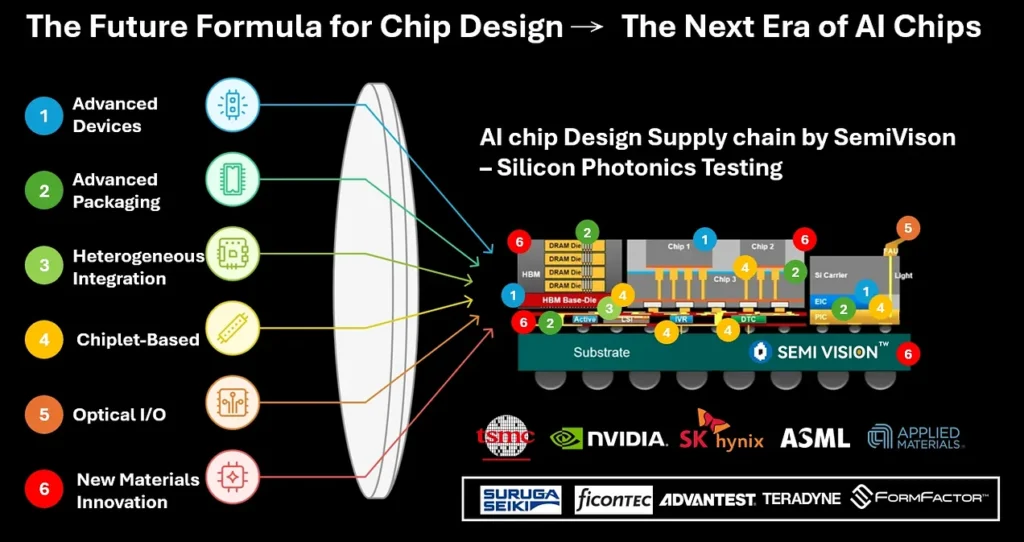
The answer is not only to continue reducing transistors. Mesquida points to a new stage based on More than Moore and Beyond CMOS technologies: advanced packaging, chiplets, heterogeneous integration, integrated photonics, new materials, neuromorphic computing and quantum computing.
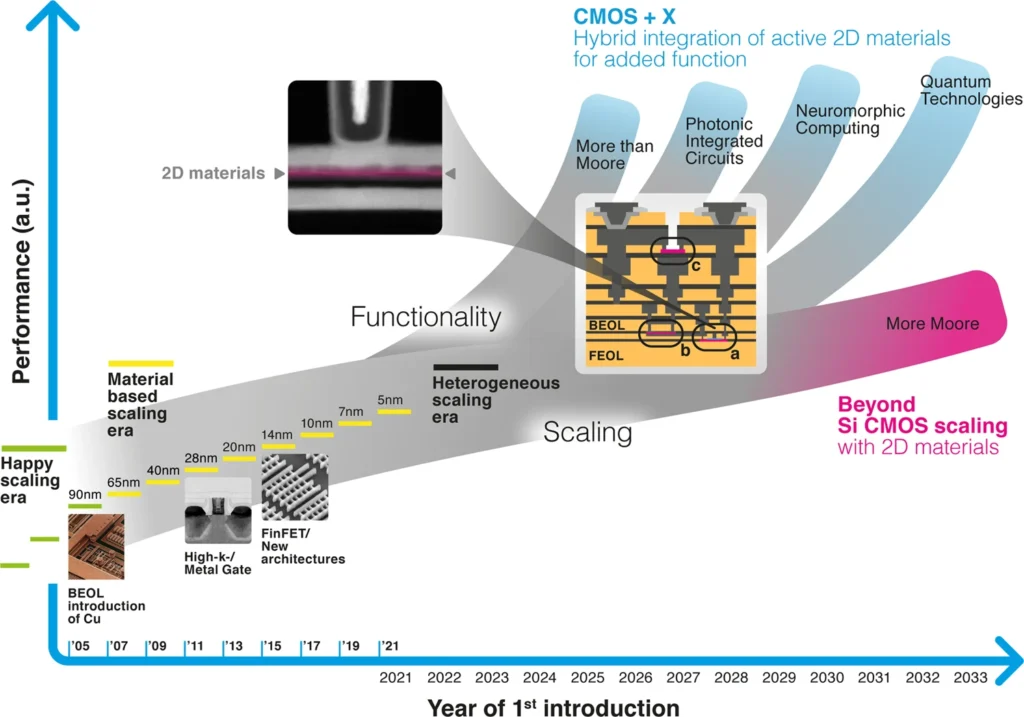
Source: https://www.nature.com/articles/s41467-022-29001-4
Europe and Spain can find windows of opportunity there. It is not a question of replicating the entire Asian value chain, but of choosing areas where differential capabilities already exist and where technological discontinuities can open up competitive space.
Europe must make better choices about where to compete
Europe is not starting from scratch. It has strengths in manufacturing equipment, power electronics, sensors, automotive, industry, research, integrated photonics and advanced materials. It also has leading companies with a solid scientific base.
The problem is fragmentation. There is knowledge, talent and industrial assets, but they do not always reach the critical mass necessary to compete as a global technology hub.
Therefore, the message of the webinar connects with one of the main conclusions of the Future Trends Forum: Europe needs a selective strategy. It cannot try to maximise everything at once. It must decide where it wants to lead, where it needs resilience and where it can specialise intelligently.
Opportunities identified include integrated photonics, compound semiconductors, advanced packaging, heterogeneous integration, chiplets, power electronics, and open architectures.
Source: https://tspasemiconductor.substack.com/p/more-than-moores-law-scaling-with
Spain: an opportunity if it knows how to build an ecosystem
For Spain, the challenge is not only to attract investment or finance isolated projects. The key is to build an ecosystem capable of connecting science, industry, capital and talent.
Mesquida stresses that Spain can play a relevant role if it concentrates on areas where emerging capacities already exist and if it manages to articulate projects with industrial ambition. The opportunity is not necessarily in competing for the most advanced factories of digital logic, but in positioning itself in segments where technological specialisation, applied research and proximity to driving sectors can become an advantage.
This requires continuity, coordination, and a long-term vision. The semiconductor industry is not built in short political cycles. Its horizons are 10 to 20 years, and its decisions require institutional stability, patient financing, and real public-private collaboration.
Talent, clusters, and speed of execution
Talent appears as one of the most critical pieces. The sector needs engineers, physicists, materials specialists, design experts, manufacturing technicians, software profiles, integration professionals, industrial managers and deep tech entrepreneurs.
But training talent is not enough. It must be connected to real industrial projects. If there are no companies, laboratories, pilot lines, validation centers and career opportunities, talent is dispersed.
That is why building clusters is essential. A semiconductor ecosystem requires density: universities, technology centers, startups, large companies, suppliers, investors, industrial customers, and administrations working in common direction.
The final message of the webinar is pragmatic: Europe and Spain have opportunities, but they must act with focus and speed. Global competition is already underway. The United States, China, Taiwan, Korea and Japan are investing with great intensity. Europe cannot limit itself to diagnosing; it needs to execute.
From Chips Act 1.0 to Chips Act 2.0: From Securing Supply to Building Competitive Advantage
Mesquida dedicated a significant part of the webinar to explaining the evolution of European semiconductor policy. The starting point was the supply crisis of 2021 and 2022, when automotive factories in Germany, Spain and other European countries had to shut down due to a lack of chips. These were not necessarily the most advanced chips, but microcontrollers, diodes and other essential components that Europe bought mostly in Asia. That crisis made European industrial dependence evident and accelerated the policy response: the first European Chips Act.
As Mesquida explained, the Chips Act 1.0 was born with a very focused approach to supply: ensuring chip availability, improving value chain monitoring, preparing for crisis responses and starting to reorganise the European semiconductor industry. The initiative mobilised a significant amount of resources – 43,000 million euros – but failed to sufficiently transform Europe’s relative position in manufacturing.
The diagnosis is clear: Europe once had more than 40% of the world’s chipmaking capacity in the early 1990s, but that share was progressively shifting to Asia. Today Europe is below 10%, while China, Taiwan, Korea and Japan account for a large part of the industrial weight. Even with current plans for new factories, Mesquida warns that Europe is unlikely to double its share in a few years, because the rest of the regions are also investing massively.
For this reason, the Chips Act 2.0 represents a change of approach. It is no longer just a matter of increasing manufacturing capacity or responding to supply crises, but of building a more balanced strategy, based on demand, technological specialization and Europe’s real strengths. Mesquida stressed that the new approach seeks to better channel European demand – automotive, industry, defense and, increasingly, data centers – and connect that demand with local design, manufacturing, integration and packaging capabilities.
The new approach also proposes to focus on technologies where Europe can be differential: photonics, artificial intelligence at the design level, RISC-V, quantum computing, manufacturing equipment and other strategic areas. Rather than trying to replicate the entire global value chain, the priority should be to strengthen the links where Europe already has unique capabilities and can turn them into a competitive advantage.
Mesquida also highlighted several measures necessary for this strategy to work: investing more in chip design, accelerating lab-to-fab transfer, creating advanced packaging infrastructure, developing talent and, above all, reducing bureaucracy. One of the problems with Chips Act 1.0, he explained, was that part of the funds were not spent on time: the application and authorization processes were too time-consuming, leaving little room to execute complex industrial projects.
The conclusion is that Chips Act 2.0 must be more agile, more selective and more market-oriented. For Europe, and also for Spain, the opportunity is not to do everything, but to better decide where to compete, connect demand and industry, and accelerate the passage of research to products and companies capable of scaling.
Q&A of the
webinarWhy does artificial intelligence make chips such a strategic technology?
Antonio Mesquida pointed out two main reasons. The first is that artificial intelligence is going to be used transversally in companies, services and everyday applications, so its impact will be global. The second is geopolitical: the main AI companies, both in software and hardware, are American, which generates a high dependency. For Mesquida, Europe needs to develop its own solutions, even if it cannot immediately replace the current capabilities of the United States.
What are the forecasts for the profits of semiconductor companies?
Mesquida explained that it is enough to observe the stock market and financial evolution of the large companies in the sector. Companies linked to chips for artificial intelligence, such as TSMC or Nvidia, as well as memory manufacturers such as Samsung, SK Hynix or Micron, are recording record sales and margins. His diagnosis was clear: the leading companies in the sector are going through a moment of very high revenues and profitability.
How long does it take to develop new manufacturing capacity for the most advanced chips?
The manufacture of cutting-edge semiconductors requires long times and extraordinary investments. Mesquida gave the example of a 2-nanometer factory in Europe: it could take between three and four years to build, and cost more than 25,000 million dollars. In Taiwan, perhaps a little faster could be built, but it would still be a project of at least three years. In addition, he stressed that it is not enough to build the factory: it is essential to ensure sufficient demand to keep it operating at full capacity.
Is water consumption one of the big problems in chip manufacturing?
Mesquida distinguished between two types of water in a semiconductor factory. On the one hand, cooling water, which works in a closed circuit. On the other, ultrapure water, used in manufacturing processes. In the past, this water was discarded, but today it is increasingly recycled. As he explained, the most advanced factories can now reuse up to 80% of the water, with examples such as TSMC in Arizona. He also indicated that in Spain this is an aspect that is being carefully analyzed.
Can sustainability become a competitive advantage for Europe?
Yes. Mesquida stressed that sustainability is not limited to the recycling of water or materials, but also includes energy. Spain, for example, has a high proportion of renewable energies and is not dependent on Russian gas. Added to this is European political stability. Factors such as energy security, institutional stability, water availability and sustainability are increasingly relevant to attract investment from companies such as TSMC or Samsung.
What professional profiles will the sector need in the coming years?
The sector will demand very diverse profiles. Mesquida mentioned everything from chip designers – especially those capable of relying on artificial intelligence tools – to machinery operators in factories. He recalled that approximately half of the people who work in a chip factory are operators, not engineers. There will also be demand in equipment construction, supply of chemical materials and other links in the value chain. He also stressed that, together with investment in university chairs, Spain must strengthen professional training. To learn more deeply, the expert recommends reading ADDRESSING THE TALENT GAP IN THE EU SEMICONDUCTOR ECOSYSTEM.
Which part of the value chain is less glamorous and harder for the public to understand?
For Mesquida, it is probably chip manufacturing and packaging, partly because Spain does not yet have a strong presence in these areas. He explained that manufacturing an advanced chip is extremely complex: a 2-nanometer chip can require more than 1,000 technological steps and more than 100 different machines. It is not comparable to manufacturing a car; it works at the scale of nanometers and atoms, with extraordinary levels of precision.
What is the critical path for initiatives like InnoFAB and Sparc to be successful in the long term?
According to Mesquida, success requires a combination of a good initial concept, focus on really relevant markets, continuous connection with market developments and also a certain dose of opportunity. In the case of Sparc, he pointed out that it comes at a favorable time for his market. But he insisted that these projects cannot be thought of in the short term: they are 30 or 40-year-old initiatives, which must be continuously renewed and reinvented.
How can Spain build a semiconductor ecosystem that generates wealth and growth?
Mesquida defended a gradual strategy: to move forward step by step. He gave as an example the region of Dresden, in Saxony, Germany, which today concentrates the largest chip manufacturing hub in Europe. This ecosystem began after German reunification, with a first factory, then a second and so on. More than 30 years later, it continues to grow and attract large-scale investments. For Spain, the lesson is that a semiconductor ecosystem is built with a long-term vision, continuity and progressive accumulation of capabilities.

Director ejecutivo de Tech-Diligence