
AI-generated summary
Educational innovation yields the greatest benefits when introduced early in childhood education, fostering essential skills for the future. Contemporary innovative projects focus on cognitive stimulation and sustainability, aiming to help children reach their full potential through engaging, interdisciplinary learning experiences.
Den Groenne Frinskole in Denmark exemplifies sustainability-centered education, where students aged 6 to 15 learn through design thinking and hands-on projects such as gardening, which teach them about ecology and sustainable practices. Students explore the world daily, even outdoors in winter, and older pupils choose their subjects, integrating multiple disciplines under teacher guidance. In California, Khan Lab School personalizes learning by grouping students based on independence rather than age and utilizing online platforms like Khan Academy. Students progress by demonstrating mastery of skills, supported by personalized tutorials, while fostering cooperation and social-emotional development within mixed-age groups. Meanwhile, Spain’s Kokoro Kids startup offers an app for children aged 2 to 6 that uses games and adaptive AI-driven methods to enhance cognitive skills like memory and attention. Grounded in neuroscience, the app personalizes activities based on each child’s performance, promoting early brain development critical for lifelong abilities such as problem-solving and communication. Together, these innovative approaches combine technology and experiential learning to prepare children for complex future challenges.
Innovative projects for early childhood students apply the development of different competencies that children will need throughout their lives, beyond the school environment.
Educational innovation can bear its best fruits if it begins to be applied from early childhood education. There is no shortage
From the cognitive stimulation of the little ones to the incorporation of sustainability in education, innovative projects are being developed today that help children develop their full potential. Below, we detail three of the most interesting ones that have emerged in recent times.
Den Groenne Frinskole (Denmark)
The well-being of the planet and its inhabitants is a basic factor for the future of children and young people. However, this relevance does not correspond to its presence in the educational programs of schools, institutes and universities. This is not the case at Den Groenne Frinskole, a school in Denmark that has developed its own school around sustainability.
Den Groenne Frinskole is a factory of innovative project ideas for students. In fact, its educational method is based on design thinking, combined with the projects that students develop. Each of them touches on a wide number of subjects, which is why there are several teachers who supervise it.
Students at Den Groenne Frinskole are invited to discover the world through its underlying patterns and interrelated systems. In this school for children from 6 to 15 years old, the older ones even choose the subjects and projects in which they are going to participate.
How do you land all this? As it is about observing the world and reflecting on it, the first thing that is done at Den Groenne Frinskole is to take the students out of the classroom to explore it. Yes, in Denmark and yes, every day. Even when it snows.
For example, pupils at Den Groenne Frinskole grow vegetables in the school garden while gaining knowledge about plants and climatic conditions. The result? Students learn how to produce their own food and also how to discern whether a business is as sustainable as it claims to be.
Khan Lab School (California)
If we are looking for innovative projects for students, Khan Lab School is an example in itself. It is because this school is an experiment to develop new learning practices that can later be extended to other schools and educational systems.
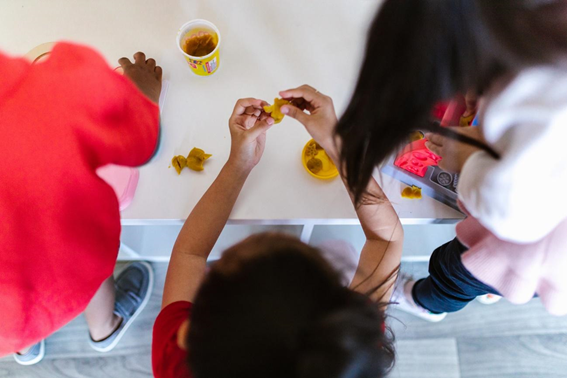
Among the issues that Khan Lab School experiments with is the grouping of students by factors such as their level of independence, not by their age. In addition, students use online learning platforms such as
To pass the next level, they must demonstrate an understanding of all the competencies and skills identified for each course. To do this, they have the support of personalized and group tutorials. Along with the acquisition of knowledge, students work on the development of social, emotional and executive skills, which are key to their future.
The fact that the progression of students is personalized does not mean that this school is individualistic. On the contrary: since students of different ages live together in each group, it is easier for them to learn from each other and even mentor each other. In this way, they are not exclusively concerned with their own advancement, but also with that of the other members of the group. This promotes cooperation over competitiveness.
This approach gives the student great power over their own learning and turns educators into facilitators for students to correctly channel their cognitive abilities. In addition, it strengthens the necessary skills to live in community and relate to other people.
Kokoro Kids (Spain)
Beyond institutions with promising educational projects, there is an ecosystem of startups willing to help shape the minds of the future. This is the case of Kokoro Kids, which has developed an emotional intelligence and cognitive stimulation app for children from two to six years of age.
To achieve their goals, Kokoro Kids uses video games, audiobooks and videos that motivate them and help them develop these types of skills. “Cognitive stimulation games are intended to develop skills such as memory, attention or language, which all our video games focus on,” the company points out.
What need is there to sign up such a young child for a mental gym like Kokoro Kids? “In the first years of life,
The choice of an app for this task is not a matter of fashion. It has more to do with the ability of digital tools to measure results and adapt content to the needs of each child. “The Kokoro method adapts the content of the games and activities individually and personalized to each child. It evaluates their initial state and progress in each area of knowledge,” the startup indicates. “Thus, it proposes games to reinforce the less developed areas and will increase the level of difficulty in the areas that stand out,” they add.
Psychology and neuroscience are behind the design of the Kokoro learning method, developed by a committee of experts in both disciplines. “The basis of the methodology is the algorithm created with
The combination of technology with innovative educational methods makes it possible to adapt education to what children will really need in a post-industrial society. That is, to the acquisition of skills and competencies that make it easier for them to understand an increasingly complex world.