AI-generated summary
For most of the 20th century medicine followed a “one disease, one treatment” model that enabled major advances—vaccines, antibiotics, surgery—but failed to account for individual variation. Precision medicine responds to that limitation by using each person’s unique mix of genes, proteins, lifestyle, microbiota and environment to tailor prevention, diagnosis and therapy. Advances in DNA sequencing, artificial intelligence, genetic engineering, synthetic biology and large-scale data analysis are converging to make this personalized approach clinically feasible. Rather than applying blanket protocols, clinicians increasingly use molecular and biomarker information to predict disease course, select treatments likely to work, avoid ineffective therapies and reduce side effects.
Oncology has driven the shift, moving from organ-based classifications to molecularly defined tumors and targeted therapies, but precision medicine is expanding to rare diseases, cardiology, neurology and metabolic disorders. New tools—CRISPR, induced pluripotent stem cells, computational protein design and AI-guided drug discovery—are helping make biology more “programmable” and medicine more predictive. Major challenges remain, including complex genomic interpretation, data privacy, high costs and the need for robust clinical evidence and equitable implementation. Precision medicine does not replace traditional care but complements it by integrating individualized biological data, marking one of the most significant transformations in medicine since antibiotics.
Precision medicine is transforming healthcare. Thanks to genetics, artificial intelligence, synthetic biology and data analysis, it is increasingly possible to adapt prevention, diagnosis and treatments to the characteristics of each patient. A paradigm shift that opens the door to more effective, predictive and personalised medicine.
For much of the 20th century, medicine was based on a relatively simple principle: one disease, one treatment. That approach allowed extraordinary advances. Antibiotics, vaccines, chemotherapy or modern surgery have saved millions of lives. However, there has always been an obvious limitation: two people with the same diagnosis can respond very differently to the same drug.
Precision medicine was born precisely to respond to this reality: each patient has a unique combination of genes, proteins, lifestyle habits, microbiota and environmental factors. Understanding this diversity allows prevention, diagnosis and treatments to be adapted to each person, increasing their effectiveness and reducing side effects.
The convergence between genetic sequencing, artificial intelligence, synthetic biology, genetic engineering and massive data analysis is making much more personalised medicine possible. The Megatrends 2026 report by the Bankinter Innovation Foundation places this convergence among the major technological transformations of the next decade.
Medicine is also leaving behind the “coffee for all”
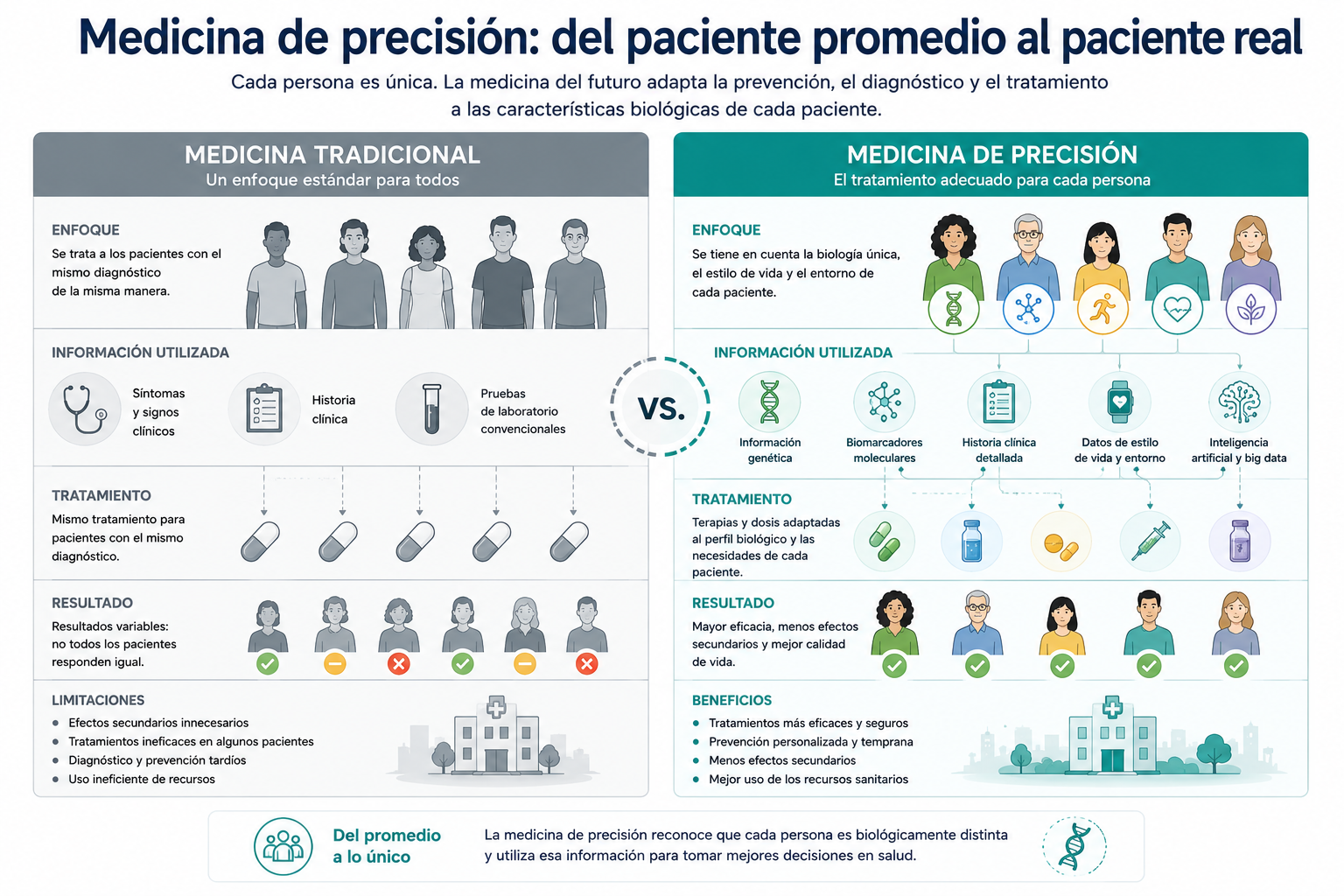
For decades, clinical medicine has worked with protocols designed for the average patient. When a treatment demonstrated its effectiveness in a large group of people, it became the standard for all patients with that diagnosis. That model has worked for many years.
But biology has never been standard. Two people can have the same type of cancer and have completely different mutations. Two patients with the same cardiovascular disease can respond in opposite ways to the same drug. Even how each organism metabolizes a drug depends in part on its genetic information.
Precision medicine is based precisely on this diversity. Its objective is to incorporate all the available information about each patient in order to choose the most appropriate treatment at all times.
What is precision medicine?
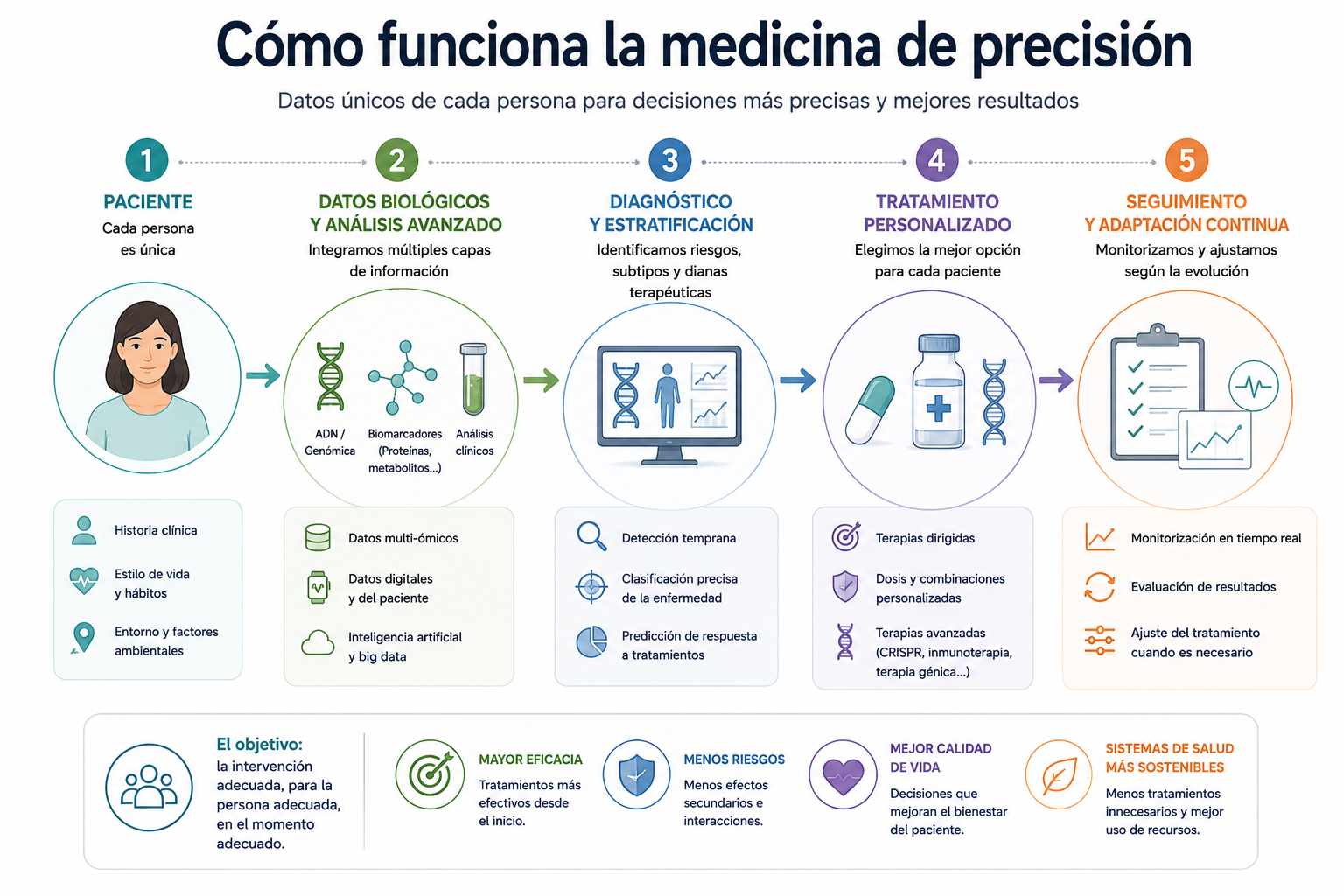
Precision medicine is a medical approach that adapts prevention, diagnosis and treatment to the biological characteristics of each patient.
To do this, it combines different sources of information:
- genetics and genomics;
- biomarkers;
- clinical analysis;
- medical history;
- lifestyle habits;
- environmental environment;
- digital data obtained during patient follow-up.
Integrating all this information allows us to better understand how a disease will evolve and which treatment is most likely to work.
In many cases, the objective is no longer just to treat a pathology. It is to anticipate it.
From DNA to clinical decision
Precision medicine does not depend on a single technology but is the result of the convergence of many disciplines that until a few years ago evolved separately.
- DNA sequencing makes it possible to identify genetic variants associated with diseases.
- Artificial intelligence analyzes enormous amounts of clinical data to detect patterns invisible to the human eye.
- Genetic engineering and synthetic biology are developing new therapies capable of acting on very specific alterations.
- And tools such as CRISPR are beginning to make it possible to directly correct certain mutations.
As we explained in our articles on synthetic biology, genetic engineering and CRISPR, all these technologies share the same goal: to understand biology with enough precision to intervene on it in a much more specific way. Precision medicine represents its most direct clinical application.
Oncology has led the way
Cancer is probably the best example of this transformation.
For a long time, tumours were classified only according to the organ where they appeared: lung, breast, colon or prostate. Today this classification is insufficient.
Two tumours located in the same organ can have completely different genetic alterations and respond very differently to the same treatment. For this reason, many hospitals already incorporate molecular analyses that allow the mutations present in each tumour to be identified.
Genetic information helps to select therapies that specifically target these alterations. In some cases, it also makes it possible to avoid treatments that would probably not be effective. The goal is to find the right treatment for each tumor.
A particularly illustrative example was shared by Andrew Hessel, an expert at the Future Trends Forum dedicated to synthetic biology. During one of the forum’s sessions, he explained the case of Sid Sijbrandij, founder of GitLab, who, after suffering a cancer relapse, promoted a multidisciplinary team to study in depth the molecular characteristics of his tumour and explore highly personalised therapeutic options. This is an exceptional case, still far from routine clinical practice, but it reflects where a part of medicine is heading: treatments that are increasingly adapted to the specific biology of each patient, instead of applying only standardised protocols.
Precision medicine does not mean that each patient will receive a completely different treatment. It means that, when the evidence allows, clinical decisions can be supported by a much deeper understanding of each person’s individual biology.
Much more than cancer
Although oncology has led this revolution, precision medicine is already spreading to many other specialties.
Rare diseases are one of the areas with the greatest potential. Many have a genetic origin and for years were extremely difficult to diagnose. Genome sequencing now makes it possible to identify alterations responsible for thousands of these pathologies. New applications are also appearing in cardiovascular, neurological and metabolic diseases.
The identification of biomarkers facilitates earlier diagnoses and treatments more adapted to the biological profile of each patient. In parallel, pharmacogenomics studies how genetic differences influence the response to drugs since the same dose can be effective for one person and insufficient or even harmful for another.
Understanding these differences can reduce adverse effects and optimize treatments.
When biology becomes programmable
Precision medicine also benefits directly from the advances we’ve discussed in other articles in this series:
- Induced pluripotent stem cells (iPS) make it possible to generate personalised tissues from the patient’s own cells to study diseases or test new treatments.
- Computational protein design accelerates the development of antibodies and therapeutic proteins adapted to specific needs.
- Genetic engineering provides the necessary tools to modify specific genes.
- And artificial intelligence applied to synthetic biology makes it possible to predict the behaviour of new therapies before they even enter the laboratory.
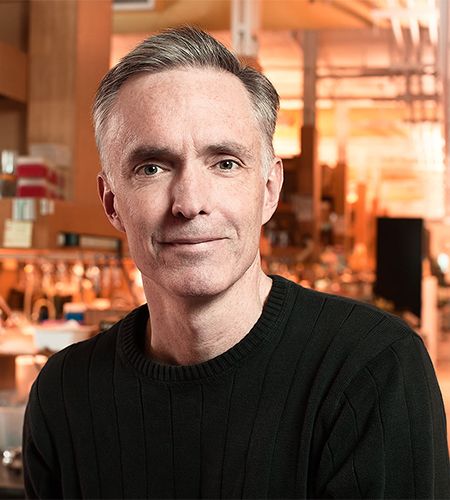
Researchers such as Jim Collins, professor at MIT and expert at the Future Trends Forum, have spent years exploring precisely this convergence between synthetic biology, artificial intelligence and engineering to develop new antibiotics, advanced therapies and tools capable of making medicine more precise.
The work of César de la Fuente, another of the experts at the Future Trends Forum, also demonstrates how artificial intelligence can accelerate the discovery of new therapeutic molecules by analysing millions of possibilities that would be impossible to evaluate experimentally.
Precision medicine does not depend on a single innovation. It depends on all these technologies working together.
A more predictive medicine
Perhaps the most profound change is not personalization. It is anticipation.
Until now, much of medicine reacted when the disease appeared. The availability of genetic information and biomarkers is beginning to change this logic: it is increasingly feasible to identify people at higher risk of developing certain pathologies and to establish preventive strategies before the first symptoms appear.
Medicine is evolving from a reactive model to a much more predictive one. This change can have a huge impact on both the quality of life of patients and the sustainability of healthcare systems.
The challenges that still remain to be solved
- The potential of precision medicine is enormous. So are its challenges:
- The interpretation of genomic data remains complex.
- Protecting the privacy of medical information is a growing priority.
- Many advanced therapies still have high costs.
- And it will be necessary to continue generating clinical evidence that allows these tools to be incorporated safely and equitably.
Technology is advancing rapidly, but the transformation of healthcare systems will take time.
The future of medicine will become more and more personal
For centuries, medicine learned by observing symptoms, then it learned to study organs and tissues. Later it began to read DNA. Today it begins to integrate all that information to make better decisions.
Precision medicine does not mean that each patient will receive a completely different drug. It means something much deeper. That we are beginning to understand that each person is biologically unique and that, for the first time, we have tools capable of incorporating that diversity into clinical practice.
This is probably the greatest transformation of medicine since the appearance of antibiotics.
Glossary
| Term | Definition |
| Precision medicine | An approach that tailors prevention, diagnosis, and treatment to the individual characteristics of each patient. |
| Biomarker | A biological indicator that helps diagnose disease or predict response to treatment. |
| Pharmacogenomics | A discipline that studies how genetic differences influence the efficacy and safety of drugs. |
| Genomics | The study of an organism’s complete set of genes. |
| Targeted therapy | A treatment designed to act on a specific molecular alteration. |
| Predictive medicine: | A strategy that uses biological information to anticipate the risk of developing diseases. |
Frequently asked questions
What is precision medicine?
It is a medical approach that adapts treatments to each patient’s genetics, biomarkers, and individual characteristics to improve their effectiveness.
What is the difference between personalized medicine and precision medicine?
Both terms are often used synonymously, although precision medicine places special emphasis on the use of biological and clinical data to make therapeutic decisions.
In which diseases is precision medicine applied?
It currently has a prominent role in oncology, rare diseases, cardiology, neurology, and some metabolic diseases, although its scope of application continues to grow.
What technologies make precision medicine possible?
Genetic sequencing, artificial intelligence, genetic engineering, synthetic biology, computational protein design, and the analysis of large volumes of data are some of the main ones.
Will precision medicine replace traditional medicine?
No. Its objective is to complement it by incorporating biological information that allows decisions to be made that are more adapted to each patient
Profesor Termeer de Ingeniería y Ciencia Médica en el MIT