AI-generated summary
For decades confined to specialist labs, genetic engineering is now the foundation of major innovations across medicine, agriculture and industry. Techniques like CRISPR, induced pluripotent stem cells and synthetic biology let scientists edit DNA, reprogram cells and design proteins with unprecedented precision. Combined with automation and artificial intelligence, these tools accelerate discovery — from AI-designed proteins and antibiotics to microorganisms engineered as efficient biofactories. The result is a shift from trial-and-error research to computationally guided, scalable workflows that turn cells into production platforms.
In medicine, genetic engineering enables gene therapies that correct root causes of disease, biologics produced by microbes or cell cultures, and patient-specific disease models using iPS cells. Agriculture benefits from crops with improved resilience and nutrition, while industry adopts microbes to make enzymes, materials, and biodegradable chemicals more sustainably. Together these advances underpin a growing bioeconomy that replaces some fossil-based manufacturing with biological processes. Yet the technology raises technical, ethical and regulatory challenges: safety, environmental impact, equitable access and boundaries between therapy and enhancement. As biology becomes engineered and programmable, addressing these questions will be as crucial as refining the tools themselves for a responsible, transformative future.
Genetic engineering is behind some of the most important innovations of our time. Gene therapies, next-generation vaccines, proteins designed with artificial intelligence, cultured meat or microorganisms capable of making new materials share the same technological basis: the ability to modify DNA with precision. Discover how this discipline is transforming medicine, food, industry and sustainability.
For decades, genetic engineering was a technology reserved for specialized laboratories. Today it is behind some of the most important innovations in biomedicine, food and industry.
CRISPR-based therapies, reprogrammed stem cells, the production of proteins by microorganisms, cultured meat or the computational design of new drugs have something in common: they all use tools capable of modifying DNA to provide cells with new functions.
Genetic engineering is no longer an isolated discipline, but an enabling technology on which much of the new biology is built.
The Bankinter Innovation Foundation’s Future Trends Forum analyses this transformation in its report on synthetic biology, where it explains how the convergence between biology, engineering, automation and artificial intelligence is changing the way solutions for health, food and sustainability are developed.
Understanding the applications of genetic engineering is no longer just about understanding how a gene is modified. It is about understanding how we are learning to program biological systems with a level of precision that was unthinkable just twenty years ago.
The technology that connects all new biology
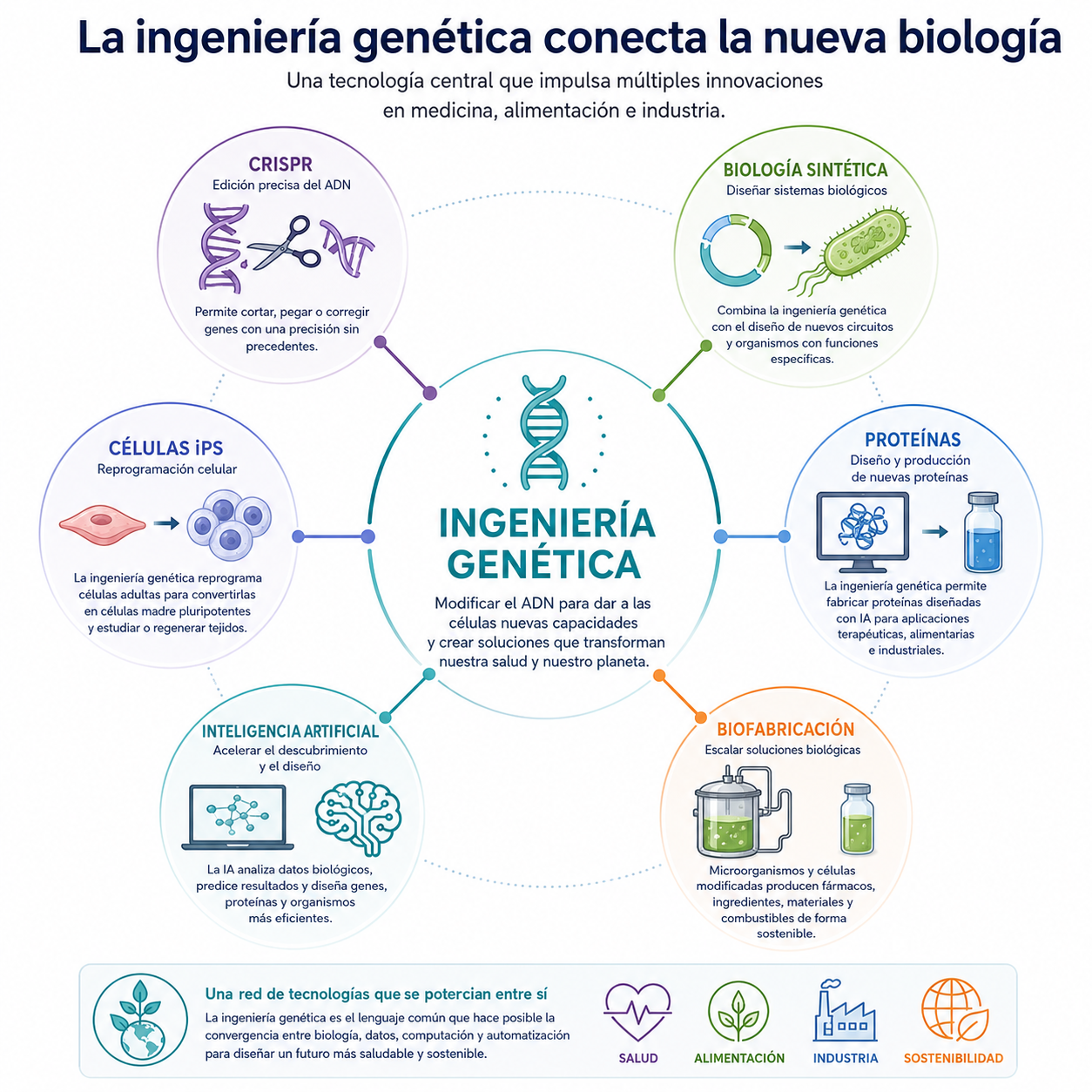
It’s easy to think that gene editing, synthetic biology, or regenerative medicine are completely different disciplines. In reality, they all share the same language.
Genetic engineering provides the necessary tools to introduce, eliminate or modify specific genes and get cells and microorganisms to develop new capabilities.
In our article on CRISPR or molecular scissors, we saw how gene editing makes it possible to act on very specific regions of DNA with a precision unknown until a few years ago.
We explained what synthetic biology is a step further: using these tools to design complete biological systems following engineering principles.
The article dedicated to the computational design of proteins showed how artificial intelligence makes it possible to create new proteins even before synthesizing them in the laboratory.
And when we analyzed induced pluripotent stem (iPS) cells, we found that modifying the expression of a small set of genes is enough to return an adult cell to an embryonic-like state.
All of these examples belong to different fields. They all use genetic engineering. More than a specific technology, genetic engineering is becoming the infrastructure on which the bioeconomy of the 21st century is built.
Applications of genetic engineering in medicine
Few areas reflect this transformation better than medicine. For much of the twentieth century, the development of new treatments consisted mainly of discovering molecules capable of alleviating the symptoms of a disease.
Today, another approach is beginning to take hold. Understanding what happens in DNA and acting directly on the source of the problem.
Therapies that correct genetic diseases
Gene therapies represent one of the best examples: instead of administering a drug for a lifetime, the goal is to correct the genetic alteration responsible for the disease.
In some cases, a functional copy of the affected gene is introduced. In others, tools such as CRISPR allow the altered sequence to be edited directly.
The first approved treatments for hereditary blood diseases show that this paradigm shift has already begun. Although these are still very specific applications, they mark the way towards much more personalized medicine.
Drugs made by cells
Genetic engineering has also changed the way many drugs are produced: human insulin, numerous monoclonal antibodies or different vaccines are made thanks to bacteria, yeast or genetically modified cells.
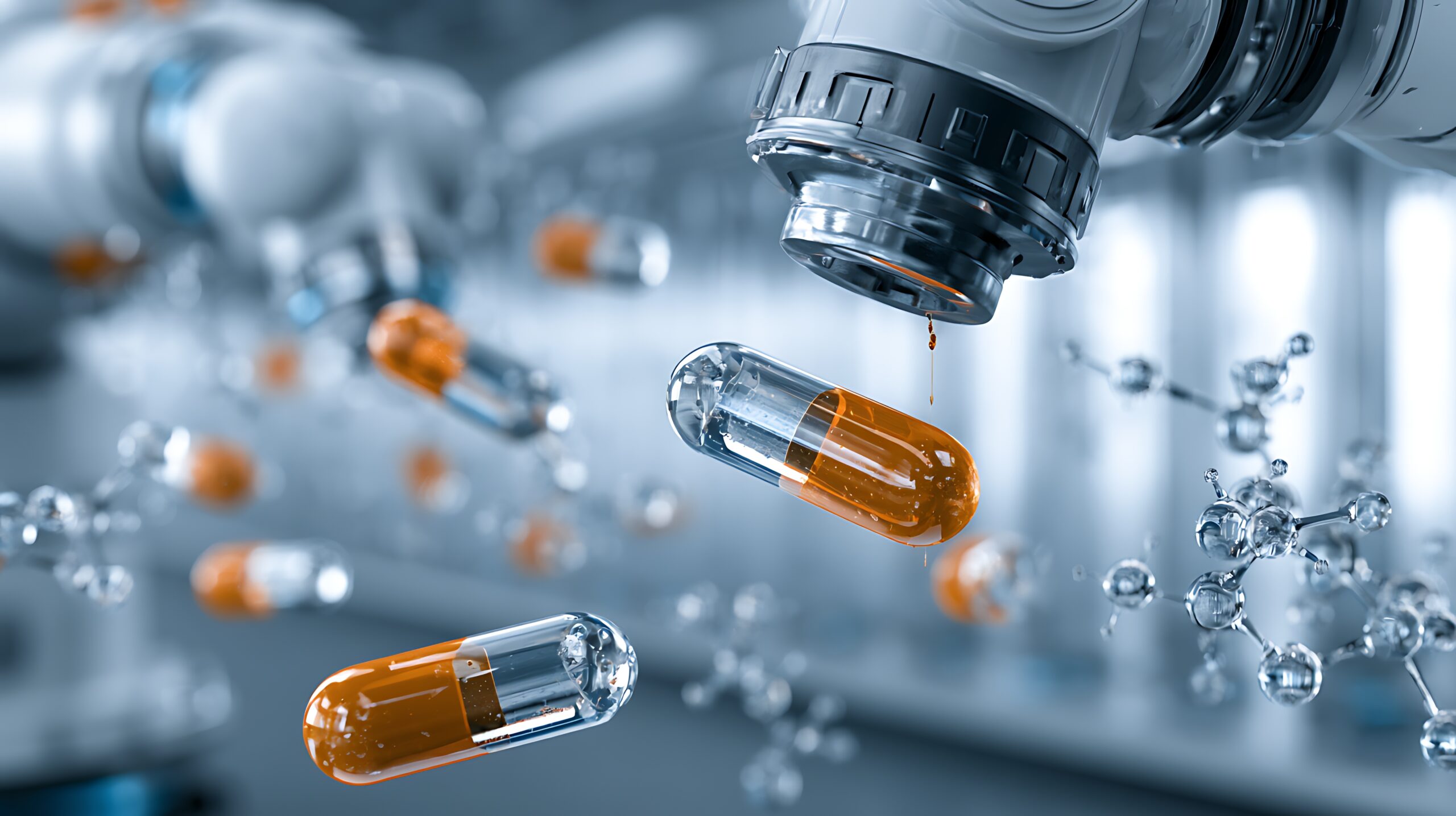
Instead of resorting to complex or inefficient extraction processes, researchers turn microorganisms into small biological factories capable of producing human proteins with consistent quality. This same principle is driving the development of new therapeutic proteins.
As we saw in our article on computational protein design, artificial intelligence makes it possible to design molecules with increasingly precise properties, while genetic engineering makes it possible to produce them later in biological systems.
The work of researchers such as César de la Fuente, an expert at the Future Trends Forum, perfectly illustrates this convergence. His team uses artificial intelligence to discover new antibiotics inspired by nature and uses genetic engineering tools to produce and validate them experimentally. The result is a much faster discovery process than traditional methods.
Better understanding of diseases
Not all applications seek to develop new treatments. In many cases, genetic engineering simply helps to better understand how a disease works.
Induced pluripotent stem cells make it possible to obtain neurons, heart cells or specific tissues from a small sample of a patient’s skin. Combined with gene-editing techniques, these platforms make it possible to study specific mutations and evaluate possible treatments without the need to intervene directly on people.
It is an example of how different technologies are beginning to reinforce each other.
Agriculture is also being redesigned
The world’s population continues to grow while climate change increases pressure on agricultural systems: producing more food using less water, less soil and less fertilizer has become one of the great technological challenges of this century.
Genetic engineering offers new tools to deal with it: it allows the development of disease-resistant crops, improved drought tolerance or increased the nutritional value of certain foods.
But perhaps the most interesting change is another. Agricultural innovation increasingly depends on understanding crop biology in order to design much more precise solutions. As stated in the report Smart Agriculture: The Sustainable Food Challenge by the Future Trends Forum, biotechnology will be one of the key pieces in building food systems capable of responding to growth in demand without proportionally increasing the consumption of natural resources.
And here again there are connections to other articles in this series. Alternative proteins use genetic engineering tools to produce food in completely different ways than traditional ones.
Industrial applications: when cells become factories
One of the most profound changes driven by genetic engineering is happening far from hospitals: it is happening in factories.
More and more industrial processes are using genetically modified microorganisms to produce substances that were previously obtained through complex chemical processes or from fossil resources. Bacteria, yeasts and fungi function as authentic biofactories capable of manufacturing enzymes, vitamins, flavourings, food ingredients, biodegradable materials or active pharmaceutical ingredients.
Many of these reactions take place at room temperature, consume less energy and generate less waste than conventional industrial processes. Genetic engineering also makes it possible to continuously optimize these microorganisms to increase their productivity or manufacture completely new molecules.
It is a paradigm shift. For decades, industry adapted nature to its processes. Now it is beginning to design organisms capable of executing those processes much more efficiently.
Bioeconomy: a new way of manufacturing
The combination of genetic engineering, synthetic biology and automation is giving rise to a new industrial model.
The so-called bioeconomy proposes to progressively replace part of the production based on fossil resources with biological processes capable of generating food, materials, chemicals or fuels using living organisms.
In this context, cells are no longer seen only as biological units. They are beginning to be understood as manufacturing platforms. This change is already visible in very different sectors:
- Precision fermentation produces proteins and food ingredients with high added value.
- Biomanufacturing develops new biomaterials inspired by nature.
- Modified microorganisms synthesize compounds used by the pharmaceutical, cosmetic or chemical industries.
And all of this shares the same technological basis: the ability to reprogram DNA so that cells perform specific functions.
Genetic engineering for a more sustainable industry
Sustainability has become one of the great drivers of biotechnological innovation. Many current applications seek to reduce the environmental impact of industrial processes: some modified microorganisms make it possible to produce biodegradable bioplastics and others synthesize biofuels or capture compounds of industrial interest.
There are also projects aimed at degrading certain pollutants using biological pathways specifically designed for this function.
Not all of these applications have yet reached commercial maturity. But they show a clear trend. Genetic engineering is no longer just used to develop new products. It also allows us to rethink how we manufacture them.
When artificial intelligence also designs DNA
Today’s revolution does not depend solely on genetic engineering. It depends on the convergence between several technologies:
Artificial intelligence is transforming the way modified organisms are designed, and computational models make it possible to analyze millions of possible combinations before conducting a single experiment. They predict which genes should be modified, how a protein will respond, or which metabolic pathway will be most efficient. In our article on how artificial intelligence improves synthetic biology , we analyzed precisely this paradigm shift.
For decades, much biotechnology research advanced through trial and error. Today, many of these tests begin first on the computer and are then validated in the laboratory. And finally, they are scaled up by systems such as pilot bioreactors, capable of reproducing the conditions necessary to manufacture cells, proteins or microorganisms on a larger scale.
Genetic engineering is still essential. The difference is that it now works accompanied by tools capable of greatly accelerating the innovation process.
The challenges of increasingly powerful technology
The ability to modify DNA also poses new responsibilities.
- In medicine, any genetic intervention must be shown to be safe and effective before it reaches patients.
- In agriculture, environmental assessment and regulation remain essential.
- In industry, traceability and biosafety are becoming increasingly important as the use of modified organisms increases.
In addition to these technical challenges, there are social and ethical issues.
- How should clinical applications be regulated? Where should
- the line be drawn between treating a disease and improving certain human capacities?
- How can we ensure that these technologies benefit society as a whole?
Answering these questions will be just as important as continuing to refine genetic engineering tools.
The future: learning to program biology
For much of the 20th century, modifying a single gene could take years of work. Today, researchers edit DNA with precision, design proteins using artificial intelligence, program microorganisms to make new materials, and produce cells for regenerative therapies.
Each of these advances seems to belong to a different discipline but in reality, they are all part of the same transformation: biology is beginning to behave like an engineering platform.
As the Future Trends Forum’s Synthetic Biology report points out, the convergence between biology, artificial intelligence, automation, and data science is changing the way we understand innovation.
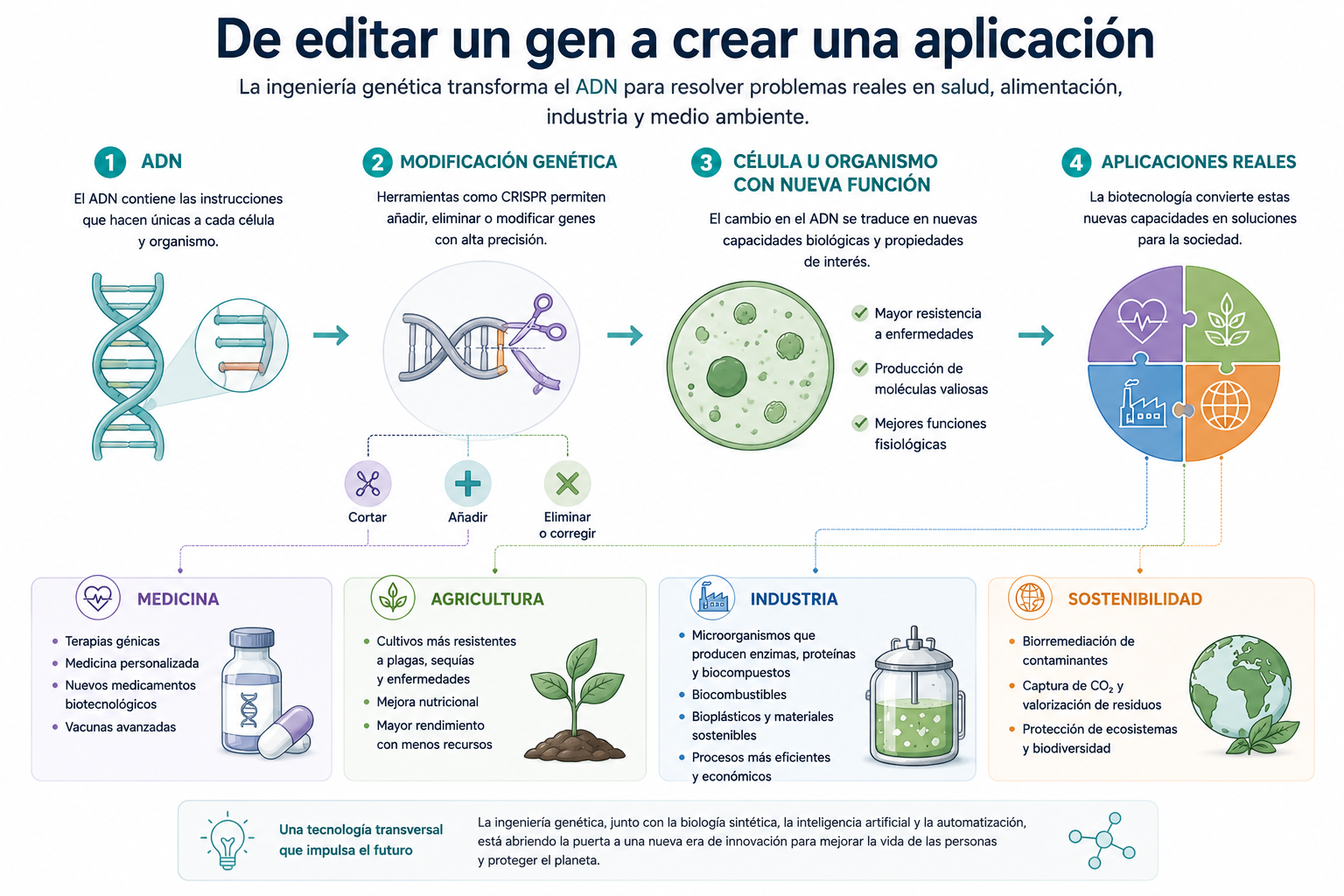
And it will probably be one of the technologies with the greatest capacity to transform medicine, food, industry and sustainability over the coming decades.
Glossary
| Term | Definition Genetic |
| engineering | A set of techniques that allow DNA to be modified to introduce, delete or alter specific genes. |
| DNA | A molecule that contains the genetic information of all living beings. |
| CRISPR | A gene-editing tool that allows specific regions of DNA to be modified with great precision. |
| Gene therapy | Treatment that acts on genes to correct or compensate for diseases of genetic origin. |
| Bioeconomy | Economic model based on the use of biological resources and biotechnological processes to produce goods and services. |
| Biomanufacturing | Production of materials, food or compounds using living organisms or biological processes. |
Frequently Asked QuestionsWhat
is genetic engineering?
It is the discipline that allows the DNA of an organism to be directly modified to introduce, delete, or alter genes for a specific purpose.
What are the main applications of genetic engineering?
It is used in medicine to develop gene therapies and biological drugs; in agriculture to create more resistant crops; and in industry to produce enzymes, proteins, materials, and biofuels using modified microorganisms.
What is the difference between genetic engineering and gene editing?
Genetic engineering encompasses all techniques for modifying DNA. Gene editing, using tools such as CRISPR, is one of these techniques and allows very precise changes to be made.
Are genetic engineering and synthetic biology the same?
No. Genetic engineering modifies specific genes. Synthetic biology uses these tools to design complete biological systems with specific functions.
What are the benefits of genetic engineering?
It allows the development of new medical treatments, improved food production, optimised industrial processes and accelerated the transition to a more sustainable bioeconomy.

Profesor Asistente Presidencial en la Universidad de Pensilvania